Why Metal Roofing is Becoming a Top Choice for Coastal East Boston Homes
East Boston’s waterfront location brings stunning harbor views but also exposes homes to salt air, high winds, and severe weather. Metal roofing has emerged as the preferred solution for coastal homeowners seeking durability and long-term protection. This guide explains why metal roofing outperforms traditional materials in East Boston’s unique climate and what you need to know before making the switch.
East Boston’s Climate Challenges for Traditional Roofing
East Boston sits directly on Boston Harbor, facing constant salt spray and wind exposure. Traditional asphalt shingles typically last 15-20 years in inland areas but often fail in 10-12 years near the coast due to corrosion and UV degradation. The area’s Nor’easters bring wind gusts exceeding 70 mph, while freeze-thaw cycles in winter create ice dams that damage conventional roofing systems.
Coastal homes in Jeffries Point and Eagle Hill experience higher moisture levels year-round, accelerating roof deterioration. The salt air corrodes metal fasteners and flashing on traditional roofs, creating leak points that worsen over time. These factors make East Boston one of the most challenging environments for roofing materials in the Greater Boston area.
Superior Wind and Weather Resistance of Metal Roofing
Metal roofing systems are engineered to withstand wind speeds up to 140 mph when properly installed, significantly exceeding the 60-80 mph rating of standard asphalt shingles. The interlocking panel design creates a continuous surface that resists uplift forces during storms.
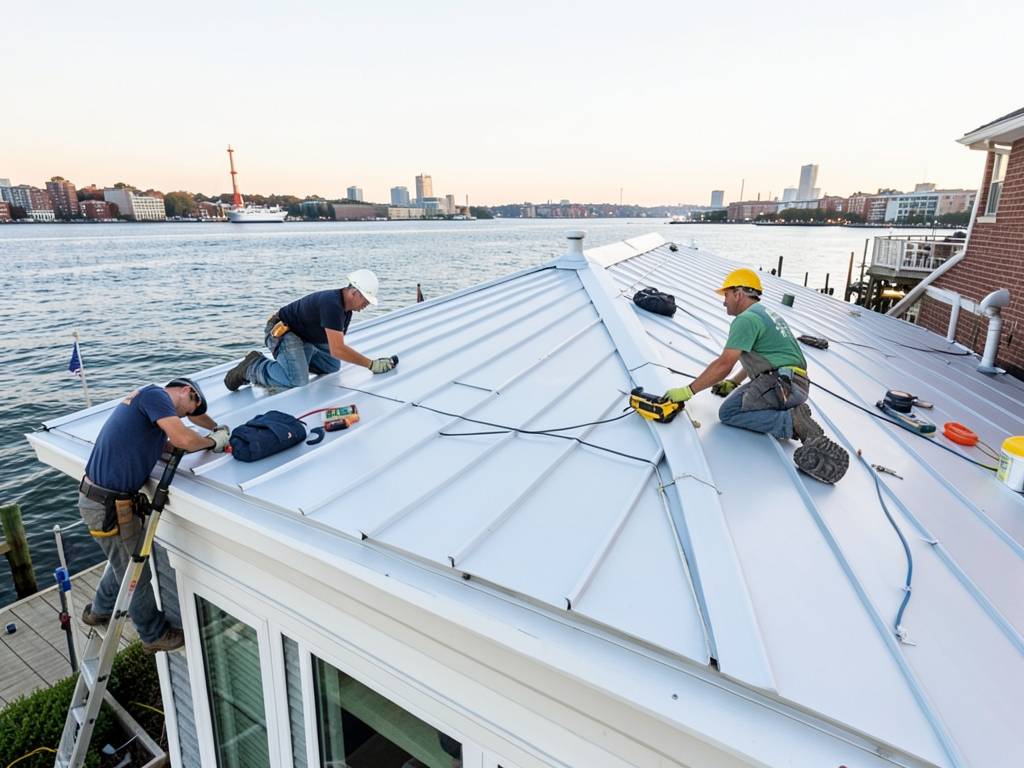
Standing seam metal roofs feature concealed fasteners that eliminate penetration points where water can enter. This design proves especially valuable during East Boston’s frequent storms, where driving rain and wind-driven debris can compromise traditional roofing systems. The smooth surface also allows snow to slide off rather than accumulating into heavy loads that stress roof structures.
Coastal metal roofing uses specialized coatings like Kynar 500 that resist salt spray corrosion. These finishes maintain their protective properties for 20-30 years, compared to standard galvanized steel that may rust within 5-7 years in coastal environments.
Energy Efficiency Benefits for East Boston Homes
Metal roofing reflects up to 70% of solar radiation, reducing cooling costs by 20-30% during East Boston’s warm summer months. The reflective properties help maintain comfortable indoor temperatures without overworking air conditioning systems, particularly important for homes near Logan Airport where heat island effects can be pronounced.
Many East Boston homeowners qualify for energy efficiency rebates when installing cool-roof certified metal systems. These coatings meet Energy Star standards and can reduce peak cooling demand by up to 15%, providing both environmental and financial benefits in a region where energy costs continue to rise. Energy Department roofing guide.
The thermal mass of metal roofing also helps regulate temperature swings common in coastal areas, where daytime heating and nighttime cooling create stress on building materials. This stability reduces expansion and contraction that can lead to leaks and structural damage over time.
Installation Considerations for East Boston Properties
Metal roofing installation in East Boston requires specialized knowledge of local building codes and coastal conditions. The Massachusetts State Building Code (780 CMR) mandates specific fastening requirements for coastal zones, including enhanced uplift resistance and corrosion-resistant fasteners. Massachusetts State Building Code.
Historic districts like Eagle Hill have additional preservation requirements that may affect material choices and installation methods. Copper and zinc metal roofing systems are often approved for historic properties due to their longevity and aesthetic appeal that develops a natural patina over time.
Proper underlayment is critical in East Boston’s climate. Synthetic underlayments provide superior moisture protection compared to traditional felt paper, which can deteriorate when exposed to salt air. Ice and water shield installation along eaves and valleys prevents ice dam formation, a common issue in East Boston’s freeze-thaw cycles.
Call (857) 387-1711 today to schedule your inspection.
Cost Analysis and Long-Term Value
Metal roofing typically costs $12-18 per square foot installed in the Boston area, compared to $5-8 for asphalt shingles. While the initial investment is higher, metal roofing’s 40-70 year lifespan versus 15-20 years for asphalt creates significant long-term savings.
Annual maintenance costs for metal roofing average $200-300, while asphalt roofs require $400-600 in maintenance and repairs. Over a 40-year period, metal roofing can save homeowners $15,000-25,000 in replacement and maintenance costs.
Insurance companies often provide premium discounts of 5-15% for homes with impact-resistant metal roofing, recognizing the reduced risk of storm damage. These discounts can offset 10-20% of the initial installation cost over the roof’s lifetime.
Property values typically increase 1-3% with metal roofing installation, particularly attractive in East Boston’s competitive real estate market where buyers increasingly value energy efficiency and durability.
Types of Metal Roofing Systems Available
Standing seam metal roofing offers the highest durability with vertical panels that lock together without exposed fasteners. This system provides excellent wind resistance and clean, modern aesthetics suitable for East Boston’s mix of historic and contemporary architecture.
Metal shingles mimic traditional roofing materials while providing superior performance. Available in styles that resemble slate, tile, or wood shake, these systems offer design flexibility for East Boston’s diverse architectural styles, from triple-deckers to waterfront condos.
Copper and zinc roofing systems provide unmatched longevity, often lasting 100+ years. These premium materials develop a distinctive patina that many East Boston homeowners find appealing, particularly for historic properties in areas like Jeffries Point.
Aluminum roofing offers the best salt spray resistance at a mid-range price point. The material’s natural corrosion resistance makes it ideal for properties closest to the harbor, where salt exposure is most severe.
Environmental and Sustainability Benefits
Metal roofing contains 25-95% recycled content depending on the material, making it one of the most sustainable roofing options available. At the end of its service life, metal roofing is 100% recyclable, unlike asphalt shingles that contribute to landfill waste.
The production of metal roofing requires significantly less energy than manufacturing new asphalt shingles, and the material’s longevity means fewer replacements over time. This reduced lifecycle impact aligns with Boston’s sustainability goals and many East Boston homeowners’ environmental values.
Metal roofing’s ability to support solar panel installation provides additional environmental benefits. The durable surface can support solar arrays without additional structural reinforcement, making it easier for East Boston homeowners to generate renewable energy.
Maintenance Requirements and Best Practices
Annual inspections should check for loose fasteners, damaged sealants, and debris accumulation in valleys and gutters. East Boston’s coastal location means more frequent inspections may be necessary, particularly after major storms.
Cleaning metal roofing once or twice yearly removes salt deposits and prevents corrosion. A simple garden hose with mild detergent is usually sufficient, though pressure washing should be avoided as it can damage protective coatings.
Gutter maintenance is critical for metal roofing performance. Clogged gutters cause water backup that can damage fascia and soffits, particularly during East Boston’s heavy rainfall events. Installing oversized gutters helps manage the area’s precipitation levels.
Prompt repair of any damage prevents water infiltration that could compromise the roof structure. Small issues caught early typically cost $200-500 to repair, while neglected damage can lead to $2,000-5,000 in structural repairs.
Comparing Metal to Other Roofing Options
Traditional asphalt shingles remain the most common roofing material in East Boston due to their lower upfront cost. However, they require replacement every 15-20 years and offer minimal wind resistance compared to metal systems.
Tile roofing provides excellent durability but weighs significantly more than metal, often requiring structural reinforcement. The cost is similar to metal roofing, but tile is more prone to cracking from impact and requires specialized installation expertise.
Slate roofing offers unmatched longevity but at a premium price point. While beautiful and durable, slate requires specialized installation and is more brittle than metal, making it vulnerable to impact damage from falling branches or debris.
Composite roofing materials attempt to combine the benefits of various systems but typically don’t match metal’s performance in coastal environments. Their lifespan of 20-30 years falls short of metal’s 40-70 year durability.
Financing and Rebate Opportunities
Several financing options make metal roofing more accessible to East Boston homeowners. Green energy loans through Mass Save offer terms up to 10 years with competitive rates for energy-efficient home improvements.
Federal tax credits for energy-efficient roofing can offset 10% of material costs, up to $500, for qualifying metal roofing systems. These credits apply to Energy Star certified products with appropriate thermal emittance ratings.
Local utility rebates may be available through National Grid for cool-roof installations that meet specific energy performance criteria. These programs change annually, so checking current offerings before installation is recommended.
Some East Boston homeowners have successfully used home equity lines of credit to finance metal roofing, taking advantage of current low interest rates while increasing their property value.
Frequently Asked Questions
Does metal roofing make homes hotter in summer?
No, metal roofing actually helps keep homes cooler. Light-colored metal roofs reflect up to 70% of solar radiation, while dark colors still perform better than asphalt. The reflective properties reduce heat absorption and lower cooling costs significantly.
Will a metal roof attract lightning?
Metal roofing does not increase lightning strike risk. If lightning does strike, the metal provides a safe path to ground, potentially protecting the structure better than other materials. East Boston’s coastal location means all homes have similar lightning exposure regardless of roofing material.
How noisy is a metal roof during rain?
Modern metal roofing with proper underlayment is no louder than asphalt shingles during rain. The solid sheathing and insulation materials used in today’s installations effectively dampen sound, making indoor noise levels comparable to traditional roofing.
Can I install solar panels on a metal roof?
Yes, metal roofing is actually ideal for solar panel installation. The durable surface can support panels without additional structural reinforcement, and the smooth surface makes mounting brackets easier to install and seal properly.
How long does metal roof installation take?
Most East Boston homes require 3-5 days for complete metal roof installation. This includes removal of existing roofing, preparation of the roof deck, installation of underlayment, and final metal panel installation. Weather delays are rare as metal roofing can be installed in most conditions.
Choosing the Right Contractor for Your Metal Roof
Metal roofing installation requires specialized skills different from traditional roofing. Look for contractors with specific metal roofing experience, proper licensing in Massachusetts, and knowledge of coastal installation requirements.
Verify contractor insurance coverage, including workers’ compensation and liability insurance. East Boston’s dense housing means workers must be properly insured to protect both the homeowner and neighboring properties.
Request references from recent metal roofing projects in the Boston area. Local experience is crucial for understanding the specific challenges of East Boston’s climate and building codes.
Ensure the contractor provides detailed written estimates that include all materials, labor, and warranty information. Be wary of unusually low bids that may indicate cost-cutting on materials or installation quality.
Ready to upgrade your East Boston home with durable metal roofing? Call (857) 387-1711 today to schedule your free consultation.
Environmental Impact and Long-Term Sustainability
East Boston’s proximity to Boston Harbor makes environmental considerations particularly important for homeowners. Metal roofing’s recyclability means that at the end of its 40-70 year lifespan, the material can be fully recycled rather than ending up in landfills.
The energy savings from metal roofing’s reflective properties reduce carbon emissions over the roof’s lifetime. For an average East Boston home, this can mean 2-3 tons less CO2 emissions annually compared to traditional roofing.
Metal roofing’s durability means fewer replacements over time, reducing the environmental impact of manufacturing, transportation, and installation of replacement materials. This lifecycle approach to sustainability is increasingly important to East Boston homeowners.
The material’s ability to support rainwater harvesting systems provides additional environmental benefits. Clean metal surfaces produce higher quality runoff than asphalt, making harvested water more suitable for garden use and reducing stormwater runoff into Boston Harbor.
Making the Decision for Your East Boston Home
Consider your specific circumstances when deciding on metal roofing. If you plan to stay in your East Boston home for more than 10 years, the long-term savings and durability often justify the higher upfront cost.
Evaluate your home’s architectural style and neighborhood character. While metal roofing works well in most East Boston neighborhoods, some historic districts may have specific requirements or restrictions on material choices.
Assess your energy efficiency goals. If reducing cooling costs and environmental impact are priorities, metal roofing’s superior performance makes it an excellent choice for East Boston’s climate.
Consider the peace of mind that comes with superior storm protection. East Boston’s exposure to severe weather means investing in the most durable roofing option available can prevent costly damage and repairs.
Ultimately, metal roofing represents a smart investment for East Boston homeowners who value durability, energy efficiency, and long-term value. The material’s proven performance in coastal environments makes it particularly well-suited to the unique challenges of living near Boston Harbor.
Don’t wait for the next storm to damage your roof. Call (857) 387-1711 now to speak with our metal roofing experts about protecting your East Boston home.
{
“@context”: “https://schema.org”,
“@type”: “BlogPosting”,
“headline”: “Why Metal Roofing is Becoming a Top Choice for Coastal East Boston Homes”,
“description”: “Discover why coastal East Boston homeowners are choosing metal roofing for salt-air durability, wind resistance, and energy efficiency. Learn about costs, installation, and local benefits.”,
“wordCount”: 2155,
“datePublished”: “2026-03-03T08:29:00.000Z”,
“dateModified”: “2026-03-03T08:29:00.000Z”,
“inLanguage”: “en-US”,
“mainEntityOfPage”: {
“@type”: “WebPage”,
“@id”: “https://silverlineroofingboston.com”
},
“publisher”: {
“@type”: “LocalBusiness”,
“name”: “Silverline Roofing Boston”,
“url”: “https://silverlineroofingboston.com”
},
“author”: {
“@type”: “Organization”,
“name”: “Silverline Roofing Boston”,
“url”: “https://silverlineroofingboston.com”
},
“image”: {
“@type”: “ImageObject”,
“url”: “https://silverlineroofingboston.com/wp-content/uploads/2026/03/why-metal-roofing-is-becoming-a-top-choice-for-coa-1.png”
}
}
{
“@context”: “https://schema.org”,
“@type”: “RoofingContractor”,
“name”: “Silverline Roofing Boston”,
“url”: “https://silverlineroofingboston.com”,
“address”: {
“@type”: “PostalAddress”,
“addressLocality”: “Boston”
},
“areaServed”: {
“@type”: “City”,
“name”: “Boston”
}
}
{
“@context”: “https://schema.org”,
“@type”: “FAQPage”,
“mainEntity”: [
{
“@type”: “Question”,
“name”: “Does metal roofing make homes hotter in summer?”,
“acceptedAnswer”: {
“@type”: “Answer”,
“text”: “No, metal roofing actually helps keep homes cooler. Light-colored metal roofs reflect up to 70% of solar radiation, while dark colors still perform better than asphalt. The reflective properties reduce heat absorption and lower cooling costs significantly.”
}
},
{
“@type”: “Question”,
“name”: “Will a metal roof attract lightning?”,
“acceptedAnswer”: {
“@type”: “Answer”,
“text”: “Metal roofing does not increase lightning strike risk. If lightning does strike, the metal provides a safe path to ground, potentially protecting the structure better than other materials. East Boston’s coastal location means all homes have similar lightning exposure regardless of roofing material.”
}
},
{
“@type”: “Question”,
“name”: “How noisy is a metal roof during rain?”,
“acceptedAnswer”: {
“@type”: “Answer”,
“text”: “Modern metal roofing with proper underlayment is no louder than asphalt shingles during rain. The solid sheathing and insulation materials used in today’s installations effectively dampen sound, making indoor noise levels comparable to traditional roofing.”
}
},
{
“@type”: “Question”,
“name”: “Can I install solar panels on a metal roof?”,
“acceptedAnswer”: {
“@type”: “Answer”,
“text”: “Yes, metal roofing is actually ideal for solar panel installation. The durable surface can support panels without additional structural reinforcement, and the smooth surface makes mounting brackets easier to install and seal properly.”
}
},
{
“@type”: “Question”,
“name”: “How long does metal roof installation take?”,
“acceptedAnswer”: {
“@type”: “Answer”,
“text”: “Most East Boston homes require 3-5 days for complete metal roof installation. This includes removal of existing roofing, preparation of the roof deck, installation of underlayment, and final metal panel installation. Weather delays are rare as metal roofing can be installed in most conditions.”
}
}
]
}
{
“@context”: “https://schema.org”,
“@type”: “BreadcrumbList”,
“itemListElement”: [
{
“@type”: “ListItem”,
“position”: 1,
“name”: “Home”,
“item”: “https://silverlineroofingboston.com”
},
{
“@type”: “ListItem”,
“position”: 2,
“name”: “Blog”,
“item”: “https://silverlineroofingboston.com/blog”
},
{
“@type”: “ListItem”,
“position”: 3,
“name”: “Why Metal Roofing is Becoming a Top Choice for Coastal East Boston Homes”
}
]
}
{
“@context”: “https://schema.org”,
“@type”: “Service”,
“serviceType”: “Roofing”,
“provider”: {
“@type”: “LocalBusiness”,
“name”: “Silverline Roofing Boston”,
“url”: “https://silverlineroofingboston.com”
},
“areaServed”: {
“@type”: “City”,
“name”: “Boston”
},
“description”: “Discover why coastal East Boston homeowners are choosing metal roofing for salt-air durability, wind resistance, and energy efficiency. Learn about costs, installation, and local benefits.”
}