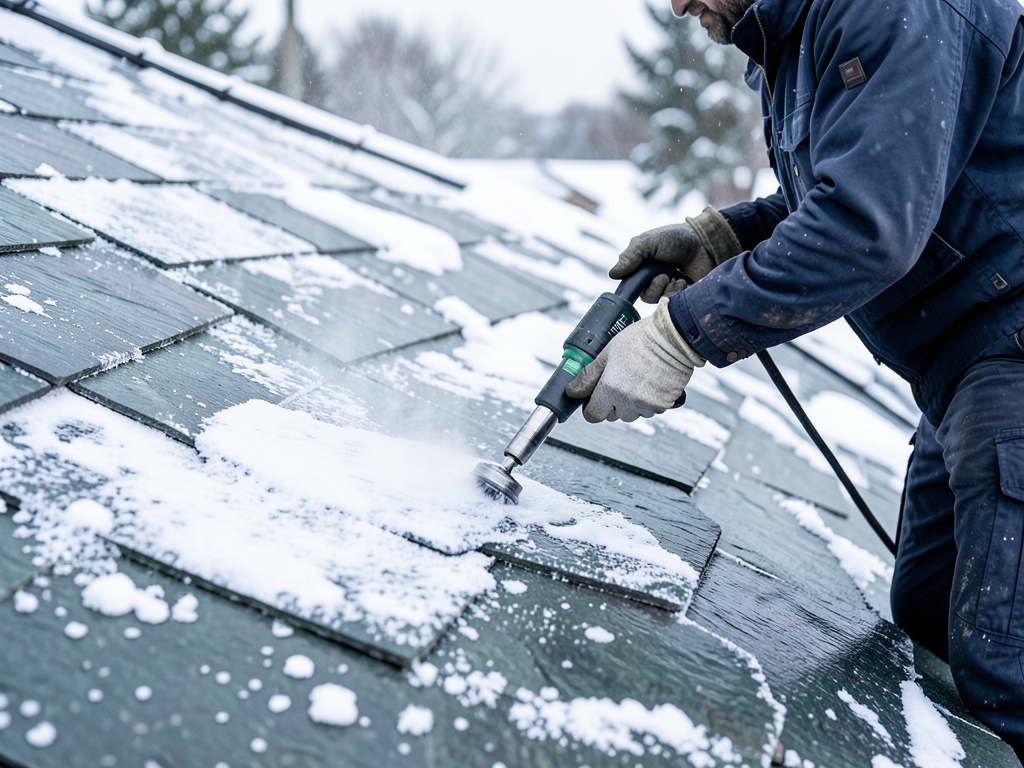







Boston experiences 20 to 30 freeze-thaw cycles each winter. Water infiltrates asphalt shingle edges, freezes, expands, and breaks the seal between shingle layers. This cycle accelerates aging and causes premature failure. Metal roofing eliminates this vulnerability because panels interlock with raised seams that shed water and ice. The humidity from Boston Harbor and coastal storms also degrades asphalt faster than in dry climates. Salt spray corrodes metal fasteners on both asphalt and metal roofs, but quality metal roofing uses stainless steel or coated fasteners that resist corrosion. These local conditions make the metal roof vs shingle roof pricing calculation favor metal more strongly in Boston than in milder climates.
Boston building codes require ice-and-water barrier along eaves and valleys to prevent ice dam damage. This adds material cost to both asphalt and metal installations. Historic districts in Beacon Hill, Back Bay, and South End restrict roofing materials and colors. You may need approval from the Boston Landmarks Commission before installing certain metal finishes or replacing slate with asphalt. Local contractors understand these requirements and factor permit timelines into project schedules. Silverline Roofing Boston has navigated these approvals for decades. We know which materials meet preservation standards and how to document proposals for commission review. This local expertise prevents costly delays and rejected installations.