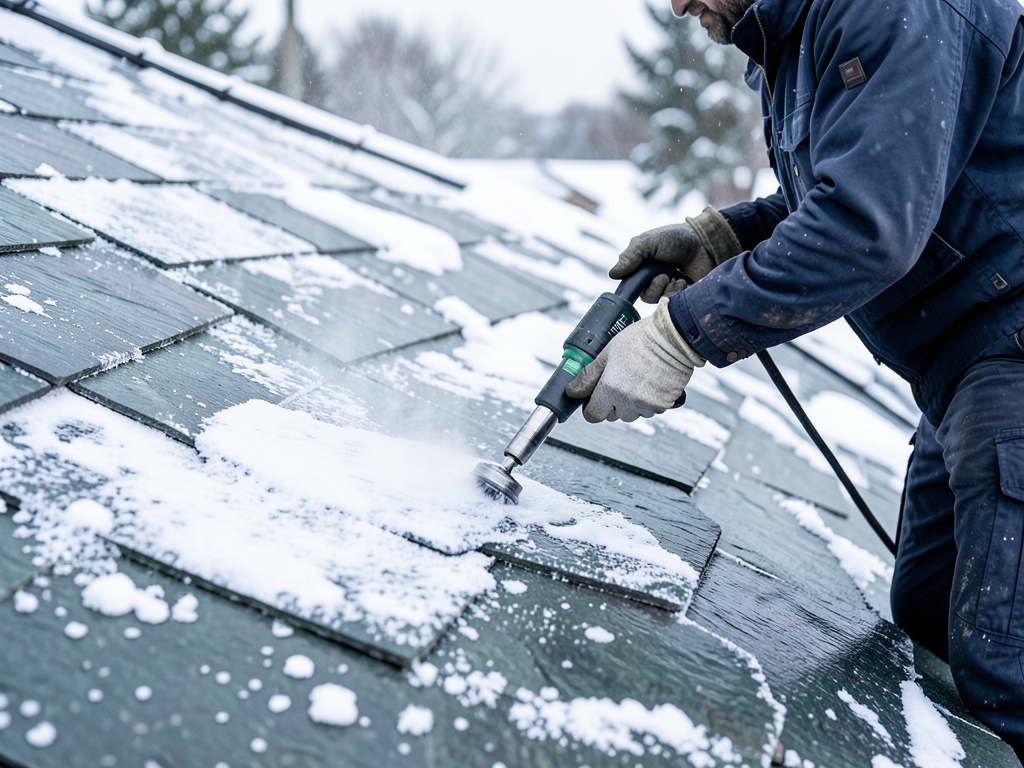







Boston experiences an average of 40 freeze-thaw cycles per winter. Water penetrates small gaps in shingles during the day, freezes overnight when temperatures drop, and expands by nine percent. That expansion forces shingles apart, widens cracks in flashing, and pops nail heads. By spring, what looked like a small problem becomes a major leak. This homeowner roofing manual focuses on materials and installation techniques that resist this cycle. Proper ice and water shield placement stops water before it reaches the roof deck. High-quality shingles with reinforced mats resist tearing when ice forms underneath them.
Boston roofing contractors who understand these conditions install roofs differently than crews from warmer climates. We use six nails per shingle instead of four in high-wind zones near the coast. We extend ice and water shield coverage beyond code minimums because we know how ice dams form on Boston roofs. We source materials rated for freeze-thaw resistance, not just the cheapest option available. Choosing a local crew means choosing someone who has repaired the damage caused by shortcuts. We know what fails, so we build it right the first time.