




menu

Industrial Roof Replacement in Boston – Minimize Downtime with Factory-Certified Installation Teams

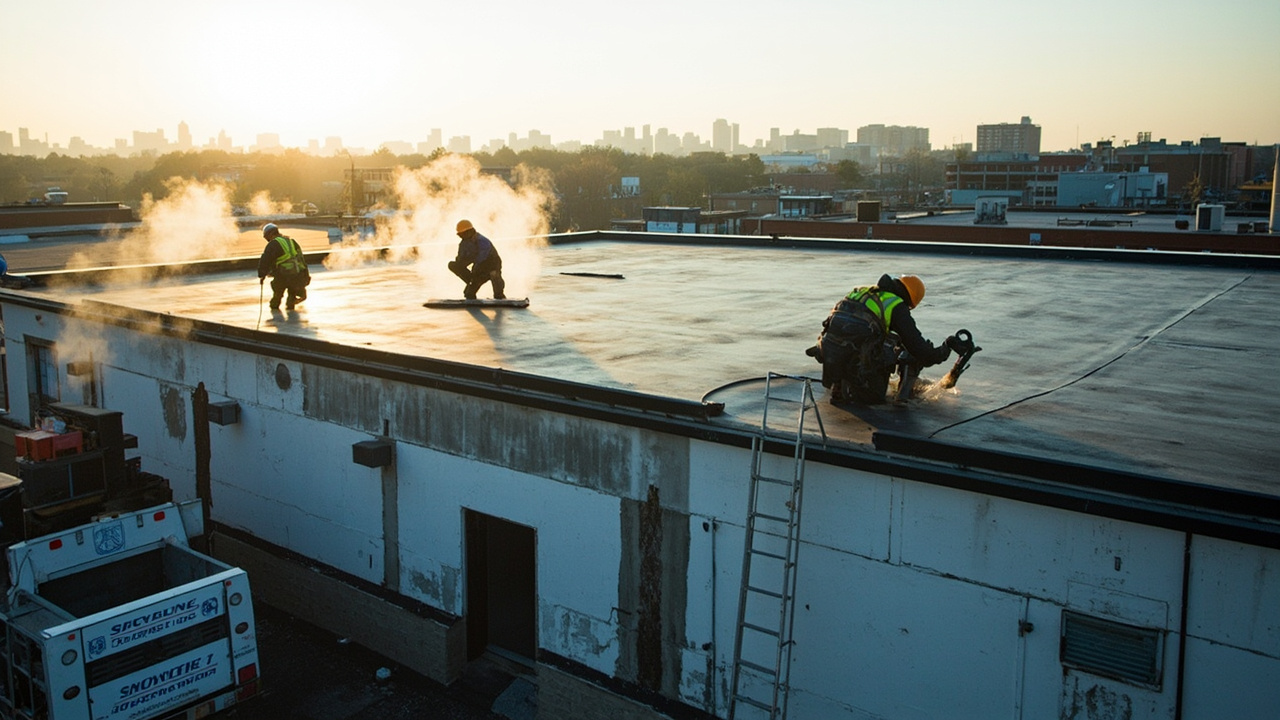
Your facility cannot afford extended closures. Our crews complete industrial roof replacement with phased scheduling that keeps your Boston warehouse, factory, or distribution center operational throughout the project.

Slider Image 1
Slider Image 2
Slider Image 3
Slider Image 4
Slider Image 5
Slider Image 7
Slider Image 8
Slider Image 9
Slider Image 10
Slider Image 11

Why Boston Industrial Facilities Face Accelerated Roof Failure

Boston's coastal location creates aggressive wear patterns on commercial flat roof systems. Salt-laden air from the harbor accelerates corrosion of metal fasteners, seams, and HVAC penetrations. Winter freeze-thaw cycles expand trapped moisture in membrane layers, causing separation and blistering. Your roof membrane endures 40 to 60 freeze-thaw events annually, compared to 15 to 20 in inland cities.

Industrial buildings in neighborhoods like South Boston, East Boston, and Chelsea face additional strain. These facilities typically house heavy machinery that generates vibration, which loosens fasteners and destabilizes roof assemblies over time. Warehouse roof replacement becomes necessary when ponding water appears after storms, a sign that structural deflection has compromised drainage.

The region's strict energy codes demand higher R-values than most states. Factory roof replacement must meet Massachusetts Building Code requirements for insulation thickness and thermal bridging mitigation. Many older industrial buildings have inadequate insulation by current standards, making re-roofing an opportunity to reduce heating costs by 20 to 35 percent.

Boston's maritime climate also creates condensation issues in facilities with high internal humidity, such as food processing plants or textile operations. Moisture vapor migrates upward through inadequate vapor barriers, saturating insulation and rotting roof decking. Commercial roof replacement must address the entire assembly, not just the visible membrane layer, to prevent recurring failure within five years.

Why Boston Industrial Facilities Face Accelerated Roof Failure
How Professional Industrial Re-Roofing Protects Your Operations

How Professional Industrial Re-Roofing Protects Your Operations

Industrial re-roofing requires coordination that residential contractors cannot provide. We deploy project managers who map your facility's production schedule, then create phased installation zones that isolate work areas from active operations. Crews install temporary weather barriers each afternoon, ensuring your building stays watertight overnight even with the roof partially open.

Our structural engineers assess deck integrity using infrared thermography and核心 sampling before we order materials. Many Boston industrial buildings have steel decking with concealed rust perforation or concrete decks with delamination from rebar corrosion. We identify compromised sections and coordinate structural repairs with your timeline, preventing change orders that delay completion.

Material selection focuses on lifecycle performance, not just initial cost. Single-ply TPO or EPDM membranes work for standard warehouses, but facilities with chemical exposure need reinforced PVC or Hypalon. We calculate wind uplift ratings based on your building's height and proximity to Boston Harbor, then specify attachment patterns that meet or exceed the 140 mph design loads required in coastal Massachusetts.

We integrate new roofing with your existing equipment. HVAC curbs get rebuilt to match new insulation thickness. Crane rails and skylights receive custom flashing details. Rooftop solar arrays stay in place through careful sequencing. Our crews carry commercial liability coverage that specifically includes coverage for business interruption, protecting you if unforeseen weather delays affect your production schedule. We communicate directly with your facility manager daily, not through a third-party coordinator who has never visited your site.

What Happens During Your Industrial Roof Replacement Project

Industrial Roof Replacement in Boston – Minimize Downtime with Factory-Certified Installation Teams
01

Site Assessment and Engineering

Our engineering team performs a full structural load analysis and moisture survey using thermal imaging and test cuts. We document existing deck conditions, insulation type, and drainage patterns. You receive a written report with recommended assembly specifications, expected R-value improvements, and a preliminary phasing plan that maps work zones around your operational areas. This assessment typically requires four to six hours for a 50,000 square foot facility.
02

Phased Tear-Off and Installation

We divide your roof into sections, typically 10,000 to 15,000 square feet per phase. Each section gets torn off, inspected, repaired if needed, then fully rebuilt with new insulation, cover board, and membrane within 48 hours. Crews install temporary tarps and edge protection each evening. Material deliveries happen during your specified low-traffic hours. We coordinate with your loading dock schedule to avoid blocking truck access or disrupting shipments.
03

Final Inspection and Documentation

After installation completes, we perform water testing on all penetrations and seams, then provide infrared scans to verify insulation continuity and detect any trapped moisture. You receive as-built drawings showing all equipment locations, drainage patterns, and membrane seam layouts. We file permit closures with Boston Inspectional Services and provide manufacturer documentation required for warranty activation. Most industrial projects pass final inspection within one week of substantial completion.

Why Boston Facility Managers Choose Local Industrial Roofing Specialists

Boston's building codes contain specific requirements that out-of-state contractors miss. The city requires flame spread ratings below 25 for roofing materials on buildings over 70 feet tall. Many industrial facilities in Charlestown and the Seaport District exceed this height. We specify only Class A fire-rated assemblies that meet both Massachusetts state code and Boston's more restrictive municipal amendments.

Our crews understand Boston's permitting process. Industrial re-roofing requires approval from Inspectional Services, plus coordination with the Fire Department for buildings with fire suppression systems. Projects near Logan Airport need Federal Aviation Administration notification if crane use exceeds 200 feet above ground level. We handle these filings as part of project management, preventing delays that cost you production time.

We maintain relationships with local structural engineers who can provide stamped drawings within days, not weeks. When we discover damaged steel decking or inadequate roof slope, we bring in licensed engineers familiar with Boston's soil conditions and seismic requirements. They produce compliant repair drawings that Inspectional Services accepts without revision, keeping your project moving forward.

Factory roof replacement requires liability coverage that protects your business, not just our company. We carry commercial general liability policies with aggregate limits above $5 million and completed operations coverage that extends 10 years after project completion. Our certificates of insurance list your facility as an additional insured, satisfying the requirements in most commercial lease agreements. We also maintain builder's risk coverage that protects materials stored on your property before installation, eliminating disputes about who pays if theft or weather damage occurs overnight.

What to Expect From Start to Finish

Project Duration and Scheduling

Most industrial roof replacements in the 30,000 to 100,000 square foot range require six to twelve weeks from permit approval to final inspection. Actual roof work happens over three to five weeks, with the remaining time allocated to engineering, permitting, and material procurement. We schedule crews during your preferred shifts, including nights and weekends if daytime work disrupts operations. Phased installation means only 15 to 20 percent of your roof remains open at any time. Weather delays happen, but our daily communication keeps you informed about revised completion dates before they affect your business planning.

Pre-Construction Evaluation Process

The initial assessment includes a roof walkthrough with your facilities manager, a review of existing drawings if available, and core samples to verify deck type and insulation condition. We use infrared cameras to map moisture infiltration and identify areas where insulation has failed. You receive a written report within one week that details necessary repairs, recommends membrane types based on your facility use, and provides a timeline that accounts for material lead times. This evaluation costs nothing if you proceed with the project. The report becomes your blueprint for budget approval and scheduling around production cycles.

Completed Roof Performance Standards

Your finished roof will meet or exceed Factory Mutual Global and UL 580 Class 90 wind uplift ratings, appropriate for Boston's coastal exposure. All seams get mechanically fastened or heat-welded, not adhesive-bonded, ensuring performance in temperatures from negative 20 to positive 180 degrees. Drainage improvements eliminate ponding water within 48 hours of rainfall. New insulation delivers R-values between 25 and 35, depending on code requirements for your building type. We provide thermal imaging documentation proving insulation continuity across the entire roof plane, with no gaps or compressed areas that create thermal bridging.

Manufacturer Warranty and Maintenance Planning

Commercial roof systems include material warranties from manufacturers and workmanship warranties from the installer. We provide both. Manufacturer coverage typically extends 15 to 20 years on membrane materials and five to 10 years on insulation and accessories. Our workmanship warranty covers installation defects for a minimum of two years, with optional extensions to five years. We offer annual maintenance agreements that include biannual inspections, drain cleaning, minor repairs, and priority response for leak calls. These agreements keep your warranty valid, as most manufacturers require documented maintenance to honor claims. Maintenance visits cost a fraction of emergency repairs and extend roof life by five to eight years.

Frequently Asked Questions

You Have Questions,
We Have Answers

How much should a 2000 sq ft roof cost? +

Industrial roof replacement costs vary widely based on system type, structural requirements, and site access. A 2000 sq ft industrial roof in Boston typically involves single-ply membranes like TPO or EPDM, or modified bitumen systems. Material selection depends on your facility's load requirements, chemical exposure, and expected service life. Factor in Boston's freeze-thaw cycles, which demand robust membrane adhesion and proper insulation to prevent thermal bridging. Substrate preparation, drainage upgrades, and code compliance add to base material costs. Request detailed scope-of-work breakdowns from multiple contractors to compare material specs and installation methods, not just bottom-line numbers.

Can roofers make 100k a year? +

Commercial roofing professionals in Boston frequently exceed six figures, particularly those specializing in industrial systems. Skilled foremen, project managers, and tradespeople with certifications in thermoplastic welding, spray foam application, or complex flashing details command premium rates. Industrial projects require expertise in safety protocols, structural assessment, and coordinating with facility operations to minimize downtime. Boston's high cost of living and union scale wages contribute to elevated compensation. The work demands physical stamina, technical precision, and problem-solving under challenging conditions. Specialized skills like infrared moisture scanning or confined space entry certification increase earning potential significantly in the commercial sector.

Is a commercial roof replacement tax deductible? +

Commercial roof replacement is generally deductible as a business expense, but tax treatment depends on whether the work qualifies as repair or capital improvement. Full replacements typically require capitalization and depreciation over 39 years for commercial buildings under IRS guidelines. However, Section 179 expensing or bonus depreciation may allow immediate deduction for qualifying improvements. Repairs that restore function without extending useful life may qualify for immediate deduction. Energy-efficient systems might qualify for additional deductions under Section 179D. Consult your CPA before contracting, as proper documentation and cost segregation can maximize tax benefits and impact project timing decisions for your Boston facility.

How long do industrial roofs last? +

Industrial roof lifespan in Boston depends on membrane type, installation quality, and maintenance protocols. TPO and PVC single-ply systems last 20 to 30 years with proper care. EPDM rubber roofs reach 25 to 35 years. Modified bitumen systems average 15 to 25 years. Metal roofing can exceed 40 years. Boston's harsh freeze-thaw cycles, UV exposure, and potential snow loads accelerate membrane degradation without preventive maintenance. Ponding water from inadequate drainage shortens any roof's life. Bi-annual inspections, immediate repair of punctures or flashing failures, and routine debris removal extend service life significantly. Budget for maintenance cycles, not just installation, to protect your investment.

What time of year is the cheapest to replace a roof? +

Late fall and winter offer lower labor rates and contractor availability for industrial roof replacement in Boston. Commercial contractors face fewer residential projects from November through February, increasing scheduling flexibility and competitive pricing. However, Boston's winter conditions require specialized cold-weather installation techniques. Membrane adhesives need temperature-adjusted formulations, and substrate preparation becomes more challenging. Some systems cannot be installed below specific thresholds. For facilities requiring operational continuity, winter work may increase logistics costs despite lower base rates. Spring and fall balance moderate weather with reasonable contractor availability. Plan projects around your production schedule and fiscal year, not just weather, to minimize business disruption.

What is the most expensive part of replacing a roof? +

Structural deck replacement or reinforcement typically represents the highest cost component in industrial roof replacement. If substrate panels, joists, or decking have deteriorated beyond repair, structural work can exceed membrane and insulation costs combined. Boston's older industrial buildings often reveal hidden deck damage during tearoff. Other high-cost factors include crane rental for material staging on multi-story facilities, disposal of existing materials (particularly if asbestos abatement is required), and temporary weatherproofing during phased installations. Complex penetration details, HVAC curb replacements, and custom metal fabrication add significant labor hours. Proper inspection and core sampling before bidding prevents budget surprises during construction.

What is the 10/50/50 rule? +

The 10/50/50 rule is not a standard term in commercial roofing or industrial construction. You may be referencing a specific warranty structure, maintenance protocol, or building code provision. Some manufacturers structure warranties with tiered coverage periods, while certain jurisdictions apply proportional requirements for roof replacement triggers. Boston follows Massachusetts building code for substantial alteration thresholds. If this refers to an internal facility management guideline or insurance requirement, clarify the context with your risk management team. When evaluating roof replacement timing, focus on documented condition assessments, remaining service life projections, and lifecycle cost analysis rather than arbitrary percentage rules.

Why do roofers get paid so much? +

Commercial roofers command high compensation due to specialized skills, significant liability exposure, and demanding work conditions. Industrial roof projects require technical expertise in waterproofing science, structural assessment, and complex detail work that prevents catastrophic leaks in facilities housing expensive equipment or inventory. The work involves height risks, weather exposure, and physical demands that limit the labor pool. In Boston, union scale wages, high overhead costs, and liability insurance requirements increase rates. Roofers assume substantial risk for workmanship failures that can cause millions in business interruption losses. The compensation reflects both skill level and the financial consequences of poor execution.

What is the highest paid roofing job? +

Commercial roofing project managers and specialized technicians in industrial applications earn top compensation. Certified spray polyurethane foam applicators, thermoplastic welding specialists, and restoration project managers frequently command six-figure salaries in Boston's commercial market. Roofers with structural engineering knowledge, infrared thermography certification, or expertise in historical building restoration earn premium rates. Safety directors on large industrial sites, estimators managing complex bid packages, and service managers overseeing national account portfolios also reach high compensation levels. Business owners and partners in established commercial firms achieve the highest earnings, though they bear corresponding risk and overhead burdens. Technical certifications and proven commercial project experience drive compensation more than years in residential work.

Is there a tax credit for a new roof in 2025? +

Federal tax credits for commercial roof replacement in 2025 focus on energy efficiency improvements rather than standard replacements. The Section 179D commercial building energy deduction allows up to a specific deduction per square foot for roof systems meeting energy performance requirements as part of whole-building improvements. Energy-efficient insulation upgrades or reflective coatings may qualify. Solar panel integration with roof replacement can access Investment Tax Credit provisions. Massachusetts offers additional incentives through utility rebate programs for cool roofing systems that reduce urban heat island effects. Consult your tax advisor about specific project qualifications before finalizing specifications, as requirements change annually and documentation must meet strict IRS standards.

How Boston Harbor Salt Air Shortens Industrial Roof Lifespan

Facilities within two miles of Boston Harbor face accelerated fastener corrosion that undermines roof attachment. Salt particles in coastal air react with galvanized metal screws and plates, creating rust that weakens pull-through resistance. Industrial buildings in South Boston, East Boston, and the Seaport see fastener failure rates 40 percent higher than facilities in Burlington or Waltham. Commercial flat roof replacement in these zones requires stainless steel fasteners and additional attachment density to meet wind uplift requirements. The Massachusetts Building Code recognizes this coastal exposure, mandating higher design pressures for buildings within the Boston Harbor flood zone.

Boston Inspectional Services requires commercial roofing contractors to hold a Construction Supervisor License and maintain workers' compensation coverage for all crew members. We employ Massachusetts-licensed supervisors on every project and provide certificate of insurance documentation before work begins. Our estimators understand local permitting timelines and inspection requirements, preventing delays that extend your project beyond planned production shutdowns. We source materials from regional suppliers, ensuring replacement parts remain available if you need repairs five or 10 years after installation. National roofing chains that leave the Boston market cannot provide this long-term support for your facility.

Roofing Services in The Boston Area

We are proud to be a locally rooted business serving the entire Greater Boston area, from the North End to the South Shore, and all surrounding communities. Our centrally located office ensures we can rapidly deploy our expert crews for everything from routine repairs in Cambridge to full installations in Quincy. Use the interactive map below to see our main location and confirm that your property is within our primary service area. We look forward to connecting with you soon for your next reliable roofing project!

Address:
Silverline Roofing Boston, 100 Cambridge St, Boston, MA, 02114

Additional Services We Offer

Our news updates

Latest Articles & News from The Blogs

Why Your Large Chimney in Concord Needs a Roof Cricket to Prevent Water Pooling If you own a home in…

Why your large chimney in Concord needs a roof cricket to prevent water pooling

Why Your Large Chimney in Concord Needs a Roof Cricket to Prevent Water Pooling If you own a home in…

Navigating the strict historic roofing requirements for homes in Salem

Navigating the strict historic roofing requirements for homes in Salem Salem’s historic districts enforce some of Massachusetts’ most rigorous preservation…

Why you might have roof leaks on sunny winter days in your Stoneham attic

Why you might have roof leaks on sunny winter days in your Stoneham attic \n\n Stoneham homeowners often report water…

Contact Us

Your facility cannot wait for roof failure to force a shutdown. Call (857) 387-1711 now to schedule a no-cost structural assessment and receive a detailed project timeline that works around your operations. We respond to evaluation requests within 48 hours.