





menu

Emergency Tree Impact & Structural Repair in Boston – 24/7 Response Teams Standing By

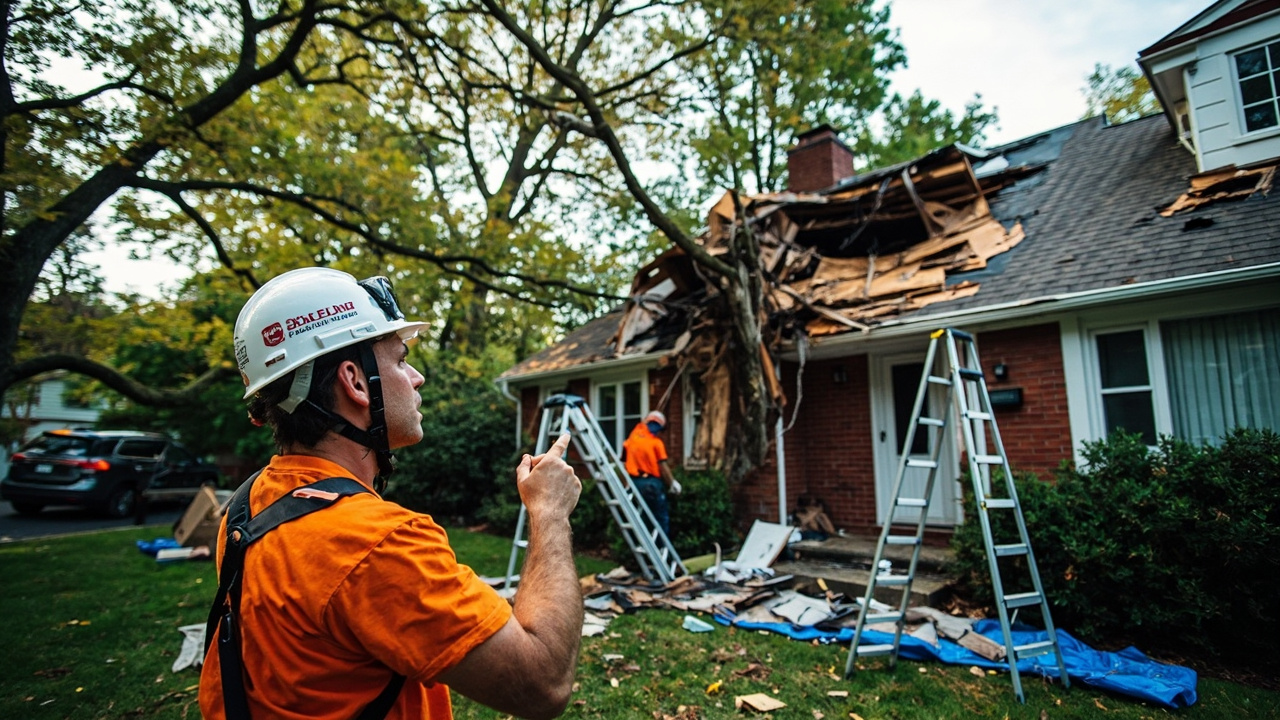
When a tree crashes through your roof, you need immediate emergency tree damage roof repair and structural restoration. Silverline Roofing Boston dispatches certified crews within hours to secure your property and prevent further damage.

Slider Image 1
Slider Image 2
Slider Image 3
Slider Image 4
Slider Image 5
Slider Image 7
Slider Image 8
Slider Image 9
Slider Image 10
Slider Image 11

A Fallen Tree Just Crushed Your Roof. Now What?

You heard the crack. Maybe you were inside when the Nor'easter hit, or you came home to find a massive oak sprawled across your roof deck. In Boston, where mature trees line streets from Beacon Hill to Jamaica Plain and winter storms bring heavy snow loads and high winds off the harbor, tree impact roofing emergencies happen fast.

A tree crushing your roof creates multiple urgent problems. Water pours through the breach. Structural members like rafters and ridge beams may be cracked or severed. Insulation gets soaked. The roof deck splinters. If the tree penetrated into living space, you face electrical hazards and immediate habitability issues. Every hour you wait, water spreads deeper into wall cavities and ceiling joists.

Boston's freeze-thaw cycles make this worse. Water that infiltrates today freezes tonight when temperatures drop, expanding and cracking framing lumber. Then it thaws tomorrow, spreading further. The damage compounds exponentially.

You need emergency roof restoration tree damage services now. Not next week. Not when the adjuster shows up. Right now, while you can still contain the destruction and protect what remains intact. Fallen tree structural roof repair starts with immediate triage, emergency tarping to stop water intrusion, and temporary bracing to prevent collapse. Then comes the systematic work of removing the tree safely, assessing hidden structural damage, and rebuilding the compromised sections to code.

This is not a handyman job. This is structural carpentry, advanced flashing work, and load-bearing calculations. You need a licensed roofing contractor who understands how to repair roof crushed by tree damage without creating secondary failures.

A Fallen Tree Just Crushed Your Roof. Now What?
How We Stabilize and Restore Tree-Damaged Roofs

How We Stabilize and Restore Tree-Damaged Roofs

Silverline Roofing Boston approaches tree impact roofing services with a damage control mindset first, restoration second. Our emergency crews arrive with tarps, temporary bracing lumber, generators, and safety equipment to immediately secure the breach and prevent further water infiltration.

We do not touch the tree until we assess the load it is placing on the structure. A tree resting on compromised rafters can shift during removal and cause catastrophic collapse. We install temporary shoring underneath damaged sections, then coordinate with certified arborists to section and remove the tree safely without overloading weakened framing.

Once the tree is clear, we document everything for your insurance claim. We photograph fractured rafters, crushed decking, torn underlayment, and damaged flashing. We measure the impact zone and identify every compromised structural element. This documentation protects you during the claims process.

Next comes structural assessment. We inspect ridge beams, ceiling joists, collar ties, and load-bearing walls for hidden damage. A tree impact transmits force through the entire roof assembly. What looks like isolated damage on the surface often reveals cracked framing members three feet away. We use moisture meters to find water intrusion paths and thermal imaging to identify compromised insulation.

Repairs follow Massachusetts building code to the letter. We sister new rafters alongside damaged ones, replace crushed decking with proper-thickness plywood or OSB, install ice and water shield in vulnerable valleys, and integrate new flashing with existing roof planes. If the impact damaged your chimney flashing or skylight curbs, we rebuild those assemblies completely. Patchwork fails in Boston winters. We restore structural integrity and weatherproofing as if we were building new.

What Happens When You Call for Emergency Tree Damage Repair

Emergency Tree Impact & Structural Repair in Boston – 24/7 Response Teams Standing By
01

Immediate Site Stabilization

Our crew arrives within hours to tarp the breach, stop active water intrusion, and install temporary bracing under compromised roof framing. We secure the scene to prevent further collapse, document conditions with photos for your insurer, and assess whether the tree can be safely removed or requires specialized rigging. This emergency response happens day or night, regardless of weather, because every hour of exposure increases your total damage cost.
02

Structural Damage Assessment

03

Code-Compliant Structural Restoration

We rebuild damaged roof sections to current Massachusetts building standards. Fractured rafters get sistered with new lumber. Crushed decking is replaced with proper-thickness sheathing. We install new underlayment, flashing, and shingles that integrate seamlessly with your existing roof. Load-bearing elements are restored to original capacity or better. The result is a structurally sound roof that will outlast the trauma and protect your home through the next Boston winter storm cycle.

Why Boston Property Owners Trust Silverline Roofing for Tree Impact Emergencies

When a tree crushes your roof, you cannot afford to wait for a contractor who treats it like a routine repair. You need a team that understands the urgency, has the structural expertise to assess hidden damage, and maintains the crew capacity to respond immediately.

Silverline Roofing Boston operates 24/7 emergency response teams specifically for tree damage and storm impact scenarios. We keep tarps, bracing lumber, and safety equipment staged and ready. When you call our emergency line, you reach a dispatcher who can mobilize a crew within hours, not days.

Our crews know Boston's building stock. We have restored tree-damaged roofs on century-old Victorians in Dorchester, split-level colonials in West Roxbury, and triple-deckers in Allston. We understand how older roof framing systems respond to impact loads and where hidden damage typically occurs in different construction eras. This local experience means we catch problems other contractors miss.

We also understand Massachusetts building codes and the permit requirements for structural repairs. When tree damage compromises load-bearing members, repairs require permits and inspections. We handle that process, coordinate with city building departments, and ensure every repair meets code so your insurance claim stays clean and your home stays protected.

You will work directly with experienced project managers who have handled dozens of tree impact restorations. They know how to document damage for insurers, how to communicate with adjusters, and how to keep your claim moving forward while we secure and repair your property. We do not disappear after tarping your roof. We stay engaged through the entire restoration process until your home is weather-tight and structurally sound again.

What to Expect During Tree Damage Roof Restoration

Emergency Response Time

We dispatch emergency crews within hours of your call, day or night. Initial stabilization happens immediately. We tarp the breach, stop water intrusion, and install temporary bracing to prevent collapse. This emergency response protects your property while we coordinate tree removal and plan the full restoration. Our crews work through weekends and storms because every hour of exposure increases damage. You get a real human on the phone when you call our emergency line, not a voicemail system. That person mobilizes a crew and gives you an accurate arrival time.

Comprehensive Structural Inspection

After we stabilize the site and remove the tree, our project manager conducts a full structural assessment. We document every compromised rafter, cracked ridge beam, crushed section of decking, and water-damaged cavity. We use moisture meters to trace infiltration and thermal imaging to find compromised insulation. You receive a detailed inspection report with photos and measurements for your insurance adjuster. This documentation protects you during the claims process and ensures nothing gets missed during restoration. We explain findings in plain language so you understand exactly what failed and why.

Structural Integrity Restoration

Our crews rebuild damaged roof sections to meet or exceed original structural capacity. Fractured rafters get sistered with new dimensional lumber. Crushed decking is replaced with code-compliant sheathing. We install new underlayment, flashing, and shingles that match your existing roof and integrate seamlessly with undamaged sections. Load-bearing repairs meet Massachusetts building code requirements. We pull necessary permits and coordinate inspections. The finished repair is structurally sound, weather-tight, and built to handle the next winter storm cycle without compromise. You get a roof that protects your home as if the tree never fell.

Post-Repair Documentation and Support

After restoration is complete, you receive full documentation of all repairs, including photos of structural work before we close up roof cavities, materials specifications, and permit sign-off records. This documentation protects your home value and gives future buyers confidence in the repair quality. We also provide guidance on monitoring the repaired section for the first year. While properly executed structural repairs should perform flawlessly, we stay available if you have questions or concerns. Our project managers provide direct contact information and remain your point of contact for any follow-up needs.

Frequently Asked Questions

You Have Questions,
We Have Answers

Will insurance pay for tree removal after a storm? +

Most homeowners policies in Boston cover tree removal if the tree damages a covered structure like your roof, garage, or fence. Insurance typically pays to remove the tree from the structure and repair the damage. However, if a tree falls in your yard without hitting anything, you pay out of pocket. Check your policy limits. Some carriers cap tree removal at $500 to $1,000 per tree. After a nor'easter or hurricane, document everything immediately with photos. Call your insurer within 24 hours to file a claim and get emergency tarping done fast to prevent secondary water damage.

Can structural damage be repaired? +

Yes. Structural damage from tree impact can be repaired by licensed contractors who understand load-bearing systems. In Boston, older homes with timber framing require careful assessment. Repairs may include replacing damaged rafters, studs, joists, or load-bearing walls. Foundation cracks from root pressure or impact need immediate attention to prevent shifting. A structural engineer should inspect severe damage before repairs begin. Quality repairs restore your home's integrity and meet Massachusetts building codes. Do not delay. Water infiltration through compromised structures causes mold and rot within days. Emergency stabilization prevents collapse and protects occupants until permanent repairs finish.

Who is responsible for damage caused by a fallen tree? +

Liability depends on tree ownership and negligence. In Massachusetts, you own damage from your tree if it was healthy and fell naturally. Your insurance covers your property. However, if your neighbor's dead or diseased tree falls on your home, they may be liable if they ignored warnings to remove it. Prove negligence by showing prior complaints or visible decay. Boundary trees shared between properties split responsibility. After storms, determining fault gets complex. Document the tree's condition and origin immediately. If your tree damages a neighbor's property, your homeowner's liability coverage typically responds. Consult an attorney for disputed claims.

What is the cheapest time of year for tree removal? +

Late winter to early spring offers the lowest rates in Boston. February through April sees less demand before storm season ramps up. Arborists charge less during slow periods and can schedule you faster. Avoid peak seasons like fall when leaf cleanup drives prices up or summer when everyone wants work done. After major storms, emergency rates spike dramatically due to high demand and dangerous conditions. Plan non-emergency removals during off-peak months to save money. Get multiple quotes in January or February when crews need work. Frozen ground can complicate access but most services adjust pricing accordingly.

How much does homeowners insurance cover for tree removal? +

Coverage varies by policy but most Boston homeowners see limits between $500 and $5,000 per tree, capped at $10,000 total per storm event. Your policy only pays for removal if the tree damages a covered structure. Preventive removal of hazardous trees before they fall is your expense. Review your declarations page for specific limits. Some carriers offer endorsements to increase tree removal coverage for an additional premium. After damage occurs, insurers pay reasonable costs to remove the tree from structures and haul debris. They will not cover stump grinding or landscaping restoration unless specifically endorsed.

What are three things that are not covered by homeowners insurance? +

Homeowners insurance in Massachusetts excludes flood damage, earthquake damage, and normal wear and tear. If water enters through your roof because you neglected maintenance, expect a denial. Policies also exclude damage from pests like termites, rodents, or carpenter ants. Sewer backups require separate endorsements. Mold resulting from long-term neglect gets denied. If a tree falls from rot you ignored for years, insurers may deny the claim citing lack of maintenance. Read your exclusions page carefully. Understand that insurance covers sudden, accidental losses but not gradual deterioration or preventable damage you ignored.

How much does it cost to fix a structural issue? +

Structural repairs in Boston range widely based on damage severity. Minor fixes like replacing a few damaged studs or rafters cost less than major work involving foundation repairs or load-bearing wall replacement. Expect higher costs for homes in Historic Districts where matching materials and permits add expense. Emergency stabilization and tarping happen first to prevent further damage. Get multiple estimates from licensed contractors. Engineers charge separately for inspection reports required by the city. Factor in permit fees and potential code upgrades if older systems need updating. Insurance adjusters calculate repair costs but you control contractor selection.

Will my homeowners insurance cover structural damage? +

Homeowners insurance covers structural damage if caused by a covered peril like falling trees, wind, fire, or vehicle impact. Policies exclude damage from floods, earthquakes, and neglected maintenance. In Boston, sudden tree impact from storms qualifies as a covered event. Your insurer pays to repair damaged framing, roofing systems, and foundations up to policy limits after you meet your deductible. However, if an adjuster finds pre-existing rot or deferred maintenance contributed to failure, expect partial denial. Document the damage immediately with photos showing the cause. Submit claims fast to avoid disputes over timelines.

What qualifies as structural damage? +

Structural damage affects load-bearing components that support your home. This includes foundation cracks, damaged floor joists, broken rafters, compromised load-bearing walls, or shifted beams. In Boston, tree impact often damages roof decking, ridge beams, and exterior wall framing. Cosmetic issues like drywall cracks or trim damage are not structural unless underlying framing is compromised. Signs include sagging ceilings, sloping floors, doors that will not close, or visible cracks in foundations. A structural engineer determines severity and required repairs. Never ignore warning signs. Small problems escalate into catastrophic failures if left unaddressed in harsh New England weather.

What is considered an act of God when a tree falls? +

An act of God refers to natural events beyond human control, like lightning strikes, hurricanes, tornadoes, or ice storms. In Massachusetts, this legal term affects liability when healthy trees fall during severe weather. If your tree was maintained properly and falls during a nor'easter, you are generally not liable for damage to a neighbor's property. However, the act of God defense fails if you neglected a visibly diseased or dead tree. Courts consider whether a reasonable person would have removed the hazard. Insurance policies use this language to define covered perils versus excluded events like floods or earthquakes.

Why Boston's Urban Tree Canopy and Storm Patterns Make Tree Impact Roof Damage a Serious Threat

Boston ranks among the most tree-dense urban areas in the Northeast, with mature oaks, maples, and elms lining residential streets throughout neighborhoods like Jamaica Plain, Roslindale, and West Roxbury. These trees provide shade and beauty but create serious roof risk during Nor'easters, hurricane remnants, and heavy snow events. When wind gusts exceed 50 mph or snow accumulates on branches faster than it can shed, large limbs and entire trees fail. Combine that with Boston's aging housing stock, where many homes were built before modern wind load standards, and you have roofs particularly vulnerable to catastrophic tree impact damage. The risk is highest from November through March when storms intensify and freeze-thaw cycles weaken tree structure.

Massachusetts building codes require specific structural standards for roof repairs involving load-bearing members, and Boston's Inspectional Services Department enforces those requirements strictly. When tree damage compromises rafters, ridge beams, or roof decking, repairs require permits and inspections to ensure structural integrity. Silverline Roofing Boston maintains strong working relationships with local building inspectors and understands exactly what documentation and repair methods pass inspection on the first attempt. This local knowledge keeps your project moving forward without delays and ensures repairs meet code so your insurance claim stays clean and your home retains its value.

Roofing Services in The Boston Area

We are proud to be a locally rooted business serving the entire Greater Boston area, from the North End to the South Shore, and all surrounding communities. Our centrally located office ensures we can rapidly deploy our expert crews for everything from routine repairs in Cambridge to full installations in Quincy. Use the interactive map below to see our main location and confirm that your property is within our primary service area. We look forward to connecting with you soon for your next reliable roofing project!

Address:
Silverline Roofing Boston, 100 Cambridge St, Boston, MA, 02114

Additional Services We Offer

Our news updates

Latest Articles & News from The Blogs

Why Your Large Chimney in Concord Needs a Roof Cricket to Prevent Water Pooling If you own a home in…

Why your large chimney in Concord needs a roof cricket to prevent water pooling

Why Your Large Chimney in Concord Needs a Roof Cricket to Prevent Water Pooling If you own a home in…

Navigating the strict historic roofing requirements for homes in Salem

Navigating the strict historic roofing requirements for homes in Salem Salem’s historic districts enforce some of Massachusetts’ most rigorous preservation…

Why you might have roof leaks on sunny winter days in your Stoneham attic

Why you might have roof leaks on sunny winter days in your Stoneham attic \n\n Stoneham homeowners often report water…

Contact Us

Your roof is compromised and water is getting in. Call Silverline Roofing Boston now at (857) 387-1711 for immediate emergency response. Our crews are standing by 24/7 to stabilize your property and begin structural repairs.