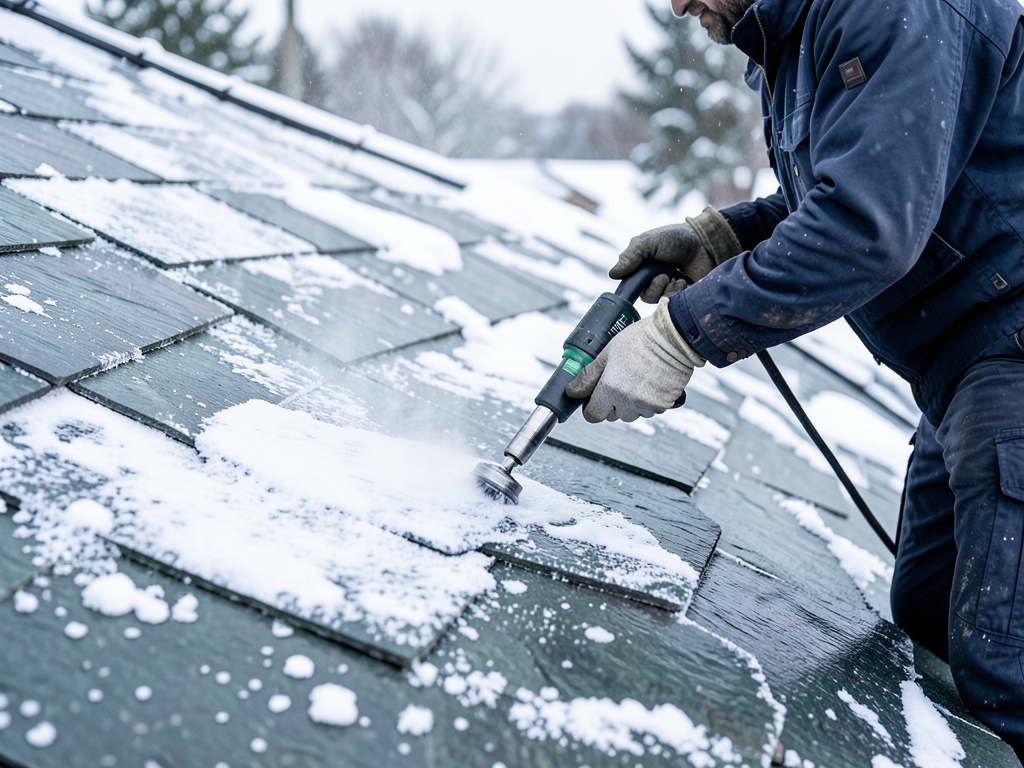








Boston averages 12 freeze-thaw cycles per winter. Temperatures swing from below freezing overnight to above 40 degrees by afternoon. This pattern turns inadequate roof ventilation into a structural threat. When heated attic air warms your roof deck above 32 degrees while outdoor temps stay below freezing, snow melts. That water hits your cold eaves and refreezes into ice dams that back up under shingles. Neighborhoods along the Charles River and in low-lying areas near Boston Harbor face additional moisture from morning fog. Proper attic exhaust systems maintain consistent deck temperatures that prevent differential melting. Ridge vents and balanced soffit intake keep your roof deck at ambient temperature, eliminating the heat source that creates ice dams.
Massachusetts amended its building code in 2015 to require specific ventilation ratios. Many Boston properties built before that date do not meet current standards. Local building inspectors now verify ventilation during renovation permits and occupancy transfers. Properties in historic districts face additional scrutiny from the Boston Landmarks Commission. We maintain current knowledge of both state code and local amendments. Our installations satisfy inspection requirements without triggering expensive re-work. We understand which Boston neighborhoods have unique architectural features affecting ventilation design. Our familiarity with triple-deckers, Victorian mansards, and colonial gambrels ensures your roof venting systems work with your home's specific design rather than against it.