




menu

Built-Up Roofing in Boston | Industrial-Grade Multi-Ply Systems That Minimize Operational Downtime

Ironwood Roofing Miami delivers asphalt built-up roofing installations engineered for Boston's commercial properties, reducing business interruption through staged deployment and pre-fabricated membrane assemblies that keep your operations running.

Slider Image 1
Slider Image 2
Slider Image 3
Slider Image 4
Slider Image 5
Slider Image 7
Slider Image 8
Slider Image 9
Slider Image 10
Slider Image 11

Why Boston's Freeze-Thaw Cycles Demand Redundant Waterproofing Layers

Boston endures 40 to 50 freeze-thaw cycles annually. Water penetrates roofing substrate during thaw periods, then expands 9% when temperatures drop below 32 degrees. This expansion stress fractures single-ply membranes and causes substrate delamination. Your facility loses thermal efficiency, interior assets face water damage, and unplanned roof repairs force production shutdowns.

BUR roofing systems solve this through redundancy. Commercial built-up roofs stack three to five alternating layers of asphalt-saturated felt and hot-mopped bitumen. Each ply functions as an independent waterproofing barrier. If one layer develops a stress fracture from freeze-thaw movement, the underlying plies maintain weathertight integrity. This redundancy matters for Boston warehouses, manufacturing facilities, and distribution centers where a single leak event can contaminate inventory or halt production lines.

Boston's coastal humidity compounds the problem. Moisture vapor migrates through roofing assemblies during heating seasons, condensing on cold roof decks. Multi-ply roofing systems control this through interlaminar bonding. Hot-mopped asphalt creates monolithic adhesion between felt layers, eliminating air gaps where condensation forms. Tar and gravel roofing adds a final ballast layer that stabilizes membrane temperature, reducing thermal cycling stress that accelerates material fatigue.

Your commercial property requires a roofing solution engineered for cyclical thermal stress, not just waterproofing. Built-up roofing delivers that through proven material science and field-tested redundancy.

Why Boston's Freeze-Thaw Cycles Demand Redundant Waterproofing Layers
How We Deploy Multi-Ply Systems Without Disrupting Your Operations

How We Deploy Multi-Ply Systems Without Disrupting Your Operations

Commercial roof replacement creates operational risk. Open roof decks expose interior spaces to weather. Hot asphalt kettles present fire code compliance issues. Crew activity generates noise that disrupts office environments. We mitigate these risks through phased deployment protocols specific to occupied facilities.

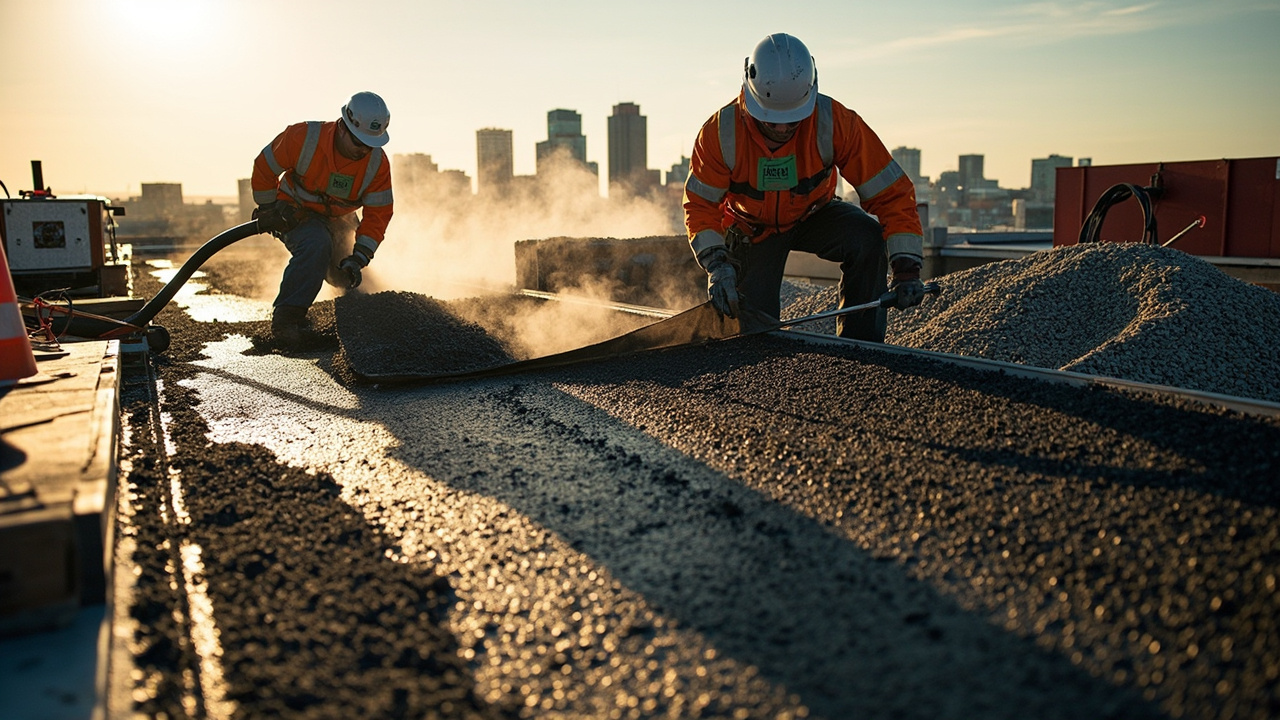
We section your roof into isolated work zones using temporary weathertight barriers. Crew access routes avoid high-traffic areas and loading docks. We schedule hot-mopping operations during non-business hours when building occupancy drops. Each work zone progresses from tear-off to final gravel surfacing within 48 to 72 hours, minimizing exposure duration. Adjacent zones remain weathertight and operational throughout the project cycle.

Our kettle operators maintain asphalt temperature between 400 and 475 degrees Fahrenheit. This range ensures proper viscosity for interlaminar adhesion without generating excessive fumes that trigger air quality complaints. We use low-fuming Type III or Type IV asphalt formulations that meet VOC restrictions in Boston's commercial districts. Fume extraction fans create negative pressure at application points, directing vapors away from HVAC intakes and occupied spaces.

Felt layer installation follows strict shingling protocols. Each ply overlaps the previous layer by 19 inches on a 36-inch roll width, creating a two-ply membrane thickness across 95% of the roof surface. Side laps receive 6-inch overlaps with hot asphalt flood coating. This redundancy eliminates single-point failure modes common in mechanically attached systems.

We verify interlaminar bond strength through pull tests before applying subsequent layers. Delaminated sections get re-mopped to specification. The final gravel surfacing layer uses 400 pounds per square of smooth river stone embedded in a flood coat, protecting the membrane from UV degradation and physical damage.

What Happens During Your Commercial BUR Installation

Built-Up Roofing in Boston | Industrial-Grade Multi-Ply Systems That Minimize Operational Downtime
01

Facility Protection Setup

We establish equipment staging zones away from loading docks and pedestrian entries. Fire-rated tarps cover roof penetrations. HVAC intake locations receive temporary filtration barriers. Asphalt kettle placement meets NFPA 241 hot work clearances from combustible walls. We coordinate crew schedules with your facility manager to avoid conflicts with shift changes, deliveries, or production deadlines that require uninterrupted building access.
02

Substrate Preparation and Priming

Existing membrane removal exposes the structural deck. We identify soft spots indicating deck rot or fastener corrosion. Damaged sections receive structural sheathing replacement before proceeding. The deck surface gets swept clean of debris and moisture-tested using calcium chloride kits. Primer application occurs only after substrate moisture content drops below 14%. This prevents trapped moisture from causing blister formation between asphalt plies during service life.
03

Multi-Ply Installation and Ballasting

Base sheet installation establishes the first waterproofing layer. Subsequent felt plies follow in shingled progression with hot asphalt mopping between each layer. Final ply receives a heavy flood coat before gravel embedment. Edge metal and flashing details get sealed with trowel-grade mastic. We photograph completed sections for documentation, then restore work zones to operational status. Your facility maintains continuous weather protection while gaining a roof system engineered for 20-plus year service life.

Why Boston Commercial Properties Trust Local BUR Expertise

Boston's building stock includes structures dating to the early 1900s. These properties feature timber roof decks, masonry parapets, and unconventional framing that complicate modern roofing installations. Generic roofing contractors unfamiliar with historic construction methods create liability exposure through improper attachment techniques or incompatible material selections.

We understand how Boston's older commercial buildings behave. Timber decks require specific fastener spacing to avoid splitting. Masonry parapets need reglet flashing details that accommodate differential thermal movement between brick and roofing membrane. Buildings in the Fort Point Channel area or near Boston Harbor face salt spray exposure that accelerates metal corrosion. We specify hot-dipped galvanized or stainless steel fasteners and edge metals for these environments.

Massachusetts Chapter 34 of the State Sanitary Code mandates specific roof slope requirements for occupied structures. Built-up roofing installations must achieve positive drainage to roof drains and scuppers. We perform laser-grade surveys before tapered insulation layout, ensuring compliance with code-mandated quarter-inch per foot minimum slope. This prevents ponding water that voids manufacturer specifications and creates premature membrane failure.

Your commercial property represents significant capital investment. Roof system failure triggers cascading costs: emergency repairs, interior restoration, inventory loss, business interruption, and potential liability claims from tenant lease violations. These costs dwarf the price difference between a properly engineered BUR system and a budget installation that fails within five years.

Ironwood Roofing Miami brings commercial roofing expertise to Boston properties that demand reliable performance. We understand local building requirements, climate-specific material selection, and the operational constraints of occupied facilities. Your project gets executed correctly the first time.

What Your Commercial BUR Project Includes

Project Timeline and Staging

Typical commercial BUR installations progress at 30 to 40 squares per day depending on roof complexity and weather conditions. A 200-square roof requires five to seven working days from mobilization to final cleanup. We provide detailed phase schedules before starting work, identifying which building sections remain operational during each construction phase. Weather delays trigger automatic schedule updates sent to your facilities manager. You receive 48-hour advance notice before hot work operations begin in new roof zones.

Pre-Installation Assessment Process

Our commercial roof evaluation includes core sampling to verify deck condition and existing insulation type. We perform infrared thermography scans to map wet insulation areas that require removal. Parapet and flashing conditions get documented through photographs with annotated repair recommendations. You receive a written scope of work detailing substrate repairs, insulation replacement quantities, and ply system specifications. This assessment eliminates change orders caused by hidden conditions discovered mid-project. Your budget remains fixed from contract signing through final inspection.

Completed System Performance

A properly installed built-up roof delivers 20 to 30 years of service life in Boston's climate. The multi-ply construction resists puncture damage from rooftop equipment maintenance and HVAC service activity. Gravel surfacing reflects solar radiation, reducing cooling loads during summer months. The monolithic asphalt layers create superior wind uplift resistance compared to mechanically attached systems. Your building gains a roof assembly engineered to withstand New England nor'easters, freeze-thaw cycling, and the thermal stress of 100-degree temperature swings between summer and winter extremes.

Post-Installation Support

We provide detailed roof care guidelines specific to BUR systems, including recommended inspection frequency and gravel redistribution protocols. Semi-annual inspections identify minor issues before they escalate into leak events. Flashing joints and penetration seals receive condition assessments with photographic documentation. We maintain project records including as-built drawings, material certifications, and installation photos. These records prove valuable during property sales, refinancing evaluations, or insurance underwriting reviews. Your facility management team gains a reliable roofing partner for the asset's operational lifespan.

Frequently Asked Questions

You Have Questions,
We Have Answers

What does built-up roofing mean? +

Built-up roofing is a multi-layer flat or low-slope roofing system consisting of alternating layers of bitumen and reinforcing fabrics. Contractors install multiple plies of roofing felt, impregnate each layer with hot asphalt or coal tar, and finish with a protective top layer of gravel or mineral cap sheet. This creates a redundant waterproofing membrane. Commercial buildings across Boston rely on built-up roofs for durability and proven performance. The system handles ponding water better than single-ply alternatives, which matters in areas with heavy snowmelt and spring rainfall. Each layer adds leak protection.

What is another name for built up roofing? +

Built-up roofing goes by several names in the commercial roofing industry. You will hear it called BUR, tar and gravel roofing, or asphalt built-up roofing. Some contractors refer to it as a conventional built-up roof system or hot-mopped roofing, referencing the installation method where crews apply hot bitumen between fabric layers. In Boston's commercial districts, property managers often call it gravel roofing because of the visible aggregate surfacing. All these terms describe the same multi-ply bituminous system that has protected flat and low-slope commercial buildings for over a century.

How long does built-up roofing last? +

A properly installed built-up roof lasts 20 to 30 years on commercial buildings. Longevity depends on several factors including the number of plies, quality of materials, installation workmanship, and maintenance schedule. Boston's freeze-thaw cycles and intense UV exposure during summer months affect lifespan. Buildings with regular inspections and minor repairs often exceed 25 years. The gravel surfacing protects underlying layers from weather damage and foot traffic. Poor drainage shortens service life because standing water accelerates deterioration. Three-ply systems typically outlast two-ply installations. Climate exposure and building use also impact durability.

What is a typical built up roof assembly? +

A typical built-up roof assembly starts with structural decking, followed by a base sheet mechanically fastened or adhered to the deck. Contractors then apply alternating layers of bitumen and reinforcing plies. A standard three-ply system includes three layers of roofing felt saturated with hot asphalt. The final layer is a flood coat of bitumen topped with gravel aggregate or mineral cap sheet. Some assemblies include insulation boards between the deck and base sheet. Boston installations often incorporate vapor retarders because of humidity fluctuations. Edge flashings, penetration details, and drainage components complete the system.

What does built-up roofing look like? +

Built-up roofing appears as a flat surface covered with gravel or smooth mineral cap sheet. The gravel version shows gray or tan aggregate embedded in black bitumen, creating a textured appearance. You will see the stones shift slightly underfoot when walking the roof. Smooth-surface built-up roofs feature a granule-covered cap sheet in colors ranging from white to gray. Both types display characteristic edge flashings at parapets and roof edges. Over time, the surface may show slight ponding areas or minor gravel displacement. The flat profile suits commercial buildings throughout Boston's business districts.

Can you repair a built-up roof? +

Yes, you can repair a built-up roof cost-effectively when damage is localized. Contractors cut out damaged sections, remove compromised plies down to sound material, and install new layers matching the existing assembly. Common repairs address blisters, splits, membrane punctures, and flashing failures. Hot asphalt bonds new plies to existing ones, restoring waterproofing integrity. Boston commercial properties benefit from timely repairs because minor issues quickly worsen during freeze-thaw cycles. Extensive damage across large areas may warrant replacement instead of patching. Regular inspections identify small problems before they compromise the building interior or require emergency intervention.

How Boston's High Wind Events and Coastal Exposure Impact Commercial Roof Selection

Boston experiences sustained winds exceeding 40 mph during coastal storm events, with gusts reaching 60 mph during nor'easters. These wind loads create uplift pressure on roof assemblies, particularly at building corners and edges where turbulence intensifies. Single-ply membranes rely on mechanical fasteners or adhesive bonds that can fail under cyclical wind stress. Built-up roofing creates continuous adhesion across the entire roof surface through hot-mopped asphalt layers. The final gravel ballast adds 20 to 25 pounds per square foot of dead load, resisting uplift forces without relying on fastener pull-through strength. Properties near Boston Harbor or along the Charles River waterfront face higher wind exposure than inland locations. BUR systems deliver proven performance in these high-stress environments.

Boston's commercial building codes require roof assemblies to meet Factory Mutual wind uplift classifications appropriate to building height and exposure category. Built-up roofing achieves FM Class 1-90 or 1-120 ratings through proper aggregate surfacing and edge securement details. Local building inspectors understand BUR construction methods and can verify compliant installation through visual inspection of ply overlaps and flood coat coverage. This familiarity streamlines permit approval and final inspection processes. Choosing a roofing system with established code compliance history reduces project risk and eliminates re-work delays caused by inspector rejections of unfamiliar installation methods.

Roofing Services in The Boston Area

We are proud to be a locally rooted business serving the entire Greater Boston area, from the North End to the South Shore, and all surrounding communities. Our centrally located office ensures we can rapidly deploy our expert crews for everything from routine repairs in Cambridge to full installations in Quincy. Use the interactive map below to see our main location and confirm that your property is within our primary service area. We look forward to connecting with you soon for your next reliable roofing project!

Address:
Silverline Roofing Boston, 100 Cambridge St, Boston, MA, 02114

Additional Services We Offer

Our news updates

Latest Articles & News from The Blogs

Why Your Large Chimney in Concord Needs a Roof Cricket to Prevent Water Pooling If you own a home in…

Why your large chimney in Concord needs a roof cricket to prevent water pooling

Why Your Large Chimney in Concord Needs a Roof Cricket to Prevent Water Pooling If you own a home in…

Navigating the strict historic roofing requirements for homes in Salem

Navigating the strict historic roofing requirements for homes in Salem Salem’s historic districts enforce some of Massachusetts’ most rigorous preservation…

Why you might have roof leaks on sunny winter days in your Stoneham attic

Why you might have roof leaks on sunny winter days in your Stoneham attic \n\n Stoneham homeowners often report water…

Contact Us

Your facility requires a roof system engineered for reliability, not experiments with unproven technology. Call Ironwood Roofing Miami at (857) 387-1711 for a detailed commercial roof assessment. We deliver built-up roofing solutions that keep your operations running.