
The Hidden Dangers of Overhanging Tree Branches for Your Roof in Leafy Waltham Neighborhoods
Overhanging tree branches create a constant threat to your roof in Waltham’s mature neighborhoods. These branches cause damage through abrasion, debris buildup, and storm breakage. Waltham’s combination of mature oaks, maples, and harsh New England weather creates a perfect storm for roof deterioration. Understanding these risks helps you protect your home before costly repairs become necessary. EPA Ice Dam Prevention Guidelines.
Common Signs of Tree Damage to Your Roof (Visible and Hidden)
Tree damage to roofs shows itself in several ways. Some damage appears immediately while other problems develop slowly over years. Learning to recognize these signs helps you catch problems early.
Surface Damage Indicators
Missing or cracked shingles near tree lines indicate branch impact. Look for areas where granules have worn away leaving bare asphalt exposed. This granule loss accelerates shingle deterioration. Dark streaks or stains on shingles suggest organic debris is holding moisture against the roof surface.
Hidden Structural Damage
Roof decking feels soft or spongy when pressed in areas with long-term moisture exposure. This indicates rot has begun. Water stains on attic ceilings or walls near roof edges suggest leaks from compromised flashing or decking. Check for sagging roof sections which indicate structural weakening.
Debris Accumulation Patterns
Excessive moss or algae growth on shaded roof areas shows poor drying conditions. Clogged gutters with compacted leaves and twigs indicate branches are depositing debris faster than normal rainfall can wash it away. This debris creates dams that force water under shingles. The Best Way to Keep Gutters Clog-Free in Wooded West Roxbury Neighborhoods.
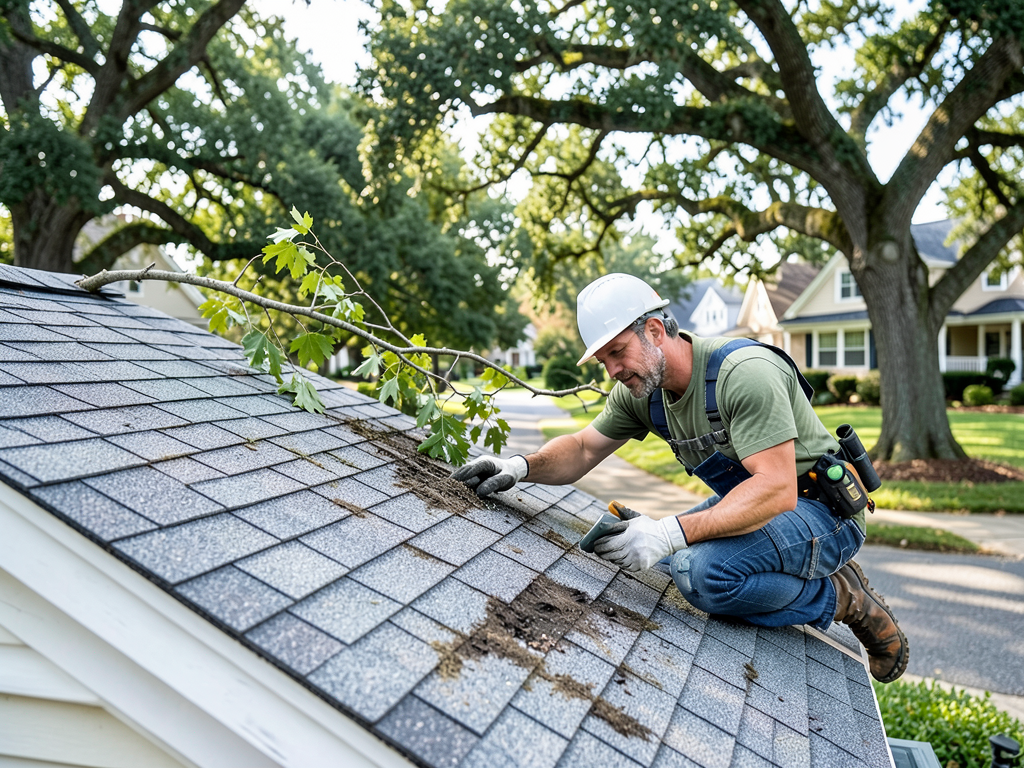
Image showing common tree damage patterns on asphalt shingles including granule loss, impact cracks, and moss growth in shaded areas.
Immediate Steps: What to Do When a Large Branch Hits Your Home
When a large branch impacts your roof, quick action prevents further damage. Follow these steps immediately after impact occurs.
Safety Assessment
Check for downed power lines before approaching the damaged area. Look for gas leaks by smelling for sulfur odors near the impact zone. Listen for creaking sounds that indicate unstable branches overhead. Do not enter the attic if you hear cracking or see daylight through the roof.
Damage Containment
Place buckets under active leaks to catch water. Move valuable items away from affected areas. Cover furniture with plastic sheeting. Turn off HVAC systems to prevent spreading debris through ductwork. Document damage with photos before making temporary repairs. 24/7 Emergency Roof Repair.
Emergency Protection
Cover exposed areas with heavy-duty tarps secured with 2×4 boards. Extend tarps at least three feet beyond damaged areas on all sides. Use multiple layers for added protection. Secure edges with roofing nails or screws to prevent wind lift. Why Metal Roofing is Becoming a Top Choice for Coastal East Boston Homes.
- Safety Preparation
Wear gloves and safety glasses. Use a sturdy ladder on level ground. Have a helper stabilize the ladder.
- Area Assessment
Identify all damaged sections. Check for hidden damage in valleys and around chimneys.
- Tarp Selection
Choose UV-resistant tarps at least 10 mil thick. Ensure tarps extend beyond damage by 36 inches minimum.
- Secure Installation
Start at the peak and work down. Overlap tarps by 12 inches. Secure with boards and nails every 12 inches.
The Boston Weather Factor: Nor’easters and Falling Limbs
Waltham experiences unique weather patterns that increase tree-related roof damage. Understanding these patterns helps you prepare for seasonal threats.
Nor’easter Impact Analysis
Nor’easters bring sustained winds of 40-60 mph to Waltham. These winds create uplift forces that stress overhanging branches. The combination of wet snow and wind increases branch failure rates by 300% compared to dry conditions. Waltham’s elevation changes create wind tunnels that amplify these effects.
Freeze-Thaw Cycles
Massachusetts building code 780 CMR requires ice barriers extending 24 inches inside exterior wall lines. This protects against ice damming caused by freeze-thaw cycles. Waltham’s temperature fluctuations cause water to expand in small roof cracks. This expansion widens cracks over time, especially where debris holds moisture against shingles. Massachusetts State Building Code 780 CMR.
Species-Specific Vulnerabilities
Red oaks common in Waltham have dense wood that becomes brittle with age. These trees shed limbs when stressed by ice loading. Sugar maples have shallow root systems that make them prone to uprooting in saturated soil. White pines drop needles that create acidic conditions on roof surfaces.
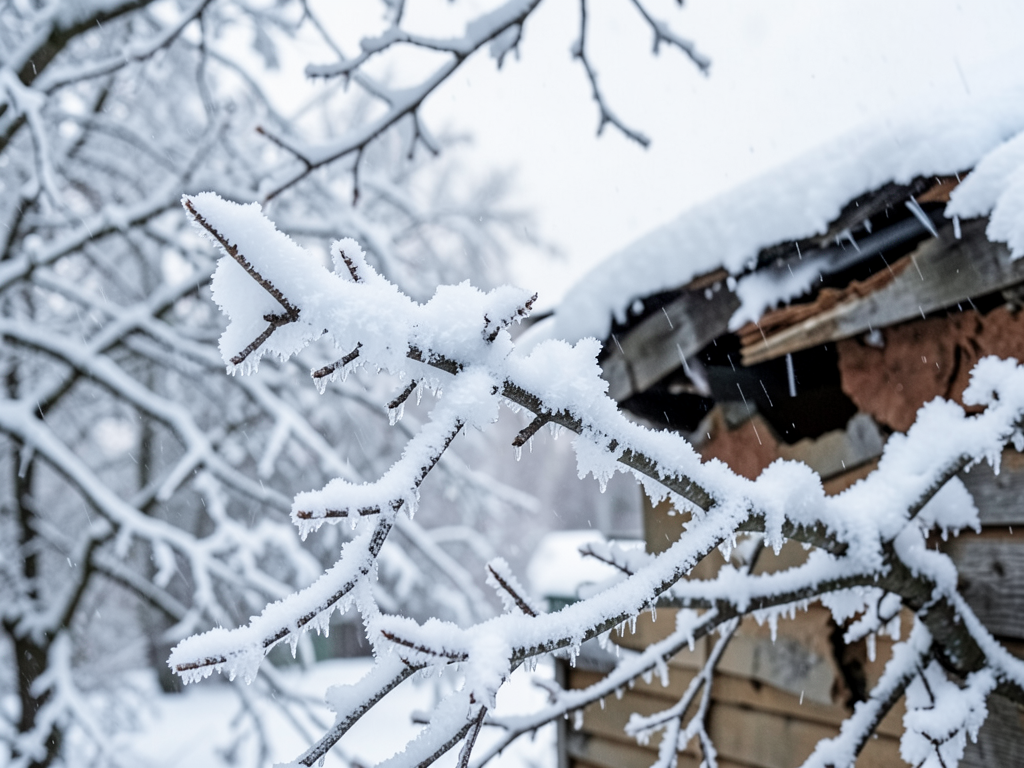
Photo showing ice accumulation on overhanging branches during a Waltham winter storm, demonstrating the weight that causes limb failure.
How to File a Roof Damage Insurance Claim in Massachusetts
Massachusetts insurance law requires specific documentation for tree damage claims. Following proper procedures increases your chances of approval.
Immediate Documentation
Take date-stamped photos of all damage from multiple angles. Include close-ups of specific damage types. Document the fallen branch location relative to property lines. Keep receipts for emergency repairs like tarping. Create a damage log with dates and descriptions of all observations.
Insurance Communication
Notify your insurance company within 24 hours of discovering damage. Provide your policy number and claim details. Request a claim number for tracking. Ask about Massachusetts-specific requirements like ice barrier documentation. Keep copies of all correspondence.
Massachusetts Liability Considerations
Massachusetts follows modified comparative negligence rules. If your neighbor’s tree falls on your house, their insurance typically covers damage if they were negligent in maintenance. Document any prior complaints about the tree. Check local Waltham ordinances regarding tree maintenance requirements.
Claim Process Timeline
Insurance adjusters must inspect damage within 15 business days in Massachusetts. You have 60 days to submit additional documentation after the initial inspection. Most claims process within 30 days if documentation is complete. Appeals must be filed within one year of denial.
Cost Factors for Roof Repair in the Greater Boston Area
Roof repair costs in Waltham vary based on damage extent, materials, and timing. Understanding these factors helps you budget appropriately.
Damage Severity Pricing
Minor repairs like replacing 10-20 shingles cost $300-600. Moderate damage affecting 100-200 square feet ranges from $1,200-2,500. Major structural repairs exceeding 300 square feet cost $3,000-7,000. Emergency services add 25-50% to standard rates. Tile Roofing Services.
Material Cost Variations
Asphalt shingles cost $3.50-5.50 per square foot installed. Architectural shingles add $1-2 per square foot. Slate repairs cost $15-25 per square foot. Cedar shake repairs range from $8-12 per square foot. Material matching affects total project costs.
Seasonal Pricing Factors
Winter repairs cost 15-30% more due to weather complications. Spring demand increases prices by 10-20%. Fall often offers best pricing as contractors seek year-end work. Emergency calls during storms command premium rates.
Permit Requirements
Waltham requires permits for roof repairs exceeding $1,000. Permit fees range from $50-200 depending on project scope. Historical district homes require additional approval from the Waltham Historical Commission. This process adds 2-3 weeks to project timelines.
Prevention: Tree Maintenance to Protect Your Property
Proactive tree maintenance prevents most roof damage. Regular inspections and proper pruning extend roof life significantly.
Professional Assessment
Certified arborists evaluate tree health and structural integrity. They identify dead branches, disease, and pest infestations. Waltham requires permits for removing trees over 12 inches in diameter. Arborist reports help justify necessary removals to local authorities.
Pruning Guidelines
Remove branches within six feet of your roof edge. Maintain 10-foot clearance above roof surfaces. Prune during dormant seasons to minimize stress on trees. Never remove more than 25% of a tree’s canopy in one season. Waltham’s tree ordinance protects certain species requiring special permits.
Root Management
Tree roots extend 2-3 times the canopy width. Large roots near foundations cause soil moisture changes that affect roof drainage. Install root barriers for trees within 10 feet of structures. Consider species selection based on mature size and root patterns.
Seasonal Maintenance Schedule
Spring: Inspect for winter damage and prune dead branches. Summer: Monitor for pest activity and disease. Fall: Remove leaves and debris from roof and gutters. Winter: Check for ice damage and snow loading on branches.
Cost-Benefit Analysis
Annual tree maintenance costs $200-500. This investment prevents $3,000-10,000 in potential roof damage. Well-maintained trees increase property values by 7-19%. Insurance companies often offer premium discounts for documented tree maintenance programs.
Diagram showing proper tree pruning techniques and recommended clearance distances from roof surfaces.
Ice Damming Complications Caused by Debris
Tree debris creates ideal conditions for ice dam formation. Understanding this relationship helps you prevent winter damage.
Debris and Ice Dam Formation
Leaves and twigs trap moisture against roof surfaces. This moisture freezes during cold snaps creating ice dams. Ice barriers prevent proper drainage causing water backup under shingles. Massachusetts building code requires ice and water shields in Waltham due to severe winter conditions.
Heat Loss Factors
Debris insulates roof areas creating temperature variations. These variations cause uneven snow melt and refreezing. Poor attic ventilation compounds this problem by allowing heat buildup. Waltham’s older homes often lack adequate insulation creating additional heat loss points.
Prevention Strategies
Clean gutters before first snowfall. Install gutter guards to prevent debris accumulation. Improve attic ventilation to maintain consistent roof temperatures. Consider heat cables in problem areas. Professional roof raking removes snow before ice dams form.
Detection Methods
Look for icicles hanging from roof edges. Check for water stains on interior walls near roof lines. Monitor attic temperatures which should stay within 5-10 degrees of outdoor temperatures. Use infrared cameras to identify heat loss areas.
Frequently Asked Questions
How close can tree branches be to my roof without causing damage?
Maintain at least six feet of clearance between branches and your roof edge. This prevents abrasion from wind movement and reduces debris accumulation. For Waltham’s mature trees, this may require removing branches that extend over your property line.
Does homeowners insurance cover tree branch damage in Massachusetts?
Yes, standard policies cover sudden and accidental damage from falling trees or branches. Coverage applies whether the tree was on your property or a neighbor’s. Massachusetts law requires insurance companies to prove negligence to deny claims based on tree maintenance issues.
How often should I have my roof inspected for tree damage?
Schedule professional inspections twice yearly, in spring and fall. Additional inspections after major storms help catch damage early. Waltham’s mature tree canopy makes regular inspections particularly important for preventing costly repairs.
Can I trim my neighbor’s tree branches if they hang over my property?
Massachusetts law allows you to trim branches up to your property line. However, you must do so without damaging the tree’s health. Document the tree’s condition before trimming. Notify your neighbor if you plan significant pruning that might affect the tree’s appearance.
What tree species cause the most roof damage in Waltham?
Red oaks and sugar maples cause the most damage due to their size and branch patterns. White pines drop acidic needles that deteriorate shingles. Bradford pears have weak branch unions that fail during storms. Consider these factors when planting new trees near structures.
Tree branch damage to your roof in Waltham requires immediate attention and preventive action. The combination of mature trees, severe weather, and local building requirements makes professional assessment essential. Don’t wait for the next storm to discover hidden damage.
Call (857) 387-1711 today to schedule your free roof inspection. Our Waltham experts will identify potential problems and recommend cost-effective solutions. Protect your home before the next Nor’easter hits.
Pick up the phone and call (857) 387-1711 before the next storm hits. Waltham’s weather won’t wait, and neither should you. Our team provides 24/7 emergency response for tree damage situations.
{
“@context”: “https://schema.org”,
“@type”: “BlogPosting”,
“headline”: “The Hidden Dangers of Overhanging Tree Branches for Your Roof in Leafy Waltham Neighborhoods”,
“description”: “Discover how overhanging tree branches threaten Waltham roofs during Nor’easters. Learn to spot damage, prevent costly repairs, and protect your home with expert local guidance.”,
“wordCount”: 1900,
“datePublished”: “2026-04-03T09:52:00.000Z”,
“dateModified”: “2026-04-03T09:52:00.000Z”,
“inLanguage”: “en-US”,
“mainEntityOfPage”: {
“@type”: “WebPage”,
“@id”: “https://silverlineroofingboston.com”
},
“publisher”: {
“@type”: “LocalBusiness”,
“name”: “Silverline Roofing Boston”,
“url”: “https://silverlineroofingboston.com”
},
“author”: {
“@type”: “Organization”,
“name”: “Silverline Roofing Boston”,
“url”: “https://silverlineroofingboston.com”
},
“image”: {
“@type”: “ImageObject”,
“url”: “https://silverlineroofingboston.com/wp-content/uploads/2026/03/the-hidden-dangers-of-overhanging-tree-branches-fo-1.png”
}
}
{
“@context”: “https://schema.org”,
“@type”: “RoofingContractor”,
“name”: “Silverline Roofing Boston”,
“url”: “https://silverlineroofingboston.com”,
“address”: {
“@type”: “PostalAddress”,
“addressLocality”: “Boston”
},
“areaServed”: {
“@type”: “City”,
“name”: “Boston”
}
}
{
“@context”: “https://schema.org”,
“@type”: “FAQPage”,
“mainEntity”: [
{
“@type”: “Question”,
“name”: “How close can tree branches be to my roof without causing damage?”,
“acceptedAnswer”: {
“@type”: “Answer”,
“text”: “Maintain at least six feet of clearance between branches and your roof edge. This prevents abrasion from wind movement and reduces debris accumulation. For Waltham’s mature trees, this may require removing branches that extend over your property line.”
}
},
{
“@type”: “Question”,
“name”: “Does homeowners insurance cover tree branch damage in Massachusetts?”,
“acceptedAnswer”: {
“@type”: “Answer”,
“text”: “Yes, standard policies cover sudden and accidental damage from falling trees or branches. Coverage applies whether the tree was on your property or a neighbor’s. Massachusetts law requires insurance companies to prove negligence to deny claims based on tree maintenance issues.”
}
},
{
“@type”: “Question”,
“name”: “How often should I have my roof inspected for tree damage?”,
“acceptedAnswer”: {
“@type”: “Answer”,
“text”: “Schedule professional inspections twice yearly, in spring and fall. Additional inspections after major storms help catch damage early. Waltham’s mature tree canopy makes regular inspections particularly important for preventing costly repairs.”
}
},
{
“@type”: “Question”,
“name”: “Can I trim my neighbor’s tree branches if they hang over my property?”,
“acceptedAnswer”: {
“@type”: “Answer”,
“text”: “Massachusetts law allows you to trim branches up to your property line. However, you must do so without damaging the tree’s health. Document the tree’s condition before trimming. Notify your neighbor if you plan significant pruning that might affect the tree’s appearance.”
}
},
{
“@type”: “Question”,
“name”: “What tree species cause the most roof damage in Waltham?”,
“acceptedAnswer”: {
“@type”: “Answer”,
“text”: “Red oaks and sugar maples cause the most damage due to their size and branch patterns. White pines drop acidic needles that deteriorate shingles. Bradford pears have weak branch unions that fail during storms. Consider these factors when planting new trees near structures.”
}
}
]
}
{
“@context”: “https://schema.org”,
“@type”: “HowTo”,
“name”: “Emergency Roof Tarp Installation”,
“step”: [
{
“@type”: “HowToStep”,
“position”: 1,
“name”: “Safety Preparation”,
“text”: “Wear gloves and safety glasses. Use a sturdy ladder on level ground. Have a helper stabilize the ladder.”
},
{
“@type”: “HowToStep”,
“position”: 2,
“name”: “Area Assessment”,
“text”: “Identify all damaged sections. Check for hidden damage in valleys and around chimneys.”
},
{
“@type”: “HowToStep”,
“position”: 3,
“name”: “Tarp Selection”,
“text”: “Choose UV-resistant tarps at least 10 mil thick. Ensure tarps extend beyond damage by 36 inches minimum.”
},
{
“@type”: “HowToStep”,
“position”: 4,
“name”: “Secure Installation”,
“text”: “Start at the peak and work down. Overlap tarps by 12 inches. Secure with boards and nails every 12 inches.”
}
],
“image”: “https://silverlineroofingboston.com/wp-content/uploads/2026/03/the-hidden-dangers-of-overhanging-tree-branches-fo-1.png”
}
{
“@context”: “https://schema.org”,
“@type”: “BreadcrumbList”,
“itemListElement”: [
{
“@type”: “ListItem”,
“position”: 1,
“name”: “Home”,
“item”: “https://silverlineroofingboston.com”
},
{
“@type”: “ListItem”,
“position”: 2,
“name”: “Blog”,
“item”: “https://silverlineroofingboston.com/blog”
},
{
“@type”: “ListItem”,
“position”: 3,
“name”: “The Hidden Dangers of Overhanging Tree Branches for Your Roof in Leafy Waltham Neighborhoods”
}
]
}
{
“@context”: “https://schema.org”,
“@type”: “Service”,
“serviceType”: “Roofing”,
“provider”: {
“@type”: “LocalBusiness”,
“name”: “Silverline Roofing Boston”,
“url”: “https://silverlineroofingboston.com”
},
“areaServed”: {
“@type”: “City”,
“name”: “Boston”
},
“description”: “Discover how overhanging tree branches threaten Waltham roofs during Nor’easters. Learn to spot damage, prevent costly repairs, and protect your home with expert local guidance.”
}