
Introduction: The Underlayment Debate in New England
Choosing the right underlayment for your Waltham roof project can make the difference between a roof that lasts 20 years and one that fails in half that time. The Massachusetts climate throws everything at your roof from heavy Nor’easters to freeze-thaw cycles that can destroy inferior materials. Synthetic underlayment and traditional felt paper each have their place, but understanding how they perform in Waltham’s specific conditions is critical before you sign that contract. Massachusetts State Building Code.
Synthetic underlayment uses advanced polymer technology to create a moisture barrier that outperforms traditional materials in almost every category. Traditional felt paper, made from asphalt-saturated organic or fiberglass mats, has protected New England homes for generations but struggles with the intense weather patterns we experience in Waltham. The choice affects not just your upfront cost but your long-term protection against ice dams, wind-driven rain, and the salt air that creeps in from coastal storms.
Massachusetts building codes require specific underlayment standards, and your warranty depends on using materials that can handle Waltham’s unique challenges. This comparison breaks down exactly what you need to know before your next roof project.
At a Glance: Comparison Table
| Feature | Synthetic Underlayment | Traditional Felt Paper |
|---|---|---|
| Weight per 1,000 sq ft | 10-25 lbs | 60-90 lbs |
| UV Resistance | 30-180 days | 5-7 days |
| Tensile Strength | 200-400 lbs | 40-60 lbs |
| Permeability Rating | 5-50 perms | 5-10 perms |
| Slip Resistance | High (textured surface) | Low (smooth surface) |
| Installation Speed | Fast (larger rolls) | Slow (smaller rolls) |
| Cost per Square | $20-40 | $8-15 |
Synthetic Underlayment: The Modern Standard
Synthetic underlayment represents the evolution of roofing technology specifically designed to handle the challenges that traditional materials cannot. These products use non-bitumen polymers like polypropylene or polyethylene that create a waterproof barrier while allowing vapor transmission. The material feels like a heavy-duty fabric but performs like a high-tech shield against moisture intrusion. Why Metal Roofing is Becoming a Top Choice for Coastal East Boston Homes.
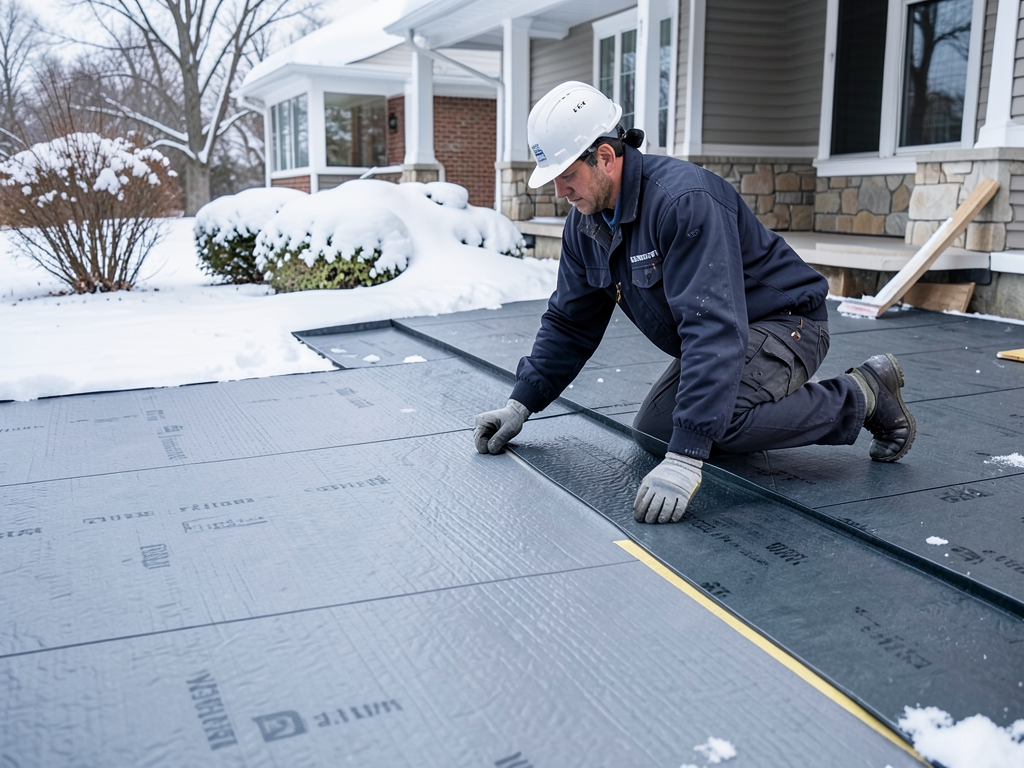
The manufacturing process creates a consistent thickness and uniform coverage that traditional felt cannot match. Each roll covers significantly more square footage than equivalent felt paper, meaning fewer seams and faster installation times. This matters in Waltham where winter weather can delay projects and leave roofs exposed for days or weeks.
UV resistance becomes critical when winter storms push back your installation schedule. Quality synthetic underlayment withstands direct sunlight for months without degrading, while traditional felt begins breaking down within a week of exposure. This extended protection prevents costly water damage when spring rains hit before your shingles are installed.
The tear resistance of synthetic materials handles the weight of snow loads common in Waltham’s winter storms. Where traditional felt might rip under the pressure of heavy snow or ice, synthetic underlayment maintains its integrity. This strength becomes especially important for homes near Waltham’s wooded areas where falling branches can test your roof’s weakest points.
Traditional Felt (Tar Paper): The Time-Tested Option
Traditional felt paper has protected New England homes since the early 1900s using a simple but effective principle: asphalt saturates organic or fiberglass mats to create a water-resistant barrier. The #15 and #30 designations refer to weight, with #30 providing better protection but at higher cost and installation difficulty.
Organic felt uses recycled paper products saturated with asphalt, creating a material that breathes naturally. Fiberglass-reinforced felt offers better tear resistance than organic versions but still falls short of synthetic alternatives. Both types install using overlapping seams that create a shingle-like pattern of protection. Bringing Natural Light into Your South End Attic with Custom Skylights.
The lower cost of traditional felt appeals to budget-conscious homeowners, but the savings come with trade-offs. Felt paper absorbs moisture, becoming heavier and more prone to tearing when wet. This characteristic creates problems during Waltham’s spring thaws when ice dams melt and water backs up under shingles.
Installation requires more rolls and more labor hours compared to synthetic options. Each roll covers less area, creating more seams where water can penetrate. The smooth surface becomes dangerously slippery when wet or icy, creating safety concerns for Waltham roofing crews working in cold conditions. The Best Roofing Strategies for Multi-Family Property Owners in Savin Hill.
Traditional felt performs adequately in moderate climates but struggles with Waltham’s extreme weather patterns. The material becomes brittle in freezing temperatures and tears easily when walked on during winter installations. These limitations make felt paper a risky choice for homeowners who cannot complete their projects quickly.
The Boston Factor: Ice Dams and Heavy Snow
Waltham sits in the heart of Massachusetts’ ice dam country where freeze-thaw cycles create unique roofing challenges. The Massachusetts State Building Code (780 CMR) requires ice barrier underlayment extending 24 inches inside the exterior wall line for all roofs where ice damming is a concern. This code recognizes that Waltham’s winters create conditions that overwhelm standard underlayment systems. Roofing Quincy.
Synthetic underlayment’s superior tear strength becomes critical when snow loads reach 20-30 pounds per square foot, common during Waltham’s heaviest storms. The material maintains its integrity under pressure where traditional felt might tear, allowing water to penetrate to the roof deck. This difference can mean the difference between a dry attic and thousands in water damage.. Read more about Understanding the Vital Difference Between a Manufacturer Warranty and a Workmanship Guarantee.
The integration with ice and water shield systems highlights another advantage. Synthetic underlayment creates a uniform surface that bonds properly with self-adhering membranes. Traditional felt’s inconsistent surface and tendency to wrinkle create gaps where ice can form and water can penetrate.
Waltham’s proximity to coastal weather patterns means roofs face salt air exposure that accelerates material degradation. Synthetic polymers resist this chemical breakdown while asphalt in traditional felt breaks down more quickly when exposed to salt-laden air. This degradation becomes visible as the material becomes brittle and loses flexibility.
The thermal cycling in Waltham creates expansion and contraction stress that synthetic materials handle better than traditional felt. Where felt might crack along seam lines during extreme temperature swings, synthetic underlayment flexes without failing. This flexibility protects your roof during the January thaws followed by February freezes that characterize Waltham winters.
Cost Analysis: Upfront Price vs. Long-Term Value
The material cost difference between synthetic and traditional underlayment reflects their performance differences. Synthetic underlayment costs $20-40 per square compared to $8-15 for traditional felt. However, this price comparison ignores the labor savings and reduced waste that synthetic materials provide.
Synthetic rolls cover 10 squares each compared to 2-4 squares for traditional felt rolls. This means fewer rolls to transport, less time climbing ladders, and fewer seams to seal. For a typical Waltham home, this efficiency can save 2-3 hours of labor per job, offsetting much of the material cost difference.
The weight difference creates additional savings. Synthetic underlayment weighs 10-25 pounds per 1,000 square feet while traditional felt weighs 60-90 pounds. This lighter weight reduces fuel costs for transportation and makes handling easier for roofing crews, potentially reducing labor costs on larger projects. Tile Roofing Services.
Long-term value calculations must include the extended roof life that quality underlayment provides. A roof with synthetic underlayment that lasts 25 years instead of 15 years represents significant savings over time. The cost difference becomes negligible when spread across the additional years of protection.
Insurance considerations also factor into the cost analysis. Some Waltham homeowners have reported lower premiums when using higher-quality roofing materials that reduce the risk of water damage claims. While not universal, this potential savings adds to the long-term value proposition of synthetic underlayment.
The environmental impact represents another cost consideration. Synthetic underlayment creates less waste due to larger roll sizes and longer service life. Traditional felt often ends up in landfills after roof replacements, while synthetic materials can sometimes be recycled depending on local facilities.
Final Verdict: Which is right for your Boston Home?
The decision between synthetic underlayment and traditional felt paper depends on your specific situation, but for most Waltham homeowners, synthetic underlayment provides the better long-term value. The superior performance in ice dam conditions, UV resistance, and tear strength justify the higher upfront cost for homes in Waltham’s climate.
Choose synthetic underlayment if your home has a complex roof design with multiple valleys and dormers where water management becomes critical. The larger roll sizes and fewer seams reduce the risk of leaks in these complicated areas. Homes near Waltham’s wooded areas also benefit from the enhanced tear resistance against falling branches.
Traditional felt paper might make sense for simple gable roofs on homes where the budget is extremely tight and the roof will be shingled within 24 hours of underlayment installation. However, even in these cases, the labor savings of synthetic often eliminates the cost advantage of traditional felt.
Consider your roof’s pitch when making your decision. Low-slope roofs (under 4:12 pitch) face greater water infiltration risks and benefit more from synthetic underlayment’s superior waterproofing. Steeper roofs might get by with traditional felt, but synthetic still provides better long-term protection.
The age and value of your home should influence your choice. Historic homes in Waltham’s older neighborhoods deserve the best protection available, making synthetic underlayment the logical choice. Newer homes might prioritize budget over longevity, but even here the labor savings often make synthetic the better value.
Talk to your roofing contractor about specific product recommendations. Not all synthetic underlayments are equal, and some perform better than others in Waltham’s specific conditions. Look for products with at least 30 days of UV resistance and tear strength ratings above 200 pounds for optimal performance.
Your roof represents one of your home’s most important protective systems. Skimping on underlayment to save a few hundred dollars might seem wise in the moment, but the cost of water damage from a failed roof far exceeds any initial savings. In Waltham’s climate, investing in quality underlayment protects your entire home.
Frequently Asked Questions
Does Massachusetts building code require synthetic underlayment?
No, Massachusetts building code (780 CMR) does not specifically require synthetic underlayment. However, it does require ice barrier underlayment extending 24 inches inside the exterior wall line for roofs where ice damming is a concern. Both synthetic and traditional materials can meet this requirement when properly installed.
How long does synthetic underlayment last compared to felt paper?
Synthetic underlayment typically lasts the lifetime of your roof, which can be 25-50 years depending on the shingle material. Traditional felt paper often degrades before the roof needs replacement, especially in Waltham’s harsh climate with its freeze-thaw cycles and UV exposure.
Can I install synthetic underlayment myself to save money?
While DIY installation is possible, professional installation ensures proper overlap, sealing, and integration with other roofing components. The cost savings rarely justify the risk of improper installation, which can lead to leaks and void your roof warranty. Professional installation also includes insurance coverage for any installation errors.
What happens if it rains during installation?
Synthetic underlayment handles temporary exposure to rain much better than traditional felt. Quality synthetic products can withstand several days of rain without compromising their waterproofing ability. Traditional felt absorbs water, becomes heavy, and may tear or develop wrinkles that create leak points.
Is synthetic underlayment environmentally friendly?
Synthetic underlayment creates less waste during installation due to larger roll sizes and lasts longer, reducing replacement frequency. Some products are recyclable, though facilities vary by location. Traditional felt contains asphalt and paper products that are less environmentally friendly but may be more biodegradable over very long time periods.
Ready to Upgrade Your Waltham Roof?
Don’t let another winter pass with inferior underlayment protecting your home. The cost difference between synthetic and traditional materials is minimal compared to the protection you’ll gain against Waltham’s harsh weather. Our team has installed hundreds of roofs throughout the area and knows exactly which materials perform best in local conditions.
Call (857) 387-1711 today to schedule your free roof inspection and underlayment consultation. We’ll show you exactly what’s under your current shingles and recommend the best protection for your specific home. Don’t wait until the next storm reveals your roof’s weaknesses.
Pick up the phone and call (857) 387-1711 before the next Nor’easter hits. Your home deserves the best protection available, and we’re ready to provide it. Serving Waltham and all surrounding communities with emergency service available 24/7. For more information, visit EPA WaterSense.
{
“@context”: “https://schema.org”,
“@type”: “BlogPosting”,
“headline”: “Synthetic Underlayment vs Traditional Felt Paper for Your Next Roof Project in Waltham”,
“description”: “Comparing synthetic underlayment and traditional felt paper for Waltham homes. Learn which material performs better in New England’s harsh winters and meets Massachusetts building codes.”,
“wordCount”: 2032,
“datePublished”: “2026-04-30T12:47:00.000Z”,
“dateModified”: “2026-04-30T12:47:00.000Z”,
“inLanguage”: “en-US”,
“mainEntityOfPage”: {
“@type”: “WebPage”,
“@id”: “https://silverlineroofingboston.com”
},
“publisher”: {
“@type”: “LocalBusiness”,
“name”: “Silverline Roofing Boston”,
“url”: “https://silverlineroofingboston.com”
},
“author”: {
“@type”: “Organization”,
“name”: “Silverline Roofing Boston”,
“url”: “https://silverlineroofingboston.com”
},
“image”: {
“@type”: “ImageObject”,
“url”: “https://silverlineroofingboston.com/wp-content/uploads/2026/03/synthetic-underlayment-vs-traditional-felt-paper-f-1.png”
}
}
{
“@context”: “https://schema.org”,
“@type”: “RoofingContractor”,
“name”: “Silverline Roofing Boston”,
“url”: “https://silverlineroofingboston.com”,
“address”: {
“@type”: “PostalAddress”,
“addressLocality”: “Boston”
},
“areaServed”: {
“@type”: “City”,
“name”: “Boston”
}
}
{
“@context”: “https://schema.org”,
“@type”: “FAQPage”,
“mainEntity”: [
{
“@type”: “Question”,
“name”: “Final Verdict: Which is right for your Boston Home?”,
“acceptedAnswer”: {
“@type”: “Answer”,
“text”: “The decision between synthetic underlayment and traditional felt paper depends on your specific situation, but for most Waltham homeowners, synthetic underlayment provides the better long-term value. The superior performance in ice dam conditions, UV resistance, and tear strength justify the higher upfront cost for homes in Waltham’s climate.”
}
},
{
“@type”: “Question”,
“name”: “Does Massachusetts building code require synthetic underlayment?”,
“acceptedAnswer”: {
“@type”: “Answer”,
“text”: “No, Massachusetts building code (780 CMR) does not specifically require synthetic underlayment. However, it does require ice barrier underlayment extending 24 inches inside the exterior wall line for roofs where ice damming is a concern. Both synthetic and traditional materials can meet this requirement when properly installed.”
}
},
{
“@type”: “Question”,
“name”: “How long does synthetic underlayment last compared to felt paper?”,
“acceptedAnswer”: {
“@type”: “Answer”,
“text”: “Synthetic underlayment typically lasts the lifetime of your roof, which can be 25-50 years depending on the shingle material. Traditional felt paper often degrades before the roof needs replacement, especially in Waltham’s harsh climate with its freeze-thaw cycles and UV exposure.”
}
},
{
“@type”: “Question”,
“name”: “Can I install synthetic underlayment myself to save money?”,
“acceptedAnswer”: {
“@type”: “Answer”,
“text”: “While DIY installation is possible, professional installation ensures proper overlap, sealing, and integration with other roofing components. The cost savings rarely justify the risk of improper installation, which can lead to leaks and void your roof warranty. Professional installation also includes insurance coverage for any installation errors.”
}
},
{
“@type”: “Question”,
“name”: “What happens if it rains during installation?”,
“acceptedAnswer”: {
“@type”: “Answer”,
“text”: “Synthetic underlayment handles temporary exposure to rain much better than traditional felt. Quality synthetic products can withstand several days of rain without compromising their waterproofing ability. Traditional felt absorbs water, becomes heavy, and may tear or develop wrinkles that create leak points.”
}
},
{
“@type”: “Question”,
“name”: “Is synthetic underlayment environmentally friendly?”,
“acceptedAnswer”: {
“@type”: “Answer”,
“text”: “Synthetic underlayment creates less waste during installation due to larger roll sizes and lasts longer, reducing replacement frequency. Some products are recyclable, though facilities vary by location. Traditional felt contains asphalt and paper products that are less environmentally friendly but may be more biodegradable over very long time periods.”
}
},
{
“@type”: “Question”,
“name”: “Ready to Upgrade Your Waltham Roof?”,
“acceptedAnswer”: {
“@type”: “Answer”,
“text”: “Don’t let another winter pass with inferior underlayment protecting your home. The cost difference between synthetic and traditional materials is minimal compared to the protection you’ll gain against Waltham’s harsh weather. Our team has installed hundreds of roofs throughout the area and knows exactly which materials perform best in local conditions.”
}
}
]
}
{
“@context”: “https://schema.org”,
“@type”: “BreadcrumbList”,
“itemListElement”: [
{
“@type”: “ListItem”,
“position”: 1,
“name”: “Home”,
“item”: “https://silverlineroofingboston.com”
},
{
“@type”: “ListItem”,
“position”: 2,
“name”: “Blog”,
“item”: “https://silverlineroofingboston.com/blog”
},
{
“@type”: “ListItem”,
“position”: 3,
“name”: “Synthetic Underlayment vs Traditional Felt Paper for Your Next Roof Project in Waltham”
}
]
}
{
“@context”: “https://schema.org”,
“@type”: “Service”,
“serviceType”: “Roofing”,
“provider”: {
“@type”: “LocalBusiness”,
“name”: “Silverline Roofing Boston”,
“url”: “https://silverlineroofingboston.com”
},
“areaServed”: {
“@type”: “City”,
“name”: “Boston”
},
“description”: “Comparing synthetic underlayment and traditional felt paper for Waltham homes. Learn which material performs better in New England’s harsh winters and meets Massachusetts building codes.”
}