How to Navigate the Approval Process for a New Roof with Your Seaport Condo Board
Getting a new roof approved by your Seaport condo board involves navigating Massachusetts condo law, Boston building permits, and multi-family construction logistics. This guide walks you through the exact steps from initial inspection to final installation while minimizing disruption to residents. Massachusetts General Law Chapter 183A.
The process typically takes 3-6 months and requires understanding your condo association’s bylaws, Massachusetts General Law Chapter 183A, and Boston’s specific permitting requirements. We’ll show you how to prepare documentation, select materials, and manage the project from start to finish. Boston Inspectional Services Department permits.
Understanding Your Condo Association’s Authority Under Massachusetts Law
Massachusetts General Law Chapter 183A governs condominium associations and gives boards significant authority over common area improvements. The board must act in good faith and within the scope of the master deed, but they have broad discretion over roofing decisions that affect building integrity and value. Why Metal Roofing is Becoming a Top Choice for Coastal East Boston Homes.
Your association’s master deed and bylaws will specify the approval process for capital improvements. Most Seaport buildings require board approval for any project exceeding $5,000 or affecting common areas. Some associations require a supermajority vote for major projects like full roof replacement.
Key legal considerations include reserve fund requirements, special assessment authority, and contractor insurance minimums. Boston condo boards typically require $1-2 million in liability coverage and workers’ compensation for any roofing contractor. The Best Roofing Strategies for Multi-Family Property Owners in Savin Hill.
Initial Assessment and Documentation Requirements
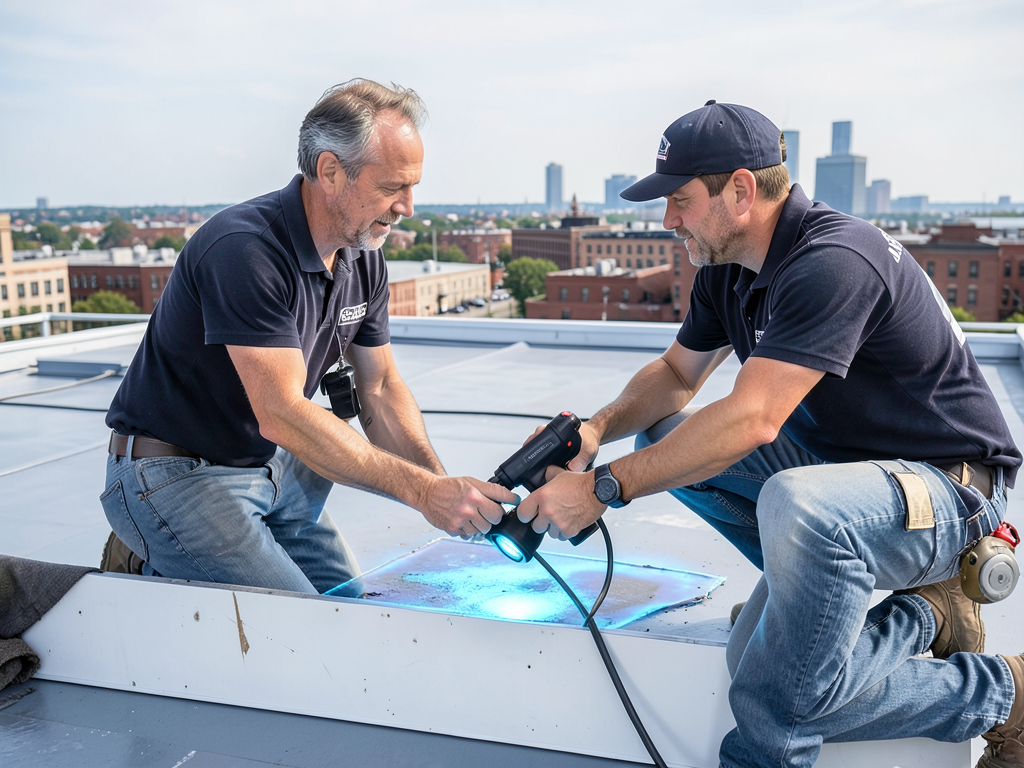
Start with a professional roof inspection that includes thermal imaging to detect moisture intrusion and core sampling to assess deck condition. This documentation becomes critical for board approval and insurance claims. The inspection should evaluate membrane integrity, flashing condition, and drainage systems.
Prepare a comprehensive project proposal including: current roof condition assessment, recommended materials with specifications, timeline with minimal disruption phases, cost breakdown with financing options, and contractor credentials including Massachusetts roofing license and insurance certificates. Roofing Quincy.
Include photos of current damage, energy audit results showing heat loss through the roof, and any warranty information from previous installations. Boards respond better to data-driven proposals that demonstrate ROI through reduced maintenance costs and improved property values.
Selecting the Right Roofing Materials for Seaport Condos
Seaport’s coastal location and urban density create unique roofing challenges. Salt air exposure, high winds, and limited equipment access require specialized materials and installation techniques. Your selection must balance durability, energy efficiency, and building code compliance. Tile Roofing Services.
Commercial-grade TPO membranes offer excellent UV resistance and energy efficiency for flat roofs common in Seaport buildings. EPDM provides superior weather resistance but requires more maintenance. PVC systems excel in chemical and grease resistance for buildings with HVAC equipment on the roof.
Consider insulation requirements under Boston’s energy code, which mandates R-30 minimum for new roof assemblies. The right insulation can reduce heating costs by 15-20% annually while meeting Boston Inspectional Services Department requirements.
| Material Type | Cost per Square Foot | Lifespan | Best For |
|---|---|---|---|
| TPO Membrane | $7-10 | 25-30 years | Flat roofs, energy efficiency |
| EPDM Rubber | $6-8 | 20-25 years | Weather resistance, budget |
| PVC Membrane | $9-12 | 25-35 years | Chemical resistance, durability |
Navigating Boston Building Permits and Inspections
Boston’s permitting process for multi-family roofing projects typically takes 4-6 weeks. You’ll need building permits from the Boston Inspectional Services Department, electrical permits if installing new equipment, and possibly historical commission approval if your building is in a designated district.. Read more about Navigating the strict historic roofing requirements for homes in Salem.
The permit application requires detailed roof plans, material specifications, contractor licenses, and insurance certificates. Boston requires compliance with 780 CMR (Massachusetts State Building Code) including wind uplift calculations for coastal zones and proper ice barrier installation extending 24 inches inside the exterior wall line.
Schedule inspections at key phases: pre-construction deck inspection, mid-installation membrane verification, and final inspection before occupancy. Missing inspections can delay certificate of occupancy and create liability issues for the association.
Creating a Resident Communication Plan
Effective communication prevents complaints and ensures smooth project execution. Create a detailed timeline showing construction phases, noise levels, and access restrictions. Most Seaport residents expect 6-8 weeks of construction with specific quiet hours and parking adjustments.
Distribute written notifications 30 days before construction begins, including emergency contacts and procedures for water shutoffs or power interruptions. Hold a pre-construction meeting with residents to address concerns and explain safety protocols.
Consider temporary relocation assistance for residents with medical conditions or work-from-home needs during noisy phases. Some associations provide hotel vouchers for particularly sensitive residents during demolition and installation.
Managing Construction Logistics in Dense Urban Areas
Seaport’s narrow streets and limited parking create significant logistical challenges. You’ll need crane permits, street closures, and pedestrian protection plans approved by the Boston Transportation Department. Most projects require 2-3 weekend closures for material delivery and equipment setup.. Read more about The Engineering Challenges of Replacing a Slate Mansard Roof on a Multi Family Building in Malden.
Coordinate with neighboring buildings to minimize disruption and share equipment staging areas. Use enclosed chutes for debris removal to prevent material from falling on sidewalks. Install protective barriers around HVAC units and skylights that remain in place.
Weather contingency plans are essential. Boston’s unpredictable weather can delay projects by weeks. Include buffer time in your schedule and have temporary protection systems ready for sudden storms.
Financing Options for Condo Association Projects
Most Seaport condo boards use a combination of reserve funds, special assessments, and financing to fund roof replacement. A $200,000 project might use $50,000 from reserves, $75,000 from special assessment, and $75,000 from a commercial loan secured by the association.
Special assessments typically spread costs over 12-24 months to minimize individual owner burden. Some associations offer payment plans for owners facing financial hardship. Commercial loans for associations usually have 5-7 year terms at current rates of 6-8%.
Consider phased replacement for buildings over 50,000 square feet. This spreads costs over 2-3 years and reduces the financial impact on any single fiscal year while maintaining building protection.
Selecting a Qualified Roofing Contractor
Your contractor must have specific experience with multi-family buildings in Boston’s coastal climate. Look for Massachusetts roofing license, GAF Master Elite or equivalent certification, and documented experience with buildings similar to yours in size and complexity.
Request references from other Boston condo associations and verify insurance coverage including general liability, workers’ compensation, and umbrella policies. Most boards require $2-5 million in coverage and proof of current Massachusetts workers’ compensation insurance.
Evaluate the contractor’s safety record, including OSHA compliance history and worker training programs. Boston’s dense urban environment requires strict safety protocols to protect pedestrians and neighboring properties.
Post-Installation Warranty and Maintenance Planning
Quality roofing contractors offer NDL (No Dollar Limit) warranties covering material and labor for 15-25 years. These warranties require annual inspections and prompt repair of any damage. Document all maintenance activities to preserve warranty coverage.
Establish a maintenance schedule including twice-yearly inspections, gutter cleaning, and prompt repair of any membrane damage. Most associations budget $2,000-5,000 annually for routine maintenance after installation.
Train building staff on basic roof inspection techniques and emergency procedures. Create a log system for tracking maintenance activities and warranty claims. This documentation becomes valuable for future board decisions and potential property sales.
Common Pitfalls and How to Avoid Them
The most common failure is inadequate documentation. Boards frequently reject proposals that lack detailed specifications, cost breakdowns, or compliance documentation. Always provide more information than requested rather than risking rejection for incompleteness.
Another frequent issue is poor contractor selection. The lowest bid often results in delays, quality issues, and warranty problems. Focus on value rather than price, considering the contractor’s experience, insurance coverage, and warranty offerings.
Weather delays can extend projects by months. Include contingency time in your schedule and have temporary protection systems ready. Some associations require contractors to provide temporary roofing if weather prevents timely completion.
Final Approval and Project Launch
Once the board approves your proposal, schedule a pre-construction meeting with all stakeholders including the contractor, building management, and key residents. Review the timeline, safety protocols, and communication procedures one final time.
Document all approvals in writing and keep copies of permits, insurance certificates, and material specifications on site. Most Boston projects require the contractor to maintain these documents for inspection purposes.
Establish a project hotline for resident questions and concerns. Quick responses to issues prevent minor problems from escalating into major complaints that could delay the project.
Frequently Asked Questions
How long does the entire approval process typically take?
The complete process from initial inspection to final installation usually takes 3-6 months. Permitting alone can take 4-6 weeks, and board approval often requires 30-60 days for review and discussion.
What if my condo association rejects the proposal?
Request specific feedback on rejection reasons and address those concerns in a revised proposal. Common issues include insufficient documentation, unrealistic timelines, or inadequate contractor credentials. Most boards will work with you to find acceptable solutions. A Realistic Checklist for Your Next Boston Roof Inspection.
Can we do the work in phases to spread costs?
Yes, phased replacement is common for large buildings. This approach spreads costs over 2-3 years and reduces the financial impact on any single fiscal year while maintaining building protection. Most contractors offer phased pricing with minimal premium over complete replacement.
Ready to Get Started?
Navigating condo board approval for a new roof requires expertise in Massachusetts law, Boston permitting, and multi-family construction logistics. Don’t risk delays or rejection with an incomplete proposal.
Call (857) 387-1711 today to schedule your professional inspection and receive a comprehensive project proposal that addresses all board requirements. Our team has completed dozens of successful condo association projects throughout Boston’s Seaport and surrounding neighborhoods.
Pick up the phone and call (857) 387-1711 before the next storm hits. We’ll help you navigate the approval process efficiently and get your building the protection it needs.
{
“@context”: “https://schema.org”,
“@type”: “BlogPosting”,
“headline”: “How to Navigate the Approval Process for a New Roof with Your Seaport Condo Board”,
“description”: “Learn the exact steps to get your Seaport condo board to approve a new roof. From Massachusetts condo law to Boston building permits, we guide you through the process.”,
“wordCount”: 1624,
“datePublished”: “2026-04-29T06:54:00.000Z”,
“dateModified”: “2026-04-29T06:54:00.000Z”,
“inLanguage”: “en-US”,
“mainEntityOfPage”: {
“@type”: “WebPage”,
“@id”: “https://silverlineroofingboston.com”
},
“publisher”: {
“@type”: “LocalBusiness”,
“name”: “Silverline Roofing Boston”,
“url”: “https://silverlineroofingboston.com”
},
“author”: {
“@type”: “Organization”,
“name”: “Silverline Roofing Boston”,
“url”: “https://silverlineroofingboston.com”
},
“image”: {
“@type”: “ImageObject”,
“url”: “https://silverlineroofingboston.com/wp-content/uploads/2026/03/how-to-navigate-the-approval-process-for-a-new-roo-1.png”
}
}
{
“@context”: “https://schema.org”,
“@type”: “RoofingContractor”,
“name”: “Silverline Roofing Boston”,
“url”: “https://silverlineroofingboston.com”,
“address”: {
“@type”: “PostalAddress”,
“addressLocality”: “Boston”
},
“areaServed”: {
“@type”: “City”,
“name”: “Boston”
}
}
{
“@context”: “https://schema.org”,
“@type”: “FAQPage”,
“mainEntity”: [
{
“@type”: “Question”,
“name”: “How long does the entire approval process typically take?”,
“acceptedAnswer”: {
“@type”: “Answer”,
“text”: “The complete process from initial inspection to final installation usually takes 3-6 months. Permitting alone can take 4-6 weeks, and board approval often requires 30-60 days for review and discussion.”
}
},
{
“@type”: “Question”,
“name”: “What if my condo association rejects the proposal?”,
“acceptedAnswer”: {
“@type”: “Answer”,
“text”: “Request specific feedback on rejection reasons and address those concerns in a revised proposal. Common issues include insufficient documentation, unrealistic timelines, or inadequate contractor credentials. Most boards will work with you to find acceptable solutions. A Realistic Checklist for Your Next Boston Roof Inspection.”
}
},
{
“@type”: “Question”,
“name”: “Can we do the work in phases to spread costs?”,
“acceptedAnswer”: {
“@type”: “Answer”,
“text”: “Yes, phased replacement is common for large buildings. This approach spreads costs over 2-3 years and reduces the financial impact on any single fiscal year while maintaining building protection. Most contractors offer phased pricing with minimal premium over complete replacement.”
}
},
{
“@type”: “Question”,
“name”: “Ready to Get Started?”,
“acceptedAnswer”: {
“@type”: “Answer”,
“text”: “Navigating condo board approval for a new roof requires expertise in Massachusetts law, Boston permitting, and multi-family construction logistics. Don’t risk delays or rejection with an incomplete proposal.”
}
}
]
}
{
“@context”: “https://schema.org”,
“@type”: “BreadcrumbList”,
“itemListElement”: [
{
“@type”: “ListItem”,
“position”: 1,
“name”: “Home”,
“item”: “https://silverlineroofingboston.com”
},
{
“@type”: “ListItem”,
“position”: 2,
“name”: “Blog”,
“item”: “https://silverlineroofingboston.com/blog”
},
{
“@type”: “ListItem”,
“position”: 3,
“name”: “How to Navigate the Approval Process for a New Roof with Your Seaport Condo Board”
}
]
}
{
“@context”: “https://schema.org”,
“@type”: “Service”,
“serviceType”: “Roofing”,
“provider”: {
“@type”: “LocalBusiness”,
“name”: “Silverline Roofing Boston”,
“url”: “https://silverlineroofingboston.com”
},
“areaServed”: {
“@type”: “City”,
“name”: “Boston”
},
“description”: “Learn the exact steps to get your Seaport condo board to approve a new roof. From Massachusetts condo law to Boston building permits, we guide you through the process.”
}