High humidity in Boston summers creates unique challenges for new roof installations that many homeowners don’t anticipate. The combination of coastal moisture, temperature fluctuations, and architectural styles common to Massachusetts properties can significantly impact the longevity and performance of your roofing system. Understanding these factors helps you make informed decisions and avoid costly mistakes during the installation process. Why Metal Roofing is Becoming a Top Choice for Coastal East Boston Homes.
How Boston’s humidity affects your roof’s lifespan
Boston’s coastal location means summer humidity levels often exceed 80% for weeks at a time. This moisture-laden air doesn’t just make you uncomfortable—it directly impacts your roof’s structural integrity and material performance. The constant exposure to salt air combined with high humidity creates a perfect environment for accelerated material degradation, particularly in older neighborhoods where roofing systems weren’t designed for today’s climate conditions. The Best Roofing Strategies for Multi-Family Property Owners in Savin Hill.
The real danger lies in moisture becoming trapped during installation. When shingles, underlayment, or decking materials are installed in high humidity, microscopic water vapor can become sealed within the roofing assembly. As temperatures rise, this trapped moisture expands, causing shingles to buckle, underlayment to delaminate, and decking to warp. This isn’t just a cosmetic issue—it can compromise the entire roofing system’s ability to protect your home. Roofing Quincy.
Historical districts like Beacon Hill and the South End face additional challenges. Many of these century-old buildings have limited attic ventilation and complex roof geometries that trap humidity. The combination of modern roofing materials with outdated ventilation systems creates condensation problems that weren’t anticipated when these homes were built. Tile Roofing Services.

The risks of installing a roof on humid days
Installing roofing materials in high humidity conditions creates several critical risks that can void warranties and reduce your roof’s lifespan by years. The most significant issue is adhesive failure. Asphalt shingles rely on precise temperature and moisture conditions for proper sealant activation. When humidity exceeds 75%, the adhesive strips on shingle backs fail to bond correctly, leaving your roof vulnerable to wind uplift and water infiltration.. Read more about Why pressure washing your shingles in Saugus is a recipe for a total roof failure.
Decking expansion presents another serious concern. Oriented strand board (OSB) and plywood absorb moisture from humid air, expanding by up to 15% in thickness. When installed during high humidity, this expansion creates buckling and waviness that becomes permanent once the material dries. The result is an uneven surface that prevents proper shingle installation and creates weak points where water can penetrate.
Condensation in the attic space represents a hidden danger that many homeowners discover only after the first winter. When humid air becomes trapped beneath new roofing materials, it cools and condenses on the underside of the decking. This creates the perfect environment for mold growth, wood rot, and insulation degradation. The problem often manifests as ceiling stains or musty odors months after installation.
According to the Massachusetts State Building Code 780 CMR 36.00, roofing installations must account for moisture management through proper ventilation and material selection. However, many contractors overlook these requirements during summer installations, leading to premature roof failure.
Best roofing materials for high-humidity coastal climates
Not all roofing materials perform equally well in Boston’s humid coastal environment. Selecting the right materials can mean the difference between a roof that lasts 15 years versus one that performs reliably for 30+ years. The key is choosing materials specifically engineered to resist moisture-related degradation while maintaining their structural integrity in salt-air conditions.
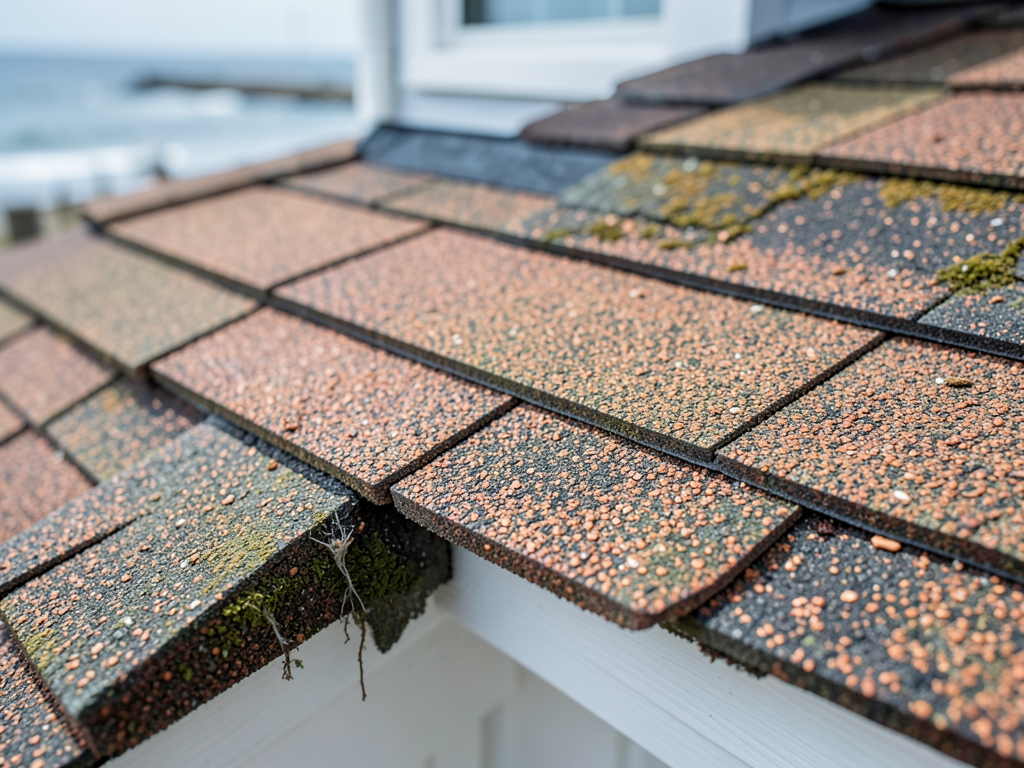
Algae-resistant shingles represent one of the most significant advancements for coastal properties. These shingles contain copper or zinc granules that inhibit the growth of Gloeocapsa Magma, the blue-green algae common in New England’s humid climate. This algae not only creates unsightly black streaks but also breaks down asphalt over time. Quality algae-resistant shingles can extend your roof’s aesthetic lifespan by 5-7 years in humid conditions.
Synthetic underlayment has largely replaced traditional felt in modern installations. Products like GAF Deck-Armor or CertainTeed Diamond Deck offer superior moisture resistance while remaining breathable. Unlike felt, which can trap moisture and deteriorate in humid conditions, synthetic underlayment allows water vapor to escape while preventing liquid water intrusion. This breathability is crucial in Boston’s climate where humidity levels fluctuate dramatically. GAF roofing installation guidelines.
For coastal properties in areas like Revere and Lynn, metal roofing systems provide exceptional humidity resistance. The interlocking panels and non-porous surface prevent moisture penetration while the thermal properties help regulate attic temperatures. Modern metal roofing also includes special coatings that resist salt corrosion, making it ideal for properties within a mile of the coastline.
The choice between OSB and plywood decking also matters significantly. While OSB is more economical, plywood’s cross-laminated structure provides better dimensional stability in humid conditions. For homes in particularly humid microclimates or those with complex roof designs, plywood decking can prevent the buckling and warping that often plagues OSB installations.
- Assess your property’s humidity exposure
Consider proximity to coast, tree coverage, and existing ventilation. Properties within 2 miles of the coast require enhanced moisture protection.
- Select algae-resistant shingles
Look for Class 4 impact resistance with copper-fortified granules. These resist both algae growth and salt corrosion.
- Upgrade to synthetic underlayment
Choose breathable synthetic products over traditional felt. The initial cost increase pays for itself through extended roof life.
- Evaluate decking material
For humid conditions, plywood offers superior stability over OSB, particularly in complex roof designs.
The role of ventilation in combating humidity
Proper attic ventilation is your first line of defense against humidity-related roof damage. In Boston’s climate, where summer humidity often exceeds 80% and winter temperatures drop below freezing, ventilation systems must address both heat buildup and moisture management. Without adequate ventilation, your attic becomes a breeding ground for condensation, mold, and structural deterioration.
The science behind ventilation is straightforward: hot, humid air rises and must be replaced with cooler, drier air to prevent condensation. This requires a balanced system of intake and exhaust vents. Soffit vents draw in cool air at the eaves while ridge vents or powered exhaust fans expel warm, moist air from the peak. The ratio should provide at least 1 square foot of net free area (NFA) ventilation for every 150 square feet of attic space, according to building code requirements.
Boston’s architectural heritage creates unique ventilation challenges. Triple-deckers and Victorian homes often have complex roof lines with multiple valleys and dormers that interrupt natural airflow. These designs require strategic vent placement and sometimes powered ventilation to maintain proper air exchange. The investment in enhanced ventilation typically pays for itself through reduced energy costs and extended roof life. Bringing Natural Light into Your South End Attic with Custom Skylights.
Ice and water shield installation represents another critical humidity management strategy. Massachusetts building code requires ice and water shield extending at least 24 inches inside the exterior wall line in most jurisdictions. This self-adhering membrane creates a waterproof barrier that prevents both ice dam damage in winter and moisture infiltration during humid summer months. For coastal properties, extending this protection to the entire roof deck provides additional insurance against humidity-related damage.
Current ventilation standards recommend continuous ridge vents combined with vented soffits for optimal performance. This configuration provides uniform airflow across the entire attic space, preventing the hot spots where humidity tends to concentrate. For homes with limited ridge length, a combination of ridge vents and strategically placed roof vents can achieve similar results.
Professional tips: when to schedule your Boston roofing project
Timing your roof installation around Boston’s humidity patterns can significantly impact the quality and longevity of your new roof. While summer might seem ideal for exterior projects, the high humidity months of July and August actually present some of the worst conditions for roofing installation. Understanding the local climate patterns helps you schedule your project during optimal conditions.
The ideal humidity range for roofing installation falls between 40-60%. Within this range, adhesives cure properly, materials maintain their dimensional stability, and moisture doesn’t become trapped within the roofing assembly. In Boston, this optimal window typically occurs during late spring (May-June) and early fall (September-October). During these months, average humidity levels hover around 65%, with periodic dry spells that create perfect installation conditions.
Morning versus afternoon installation timing also matters significantly. Even during optimal months, humidity levels can spike dramatically throughout the day. Starting work early, ideally between 7-11 AM, allows crews to complete the most critical installation phases before afternoon humidity peaks. This approach is particularly important for tasks like shingle application and underlayment sealing where moisture sensitivity is highest.
Temperature considerations work hand-in-hand with humidity management. The ideal installation temperature range falls between 45-85°F. Boston’s late spring and early fall typically provide these conditions, though microclimates near the coast may run slightly cooler. Professional contractors use digital hygrometers to monitor both temperature and humidity throughout the installation process, adjusting work schedules as conditions change.
Emergency repairs during high humidity require special considerations. When immediate repair is necessary regardless of conditions, experienced contractors employ techniques like using moisture-resistant underlayment, applying additional adhesive, and ensuring thorough attic ventilation. These precautions help mitigate the risks of humidity-related complications while addressing the immediate structural needs. EPA ventilation guidelines.
The following table illustrates Boston’s monthly humidity patterns and their impact on roofing installation timing:
| Month | Average Humidity | Installation Suitability | Key Considerations |
|---|---|---|---|
| May | 68% | Good | Increasing temperatures, occasional rain delays |
| June | 72% | Fair-Good | Early morning work ideal, hurricane season begins |
| July | 81% | Poor | High humidity, thunderstorms frequent, material expansion issues |
| August | 79% | Poor-Fair | Similar to July, slightly decreasing by month’s end |
| September | 73% | Good | Declining humidity, stable temperatures, ideal conditions |
| October | 70% | Excellent | Optimal conditions, cooling temperatures, low precipitation |
Professional contractors in Boston understand these patterns and often maintain flexible schedules to capitalize on optimal weather windows. This flexibility might mean waiting an extra week for perfect conditions or adjusting work hours to avoid afternoon humidity spikes. While this approach may extend your project timeline slightly, the investment in proper timing pays dividends through enhanced roof performance and longevity.
Local building inspectors in Suffolk County and surrounding areas pay particular attention to moisture management during roof inspections. They verify proper ventilation installation, check ice and water shield coverage, and ensure all materials meet manufacturer specifications for the local climate. Working with contractors who understand these requirements helps ensure your installation passes inspection and maintains warranty coverage.
The cost-benefit analysis of timing your installation correctly is compelling. A roof installed during optimal conditions might cost 5-10% more in labor due to scheduling constraints, but can extend the roof’s functional life by 5-8 years. Over a 25-year ownership period, this translates to thousands of dollars in avoided replacement and repair costs.
For homeowners in historic districts like Beacon Hill or the South End, timing becomes even more critical. These properties often require custom materials and specialized installation techniques that are more sensitive to humidity variations. Working with contractors experienced in historic preservation ensures your roof not only performs well but also maintains the architectural integrity of your home.
Frequently Asked Questions
How can I tell if my roof was installed during high humidity?
Signs of humidity-affected installation include wavy or buckling shingles, premature granule loss, and attic condensation problems. A professional inspection can identify these issues and recommend corrective measures.
Does high humidity void my roof warranty?
Most manufacturer warranties require installation within specified temperature and humidity ranges. Installation outside these parameters can void coverage, though many contractors carry their own workmanship warranties that address installation-related issues.
Can I install a new roof myself during humid weather?
DIY installation during high humidity is extremely risky. Professional contractors use specialized equipment to monitor conditions and employ techniques that mitigate humidity-related problems. Improper installation can lead to costly damage and void all warranties.
How does coastal humidity differ from inland humidity for roofing?
Coastal humidity carries salt particles that accelerate material degradation and create more aggressive algae growth. Properties within a mile of the coast require enhanced moisture protection and salt-resistant materials compared to inland installations.
What’s the best time of day to install roofing materials in Boston?
Early morning hours (7-11 AM) typically offer the lowest humidity levels and most stable conditions. Professional crews often start early and adjust their schedules based on real-time humidity monitoring throughout the day.
How long should I wait after rain before installing new roofing?
Roof decking should be completely dry before installation begins. This typically requires 24-48 hours of dry weather after measurable precipitation. Using moisture meters, professionals verify decking moisture content is below 19% before proceeding.
High humidity in Boston summers creates real challenges for new roof installations, but understanding these challenges helps you make informed decisions. From selecting the right materials to timing your installation correctly, each choice impacts your roof’s ability to protect your home for decades to come. The investment in proper planning and professional installation pays for itself through extended roof life, reduced maintenance costs, and the peace of mind that comes from knowing your home is protected against New England’s demanding climate.
Don’t let humidity compromise your roofing investment. Call (857) 387-1711 today to schedule your inspection and learn how we can help you navigate Boston’s unique climate challenges. Our experienced team understands the local conditions and uses proven techniques to ensure your new roof performs flawlessly for years to come.
You may also find this helpful. How to survive the chaos and noise of a roof replacement while working from home.
{
“@context”: “https://schema.org”,
“@type”: “BlogPosting”,
“headline”: “How high humidity in Boston summers affects your new roof installation”,
“description”: “Learn how Boston’s coastal humidity impacts roof installation, from shingle adhesion to attic ventilation. Expert guide for homeowners in humid New England climate.”,
“wordCount”: 2211,
“datePublished”: “2026-05-20T12:18:00.000Z”,
“dateModified”: “2026-05-20T12:18:00.000Z”,
“inLanguage”: “en-US”,
“mainEntityOfPage”: {
“@type”: “WebPage”,
“@id”: “https://silverlineroofingboston.com”
},
“publisher”: {
“@type”: “LocalBusiness”,
“name”: “Silverline Roofing Boston”,
“url”: “https://silverlineroofingboston.com”
},
“author”: {
“@type”: “Organization”,
“name”: “Silverline Roofing Boston”,
“url”: “https://silverlineroofingboston.com”
},
“image”: {
“@type”: “ImageObject”,
“url”: “https://silverlineroofingboston.com/wp-content/uploads/2026/03/how-high-humidity-in-boston-summers-affects-your-n-1.png”
}
}
{
“@context”: “https://schema.org”,
“@type”: “RoofingContractor”,
“name”: “Silverline Roofing Boston”,
“url”: “https://silverlineroofingboston.com”,
“address”: {
“@type”: “PostalAddress”,
“addressLocality”: “Boston”
},
“areaServed”: {
“@type”: “City”,
“name”: “Boston”
}
}
{
“@context”: “https://schema.org”,
“@type”: “FAQPage”,
“mainEntity”: [
{
“@type”: “Question”,
“name”: “How can I tell if my roof was installed during high humidity?”,
“acceptedAnswer”: {
“@type”: “Answer”,
“text”: “Signs of humidity-affected installation include wavy or buckling shingles, premature granule loss, and attic condensation problems. A professional inspection can identify these issues and recommend corrective measures.”
}
},
{
“@type”: “Question”,
“name”: “Does high humidity void my roof warranty?”,
“acceptedAnswer”: {
“@type”: “Answer”,
“text”: “Most manufacturer warranties require installation within specified temperature and humidity ranges. Installation outside these parameters can void coverage, though many contractors carry their own workmanship warranties that address installation-related issues.”
}
},
{
“@type”: “Question”,
“name”: “Can I install a new roof myself during humid weather?”,
“acceptedAnswer”: {
“@type”: “Answer”,
“text”: “DIY installation during high humidity is extremely risky. Professional contractors use specialized equipment to monitor conditions and employ techniques that mitigate humidity-related problems. Improper installation can lead to costly damage and void all warranties.”
}
},
{
“@type”: “Question”,
“name”: “How does coastal humidity differ from inland humidity for roofing?”,
“acceptedAnswer”: {
“@type”: “Answer”,
“text”: “Coastal humidity carries salt particles that accelerate material degradation and create more aggressive algae growth. Properties within a mile of the coast require enhanced moisture protection and salt-resistant materials compared to inland installations.”
}
},
{
“@type”: “Question”,
“name”: “What’s the best time of day to install roofing materials in Boston?”,
“acceptedAnswer”: {
“@type”: “Answer”,
“text”: “Early morning hours (7-11 AM) typically offer the lowest humidity levels and most stable conditions. Professional crews often start early and adjust their schedules based on real-time humidity monitoring throughout the day.”
}
}
]
}
{
“@context”: “https://schema.org”,
“@type”: “HowTo”,
“name”: “Choosing Humidity-Resistant Roofing Materials”,
“step”: [
{
“@type”: “HowToStep”,
“position”: 1,
“name”: “Assess your property’s humidity exposure”,
“text”: “Consider proximity to coast, tree coverage, and existing ventilation. Properties within 2 miles of the coast require enhanced moisture protection.”
},
{
“@type”: “HowToStep”,
“position”: 2,
“name”: “Select algae-resistant shingles”,
“text”: “Look for Class 4 impact resistance with copper-fortified granules. These resist both algae growth and salt corrosion.”
},
{
“@type”: “HowToStep”,
“position”: 3,
“name”: “Upgrade to synthetic underlayment”,
“text”: “Choose breathable synthetic products over traditional felt. The initial cost increase pays for itself through extended roof life.”
},
{
“@type”: “HowToStep”,
“position”: 4,
“name”: “Evaluate decking material”,
“text”: “For humid conditions, plywood offers superior stability over OSB, particularly in complex roof designs.”
}
],
“image”: “https://silverlineroofingboston.com/wp-content/uploads/2026/03/how-high-humidity-in-boston-summers-affects-your-n-1.png”
}
{
“@context”: “https://schema.org”,
“@type”: “BreadcrumbList”,
“itemListElement”: [
{
“@type”: “ListItem”,
“position”: 1,
“name”: “Home”,
“item”: “https://silverlineroofingboston.com”
},
{
“@type”: “ListItem”,
“position”: 2,
“name”: “Blog”,
“item”: “https://silverlineroofingboston.com/blog”
},
{
“@type”: “ListItem”,
“position”: 3,
“name”: “How high humidity in Boston summers affects your new roof installation”
}
]
}
{
“@context”: “https://schema.org”,
“@type”: “Service”,
“serviceType”: “Roofing”,
“provider”: {
“@type”: “LocalBusiness”,
“name”: “Silverline Roofing Boston”,
“url”: “https://silverlineroofingboston.com”
},
“areaServed”: {
“@type”: “City”,
“name”: “Boston”
},
“description”: “Learn how Boston’s coastal humidity impacts roof installation, from shingle adhesion to attic ventilation. Expert guide for homeowners in humid New England climate.”
}