Common Reasons Flat Roofs Leak in Older Somerville Apartment Buildings
Flat roofs on older Somerville apartment buildings face unique challenges that cause persistent leaks. From ponding water to membrane deterioration, understanding these issues helps property owners prevent costly damage. This guide covers the most common leak sources and what to do when water starts dripping through your ceiling.
Understanding Somerville’s Flat Roof Challenges
Somerville’s dense urban landscape features thousands of older apartment buildings with flat or low-slope roofs. Many were constructed between 1900 and 1970 using built-up roofing systems or early membrane technologies. These structures now face decades of wear from New England’s harsh climate. Why Metal Roofing is Becoming a Top Choice for Coastal East Boston Homes.
The city’s coastal location exposes roofs to salt air, high humidity, and frequent freeze-thaw cycles. Combined with the age of most buildings, these factors create perfect conditions for roof failure. Property owners often discover leaks only after significant interior damage occurs.
Flat roofs require different maintenance than sloped roofs. Water cannot drain as quickly, creating ponding areas that stress the membrane. Older buildings may have inadequate drainage systems or structural issues that cause sagging, leading to water accumulation.
Common Leak Sources in Somerville’s Older Buildings
Ponding Water and Poor Drainage
Ponding water represents the most frequent cause of flat roof leaks. When water sits on a roof for more than 48 hours, it creates pressure that can breach even good membranes. Many Somerville buildings develop low spots from settling foundations or structural deflection.
Older drainage systems often clog with leaves, debris, or sediment. Scuppers and internal drains may be undersized for current rainfall patterns. Ice buildup in winter can completely block drainage paths, forcing water under the membrane.
Membrane Deterioration
Older flat roofs typically use built-up roofing (BUR) or early EPDM membranes. These materials degrade over time from UV exposure, thermal cycling, and chemical breakdown. Somerville’s urban heat island effect accelerates this deterioration. The Best Roofing Strategies for Multi-Family Property Owners in Savin Hill.
UV rays break down the chemical bonds in roofing materials. Thermal expansion and contraction from temperature swings causes cracking and splitting. Salt air and pollution create chemical reactions that weaken the membrane structure. Roofing Quincy.
Seam Failures
Most flat roof membranes connect through seams that can fail over time. EPDM roofs typically have seams every 10 feet. TPO and PVC membranes have heat-welded seams that can separate. Older buildings often have adhesive-based seams that lose their bond strength. EPA Urban Heat Island Information.
Seam failures allow water to penetrate beneath the membrane. Once water gets underneath, it travels along the roof deck before finding an opening into the building. This makes leak detection challenging since the entry point may be far from where water appears inside.
Flashing Deterioration
Roof flashing protects vulnerable areas where the roof meets walls, chimneys, or other penetrations. In Somerville’s older buildings, flashing often consists of metal strips that corrode or pull away from surfaces over time.
Roof penetrations for vents, HVAC units, or plumbing create additional leak points. The seals around these penetrations deteriorate from UV exposure and temperature changes. Older buildings may have inadequate flashing details that modern codes would not permit.
Diagnostic Process for Flat Roof Leaks
Visual Inspection Techniques
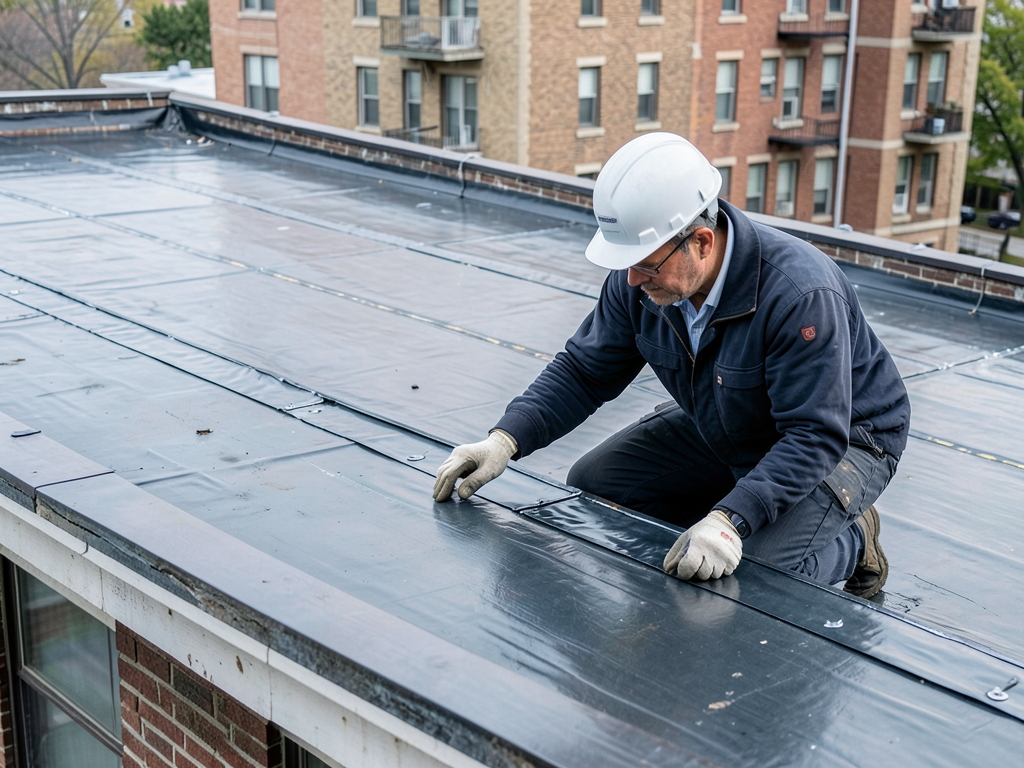
Professional roofers use systematic inspection methods to locate leaks. They examine the roof surface for visible damage, checking for blisters, cracks, or areas of standing water. They inspect seams, flashing, and penetrations closely for signs of failure.
Interior inspection reveals water stains, mold growth, or structural damage. Technicians trace water paths to identify the highest point of moisture, which often indicates the leak source. They check ceilings, walls, and attic spaces for signs of water intrusion.
Moisture Detection Technology
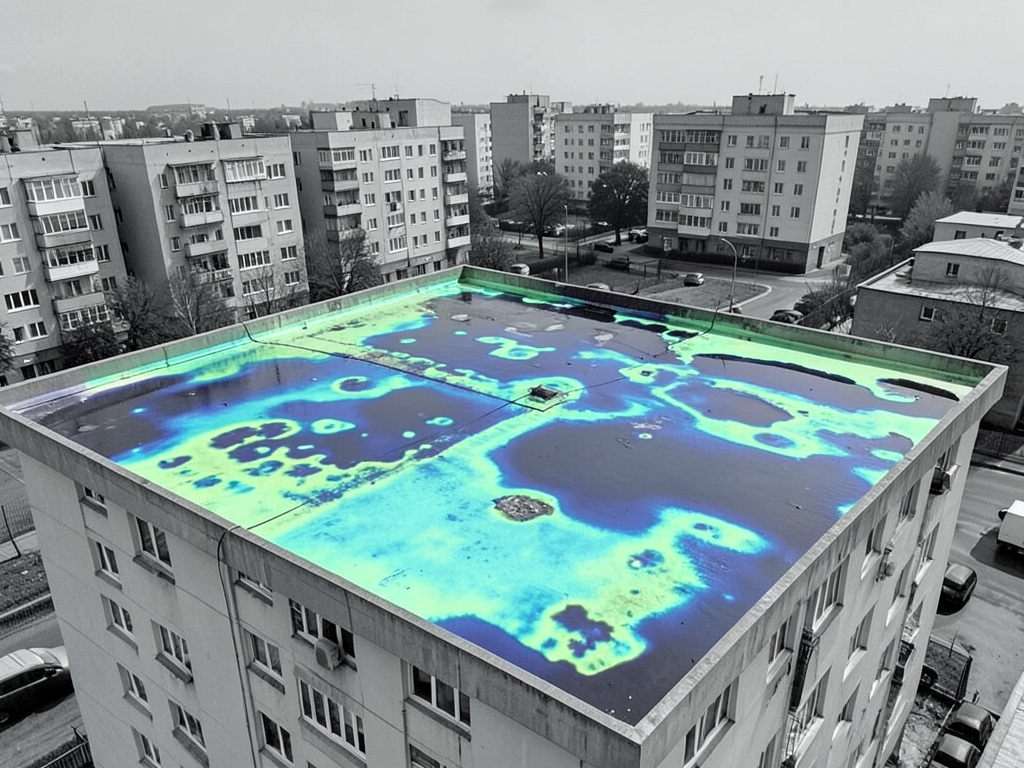
Modern leak detection uses infrared scanning to identify moisture beneath the surface. Wet areas show different thermal patterns than dry areas. This technology helps locate leaks without destructive testing.
Electronic leak detection sends electrical currents through the roof membrane. Technicians use specialized equipment to trace current paths and locate breaches. This method works even when the leak is not visible to the naked eye.
Water Testing Procedures
When visual inspection fails to locate a leak, technicians perform water testing. They systematically soak different roof areas while monitoring the interior for water entry. This process isolates the exact leak location.
Water testing requires patience since some leaks only appear after extended exposure. Technicians document their findings to create a comprehensive repair plan. They may need to test multiple areas to find all active leaks. 24/7 Emergency Roof Repair.
Repair Solutions for Common Issues
Ponding Water Solutions
Fixing ponding water often requires structural modifications. Technicians may install tapered insulation to create positive drainage slopes. They can add roof crickets to divert water toward drains. In severe cases, they recommend roof replacement with improved drainage design.
Regular maintenance prevents ponding from becoming severe. Keeping drains clear and removing debris helps water flow properly. Property owners should schedule annual roof cleaning to prevent drainage issues.
Membrane Repair Options
Small membrane repairs involve cleaning the damaged area and applying compatible patching materials. EPDM roofs use specific adhesives and patches. TPO and PVC membranes require heat welding for proper repairs.
Large-scale membrane damage often necessitates partial or complete roof replacement. Modern materials offer better durability and longer warranties. Property owners should consider replacement when repair costs approach replacement costs.
Flashing and Penetration Repairs
Flashing repairs involve removing damaged sections and installing new materials. Technicians use compatible metals and proper fastening techniques. They ensure all joints are sealed to prevent future leaks.
Penetration seals require removing old sealants and applying new materials. Modern sealants offer better UV resistance and flexibility. Technicians may recommend upgrading penetration details to meet current building standards.
Somerville Building Code Requirements
Massachusetts building codes require specific standards for flat roof installations. The Massachusetts State Building Code (780 CMR) mandates minimum insulation values, proper drainage, and approved materials. Somerville follows these state requirements with local amendments. Massachusetts State Building Code 780 CMR.
Ice and water shield requirements extend 24 inches inside the exterior wall line. This protects against ice dam formation common in New England winters. The code also requires proper ventilation to prevent moisture accumulation in roof assemblies.
Historic district properties face additional requirements. Somerville’s historic preservation guidelines may restrict visible roofing changes. Property owners must obtain approval before replacing roofs on designated properties. Tile Roofing Services.
Preventative Maintenance Strategies
Seasonal Inspection Schedule
Property owners should inspect flat roofs twice yearly. Spring inspections identify winter damage. Fall inspections prepare for winter weather. Additional inspections after major storms help catch problems early.
Professional inspections should include detailed documentation with photos. This creates a maintenance history and helps identify developing problems. Property owners should address minor issues before they become major repairs.
Drainage System Maintenance
Keeping drainage systems clear prevents most flat roof problems. Remove leaves, debris, and sediment from drains and scuppers. Check downspouts for blockages. Ensure roof drains are properly aligned and functioning.
Ice removal in winter prevents drainage blockages. Use plastic tools to avoid membrane damage. Never use salt or chemicals that could harm roofing materials.
Membrane Protection
Protect the membrane from foot traffic and equipment damage. Install walkway pads in high-traffic areas. Use protective mats under HVAC equipment. Avoid dragging heavy objects across the roof surface.
Consider applying roof coatings to extend membrane life. Reflective coatings reduce heat absorption and UV damage. Silicone coatings provide excellent waterproofing and flexibility.
When to Call a Professional
Property owners should contact professionals when they notice water stains, mold growth, or visible roof damage. Don’t wait for leaks to become severe. Early intervention prevents costly interior damage.
Professional roofers have the equipment and expertise to diagnose complex issues. They understand local building codes and can recommend appropriate solutions. DIY repairs often fail and void warranties.
Emergency services are available for active leaks. Quick response prevents further damage. Most roofing companies offer 24/7 emergency repair services for urgent situations.
Cost Factors for Flat Roof Repairs
Repair costs vary based on damage extent, roof size, and material type. Simple seam repairs might cost a few hundred dollars. Complete roof replacement can cost thousands. Property owners should get multiple quotes for major repairs.
Building access affects repair costs. Urban locations like Somerville may require special equipment or permits. Roof height, complexity, and material disposal all impact pricing.
Warranty coverage varies by repair type and contractor. Some repairs carry limited warranties. New installations often include longer manufacturer warranties. Ask about warranty terms before committing to repairs.
Choosing the Right Contractor
Select contractors with experience in flat roof systems. Verify licenses and insurance coverage. Check references from similar properties. Avoid contractors who cannot provide proof of insurance or licensing.
Local experience matters for Somerville buildings. Contractors familiar with area architecture understand common issues. They know local suppliers and permitting requirements.
Get detailed written estimates that specify materials, work scope, and timeline. Avoid vague proposals. Quality contractors provide clear documentation and stand behind their work.
Frequently Asked Questions
How long do flat roofs typically last in Somerville?
Flat roofs in Somerville typically last 15-25 years depending on material quality and maintenance. Built-up roofs may last 15-20 years. EPDM membranes often last 20-25 years. TPO and PVC systems can last 25-30 years with proper care.
Can I walk on my flat roof to inspect it myself?
Walking on flat roofs requires caution. Distribute weight evenly and avoid damaged areas. Wear soft-soled shoes to prevent membrane damage. Never walk on roofs with visible damage or ponding water. Professional inspections are safer and more thorough.
What’s the best time of year for flat roof repairs in Somerville?
Late spring through early fall offers ideal conditions for flat roof repairs. Temperatures between 45-85 degrees Fahrenheit allow proper material adhesion. Winter repairs are possible but may require special cold-weather materials and techniques.
How can I prevent ice dams on my flat roof?
Prevent ice dams by ensuring proper roof ventilation and insulation. Keep drains clear of debris. Consider installing heat cables in problem areas. Professional assessment can identify specific vulnerabilities in your roof system.
Are flat roof repairs covered by insurance?
Insurance coverage depends on the cause of damage. Storm damage is typically covered. Wear and tear from age usually isn’t covered. Check your policy details and document damage with photos for insurance claims.
[IMAGE_PLACEHOLDER_3>
Take Action Before Your Next Leak
Flat roof leaks in Somerville’s older apartment buildings won’t fix themselves. Every month of delay allows water damage to worsen, potentially affecting electrical systems, insulation, and interior finishes. Property owners who address issues early save significant money and prevent tenant disruption.
Don’t let another storm season pass without addressing your roof concerns. Call (857) 387-1711 today to schedule a comprehensive inspection. Our experienced technicians understand Somerville’s unique building challenges and can recommend cost-effective solutions tailored to your property’s needs.
Pick up the phone and call (857) 387-1711 before the next storm hits. Your tenants, your building, and your budget will thank you for taking action now rather than waiting for emergency repairs during the next Nor’easter.
{
“@context”: “https://schema.org”,
“@type”: “BlogPosting”,
“headline”: “Common Reasons Flat Roofs Leak in Older Somerville Apartment Buildings”,
“description”: “Learn why flat roofs in Somerville’s older apartment buildings fail and how to fix them. Expert leak detection, repair, and prevention for property owners.”,
“wordCount”: 1846,
“datePublished”: “2026-02-28T15:40:00.000Z”,
“dateModified”: “2026-02-28T15:40:00.000Z”,
“inLanguage”: “en-US”,
“mainEntityOfPage”: {
“@type”: “WebPage”,
“@id”: “https://silverlineroofingboston.com”
},
“publisher”: {
“@type”: “LocalBusiness”,
“name”: “Silverline Roofing Boston”,
“url”: “https://silverlineroofingboston.com”
},
“author”: {
“@type”: “Organization”,
“name”: “Silverline Roofing Boston”,
“url”: “https://silverlineroofingboston.com”
},
“image”: {
“@type”: “ImageObject”,
“url”: “https://silverlineroofingboston.com/wp-content/uploads/2026/03/common-reasons-flat-roofs-leak-in-older-somerville-1.png”
}
}
{
“@context”: “https://schema.org”,
“@type”: “RoofingContractor”,
“name”: “Silverline Roofing Boston”,
“url”: “https://silverlineroofingboston.com”,
“address”: {
“@type”: “PostalAddress”,
“addressLocality”: “Boston”
},
“areaServed”: {
“@type”: “City”,
“name”: “Boston”
}
}
{
“@context”: “https://schema.org”,
“@type”: “FAQPage”,
“mainEntity”: [
{
“@type”: “Question”,
“name”: “How long do flat roofs typically last in Somerville?”,
“acceptedAnswer”: {
“@type”: “Answer”,
“text”: “Flat roofs in Somerville typically last 15-25 years depending on material quality and maintenance. Built-up roofs may last 15-20 years. EPDM membranes often last 20-25 years. TPO and PVC systems can last 25-30 years with proper care.”
}
},
{
“@type”: “Question”,
“name”: “Can I walk on my flat roof to inspect it myself?”,
“acceptedAnswer”: {
“@type”: “Answer”,
“text”: “Walking on flat roofs requires caution. Distribute weight evenly and avoid damaged areas. Wear soft-soled shoes to prevent membrane damage. Never walk on roofs with visible damage or ponding water. Professional inspections are safer and more thorough.”
}
},
{
“@type”: “Question”,
“name”: “What’s the best time of year for flat roof repairs in Somerville?”,
“acceptedAnswer”: {
“@type”: “Answer”,
“text”: “Late spring through early fall offers ideal conditions for flat roof repairs. Temperatures between 45-85 degrees Fahrenheit allow proper material adhesion. Winter repairs are possible but may require special cold-weather materials and techniques.”
}
},
{
“@type”: “Question”,
“name”: “How can I prevent ice dams on my flat roof?”,
“acceptedAnswer”: {
“@type”: “Answer”,
“text”: “Prevent ice dams by ensuring proper roof ventilation and insulation. Keep drains clear of debris. Consider installing heat cables in problem areas. Professional assessment can identify specific vulnerabilities in your roof system.”
}
},
{
“@type”: “Question”,
“name”: “Are flat roof repairs covered by insurance?”,
“acceptedAnswer”: {
“@type”: “Answer”,
“text”: “Insurance coverage depends on the cause of damage. Storm damage is typically covered. Wear and tear from age usually isn’t covered. Check your policy details and document damage with photos for insurance claims.”
}
}
]
}
{
“@context”: “https://schema.org”,
“@type”: “BreadcrumbList”,
“itemListElement”: [
{
“@type”: “ListItem”,
“position”: 1,
“name”: “Home”,
“item”: “https://silverlineroofingboston.com”
},
{
“@type”: “ListItem”,
“position”: 2,
“name”: “Blog”,
“item”: “https://silverlineroofingboston.com/blog”
},
{
“@type”: “ListItem”,
“position”: 3,
“name”: “Common Reasons Flat Roofs Leak in Older Somerville Apartment Buildings”
}
]
}
{
“@context”: “https://schema.org”,
“@type”: “Service”,
“serviceType”: “Roofing”,
“provider”: {
“@type”: “LocalBusiness”,
“name”: “Silverline Roofing Boston”,
“url”: “https://silverlineroofingboston.com”
},
“areaServed”: {
“@type”: “City”,
“name”: “Boston”
},
“description”: “Learn why flat roofs in Somerville’s older apartment buildings fail and how to fix them. Expert leak detection, repair, and prevention for property owners.”
}