
Comparing solar shingles and traditional panels for historic Cambridge rooftops
Choosing between solar shingles and traditional panels for your Cambridge home means understanding how each system works with your roof’s structure, your neighborhood’s historic requirements, and Massachusetts’ solar incentives. Solar shingles integrate directly into your roofline, offering a seamless look that often meets Cambridge Historical Commission standards. Traditional panels mount on racks above your existing roof, providing higher efficiency and lower upfront costs but with a more visible profile. Cambridge Historical Commission solar guidelines.
For Cambridge’s historic districts like Harvard Square and Central Square, the visual impact matters. Solar shingles from manufacturers like GAF Energy Timberline Solar can preserve your home’s architectural character while generating clean energy. Traditional panels, while more efficient, may require additional approval steps from the Cambridge Historical Commission due to their raised profile and mounting hardware.
Massachusetts offers strong financial incentives for both options. The Federal Solar Tax Credit covers 30% of installation costs in 2026, while the MA SMART Program provides ongoing payments based on energy production. Cambridge residents also benefit from net metering through Eversource, allowing you to earn credits for excess power sent back to the grid. Massachusetts Clean Energy Center solar incentives.
Key differences between solar shingles and traditional panels
Solar shingles function as both your roof covering and energy generator. They install flush with your existing roofing materials, creating a uniform appearance that blends with Cambridge’s historic architecture. Traditional panels mount on aluminum racks above your roof surface, sitting several inches above the shingles. Why Metal Roofing is Becoming a Top Choice for Coastal East Boston Homes.
Efficiency varies significantly between the two. Traditional panels typically achieve 18-22% efficiency, converting more sunlight to electricity per square foot. Solar shingles average 14-18% efficiency due to their integrated design and lower operating temperatures. This means you’ll need more roof area with solar shingles to generate the same power as traditional panels.
Installation complexity differs too. Solar shingles require removing your existing roof covering and installing new roofing with integrated solar cells. This process takes 3-5 days for an average home. Traditional panels mount to your existing roof in 1-2 days, making them faster to install but potentially more vulnerable to wind uplift in Cambridge’s coastal storms. The Best Roofing Strategies for Multi-Family Property Owners in Savin Hill.
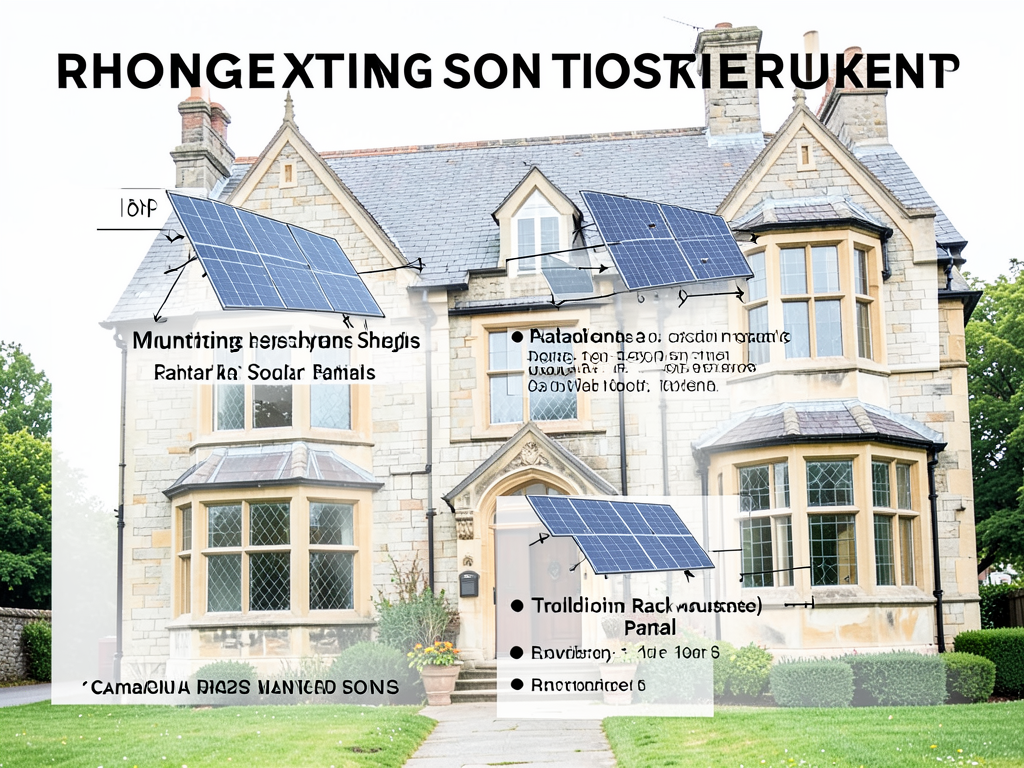
A technical diagram comparing the mounting systems of solar shingles versus traditional rack-mounted panels on a Cambridge-style historic home
Cambridge Historical Commission requirements for solar installations
The Cambridge Historical Commission (CHC) reviews all solar installations in historic districts to ensure they don’t compromise architectural integrity. For solar shingles, the approval process often moves faster since they integrate with your roofline and maintain the home’s original profile. The CHC particularly favors installations that aren’t visible from public streets.
Traditional panels face stricter scrutiny. The CHC evaluates factors like panel color, mounting hardware visibility, and how the installation affects your roof’s original materials. Panels mounted parallel to the roof plane have better approval odds than those angled upward. In some cases, the CHC may require screening or strategic placement to minimize visual impact.. Read more about Choosing a roofing material that matches the specific aesthetic of historic homes in Salem.
Cambridge’s building code, based on the Massachusetts State Building Code 780 CMR, requires structural engineering assessments for any solar installation. Older Cambridge homes, particularly those built before 1940 in areas like Mid-Cambridge and Neighborhood Nine, may need roof reinforcement to handle the additional weight. Snow loads in Cambridge average 40-50 pounds per square foot, and solar installations must account for this when calculating total roof loading.
Cost comparison and financial incentives in 2026
Solar shingles cost $4.50-$7.00 per watt installed, while traditional panels run $2.50-$4.00 per watt. For a typical Cambridge home needing 6 kilowatts of capacity, solar shingles would cost $27,000-$42,000 versus $15,000-$24,000 for traditional panels.
The Federal Investment Tax Credit (ITC) reduces these costs by 30% in 2026. Massachusetts’ SMART Program adds $0.05-$0.25 per kilowatt-hour produced, depending on your block and system size. Eversource’s net metering program in Cambridge credits you at the full retail rate for excess electricity, currently around $0.28 per kilowatt-hour.
Cambridge residents may qualify for additional local incentives through the Cambridge Energy Alliance, which offers rebates up to $1,000 for solar installations. The MassCEC (Massachusetts Clean Energy Center) also provides grants for income-eligible homeowners, potentially covering 30-50% of installation costs.
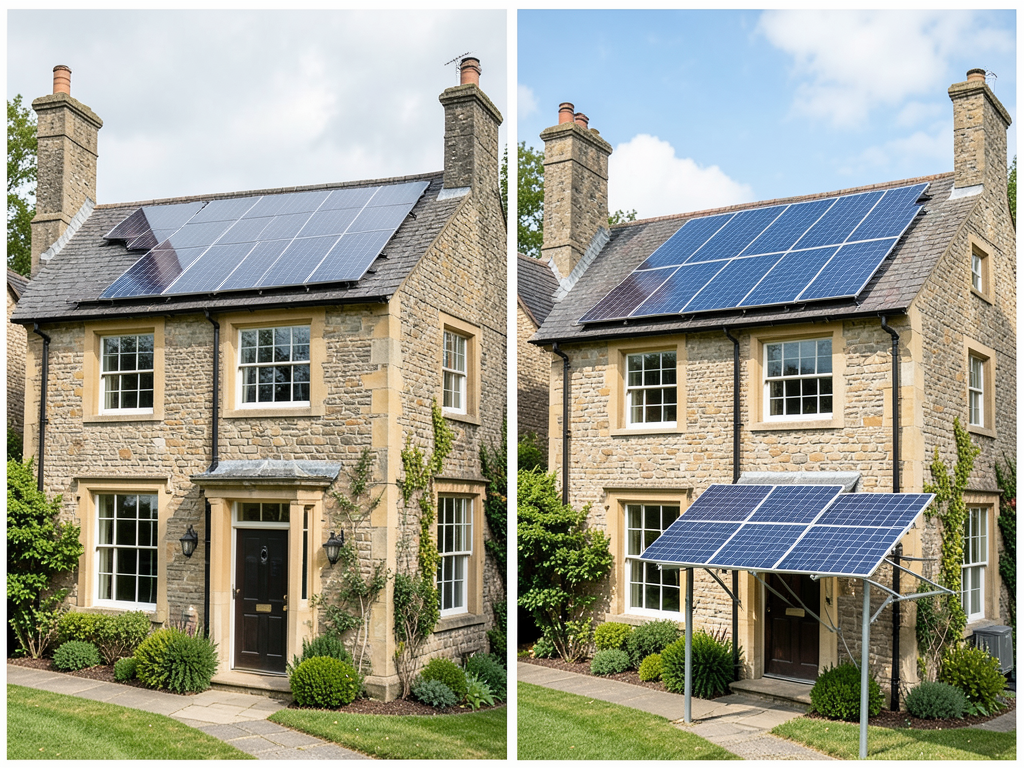
Before and after photos showing a Cambridge historic home with solar shingles installed flush with the roofline versus traditional panels mounted on racks
Structural considerations for Cambridge’s housing stock
Cambridge’s housing stock includes many homes built between 1890 and 1940 with balloon-frame construction. These structures often have 2×4 roof rafters spaced 16 or 24 inches apart, which may not meet modern snow load requirements for solar installations. A structural engineer must evaluate your roof’s ability to support the additional weight.
Solar shingles add 2-4 pounds per square foot to your roof, while traditional panels with mounting hardware add 3-5 pounds per square foot. For a 2,000-square-foot roof, that’s 4,000-10,000 pounds of additional load. Cambridge’s clay-rich soils can cause foundation settling over time, potentially affecting roof load distribution.
The Massachusetts State Building Code requires ice barrier membranes extending 24 inches inside the exterior wall line. When installing solar, these membranes must remain intact to prevent ice dam damage. Solar shingles often integrate better with existing ice barrier systems since they replace the roof covering entirely.
Weather performance in New England conditions
Cambridge experiences Nor’easters with wind gusts up to 70 mph and annual snowfall averaging 48 inches. Traditional panels mounted on racks must meet wind uplift requirements of 30-40 pounds per square foot. Solar shingles, being integrated into the roof, distribute wind loads more evenly but require proper underlayment and flashing.
Ice dams form when heat escapes through your roof, melting snow that refreezes at the eaves. Both solar options can help reduce ice dams by keeping your roof colder, but improper installation can create new problems. Solar shingles eliminate gaps where ice can form beneath traditional panel mounting hardware.
Salt air from Revere Beach and other coastal areas can corrode mounting hardware within 5-7 years if not properly treated. Stainless steel or aluminum hardware with marine-grade finishes extends system life in Cambridge’s coastal environment. Regular maintenance checks after major storms help identify loose connections or damaged panels before leaks develop.
Installation timeline and process
Solar shingle installation follows a different sequence than traditional panels. First, your existing roof covering must be removed down to the deck. Next, ice and water shield installation occurs, followed by the solar shingle underlayment. Finally, the solar shingles install in overlapping courses, similar to traditional asphalt shingles.. Read more about Why steaming is the only safe way to remove ice from a delicate slate roof in Brookline.
Traditional panel installation begins with mounting the rack system to your roof rafters using lag bolts. Flashing installs around each penetration to prevent leaks. Panels mount to the rails, followed by electrical connections and inverter installation. The entire process typically takes 1-2 days versus 3-5 days for solar shingles.
Both systems require electrical work including DC wiring from panels to an inverter, then AC wiring to your electrical panel. Eversource interconnection approval takes 2-4 weeks after installation. Cambridge’s building department requires final inspections before you can activate your system and begin generating power.
Maintenance requirements and longevity
Solar shingles have a 25-30 year lifespan with minimal maintenance. Their integrated design means no exposed wiring or mounting hardware to corrode. Annual inspections check for damaged shingles and ensure electrical connections remain secure. Cleaning may be necessary every 2-3 years to maintain optimal performance.
Traditional panels last 25-35 years but require more maintenance. The mounting hardware needs inspection every 1-2 years for loose bolts or corroded components. Panel surfaces accumulate dust and debris, reducing efficiency by 5-15% if not cleaned. Snow removal may be necessary in winter to restore power generation.
Both systems include monitoring software that alerts you to performance issues. Traditional panels allow individual panel replacement if one fails, while solar shingle replacement requires removing surrounding shingles. Warranty coverage typically includes 25-year performance guarantees for power output and 10-15 year product warranties for manufacturing defects.
Making the right choice for your Cambridge home
Solar shingles work best for homeowners prioritizing aesthetics and historical preservation. If your home sits in a Cambridge historic district or you want a seamless roofline, solar shingles provide the best solution. They’re particularly suitable for homes undergoing roof replacement, as the combined cost of new roofing and solar becomes more competitive. Roofing Quincy.
Traditional panels suit homeowners focused on maximum energy production and lower upfront costs. If your primary goal is reducing electricity bills or achieving energy independence, traditional panels offer better efficiency and faster payback periods. They’re also ideal for homes with limited roof space that need to maximize power output per square foot.
Consider your roof’s orientation and shading. South-facing roofs without obstructions generate the most power regardless of system type. East and west-facing roofs work better with traditional panels due to their higher efficiency. Heavy tree cover may make neither option cost-effective without first addressing shading issues.
A technician using a moisture meter to check roof deck integrity before solar installation, demonstrating the diagnostic process required for Cambridge’s older homes
Frequently Asked Questions
Do I need special permits for solar installation in Cambridge?
Yes. Cambridge requires building permits for all solar installations. You’ll need structural engineering drawings, electrical plans, and potentially Cambridge Historical Commission approval if your home is in a historic district. The process typically takes 2-4 weeks for review.
How long does it take to recoup my investment?
Payback periods range from 6-12 years depending on your system size, energy usage, and available incentives. Solar shingles typically have longer payback periods due to higher upfront costs, while traditional panels often break even in 6-8 years with current incentives.
Can I install solar if my roof needs replacement soon?
It’s best to replace your roof before installing solar shingles, as they integrate with the roofing system. For traditional panels, you can install them on an older roof, but you’ll need to pay to remove and reinstall them when you eventually replace the roof. Tile Roofing Services.
What happens during a power outage?
Most grid-tied solar systems shut down during outages for safety. To maintain power during outages, you’ll need battery storage like the Tesla Powerwall or similar systems, which add $10,000-$20,000 to your installation cost.
Are there any Cambridge-specific solar incentives?
Cambridge offers the Cambridge Energy Alliance rebate program, providing up to $1,000 for solar installations. Some neighborhoods also qualify for additional incentives through the Green Cambridge initiative. Check with your installer about current local offerings.
Ready to explore solar options for your Cambridge home? Call (857) 387-1711 today to schedule your free consultation and learn which system works best for your historic property.
Don’t wait until next winter’s storms damage your aging roof. Contact us now at (857) 387-1711 to get your solar assessment started before the busy season hits.
{
“@context”: “https://schema.org”,
“@type”: “BlogPosting”,
“headline”: “Comparing solar shingles and traditional panels for historic Cambridge rooftops”,
“description”: “Learn how solar shingles vs traditional panels perform on Cambridge’s historic roofs. Compare costs, installation, and Cambridge Historical Commission requirements for 2026.”,
“wordCount”: 1808,
“datePublished”: “2026-06-09T07:46:00.000Z”,
“dateModified”: “2026-06-09T07:46:00.000Z”,
“inLanguage”: “en-US”,
“mainEntityOfPage”: {
“@type”: “WebPage”,
“@id”: “https://silverlineroofingboston.com”
},
“publisher”: {
“@type”: “LocalBusiness”,
“name”: “Silverline Roofing Boston”,
“url”: “https://silverlineroofingboston.com”
},
“author”: {
“@type”: “Organization”,
“name”: “Silverline Roofing Boston”,
“url”: “https://silverlineroofingboston.com”
},
“image”: {
“@type”: “ImageObject”,
“url”: “https://silverlineroofingboston.com/wp-content/uploads/2026/03/comparing-solar-shingles-and-traditional-panels-fo-1.png”
}
}
{
“@context”: “https://schema.org”,
“@type”: “RoofingContractor”,
“name”: “Silverline Roofing Boston”,
“url”: “https://silverlineroofingboston.com”,
“address”: {
“@type”: “PostalAddress”,
“addressLocality”: “Boston”
},
“areaServed”: {
“@type”: “City”,
“name”: “Boston”
}
}
{
“@context”: “https://schema.org”,
“@type”: “FAQPage”,
“mainEntity”: [
{
“@type”: “Question”,
“name”: “Do I need special permits for solar installation in Cambridge?”,
“acceptedAnswer”: {
“@type”: “Answer”,
“text”: “Yes. Cambridge requires building permits for all solar installations. You’ll need structural engineering drawings, electrical plans, and potentially Cambridge Historical Commission approval if your home is in a historic district. The process typically takes 2-4 weeks for review.”
}
},
{
“@type”: “Question”,
“name”: “How long does it take to recoup my investment?”,
“acceptedAnswer”: {
“@type”: “Answer”,
“text”: “Payback periods range from 6-12 years depending on your system size, energy usage, and available incentives. Solar shingles typically have longer payback periods due to higher upfront costs, while traditional panels often break even in 6-8 years with current incentives.”
}
},
{
“@type”: “Question”,
“name”: “Can I install solar if my roof needs replacement soon?”,
“acceptedAnswer”: {
“@type”: “Answer”,
“text”: “It’s best to replace your roof before installing solar shingles, as they integrate with the roofing system. For traditional panels, you can install them on an older roof, but you’ll need to pay to remove and reinstall them when you eventually replace the roof. Tile Roofing Services.”
}
},
{
“@type”: “Question”,
“name”: “What happens during a power outage?”,
“acceptedAnswer”: {
“@type”: “Answer”,
“text”: “Most grid-tied solar systems shut down during outages for safety. To maintain power during outages, you’ll need battery storage like the Tesla Powerwall or similar systems, which add $10,000-$20,000 to your installation cost.”
}
},
{
“@type”: “Question”,
“name”: “Are there any Cambridge-specific solar incentives?”,
“acceptedAnswer”: {
“@type”: “Answer”,
“text”: “Cambridge offers the Cambridge Energy Alliance rebate program, providing up to $1,000 for solar installations. Some neighborhoods also qualify for additional incentives through the Green Cambridge initiative. Check with your installer about current local offerings.”
}
}
]
}
{
“@context”: “https://schema.org”,
“@type”: “BreadcrumbList”,
“itemListElement”: [
{
“@type”: “ListItem”,
“position”: 1,
“name”: “Home”,
“item”: “https://silverlineroofingboston.com”
},
{
“@type”: “ListItem”,
“position”: 2,
“name”: “Blog”,
“item”: “https://silverlineroofingboston.com/blog”
},
{
“@type”: “ListItem”,
“position”: 3,
“name”: “Comparing solar shingles and traditional panels for historic Cambridge rooftops”
}
]
}
{
“@context”: “https://schema.org”,
“@type”: “Service”,
“serviceType”: “Roofing”,
“provider”: {
“@type”: “LocalBusiness”,
“name”: “Silverline Roofing Boston”,
“url”: “https://silverlineroofingboston.com”
},
“areaServed”: {
“@type”: “City”,
“name”: “Boston”
},
“description”: “Learn how solar shingles vs traditional panels perform on Cambridge’s historic roofs. Compare costs, installation, and Cambridge Historical Commission requirements for 2026.”
}