
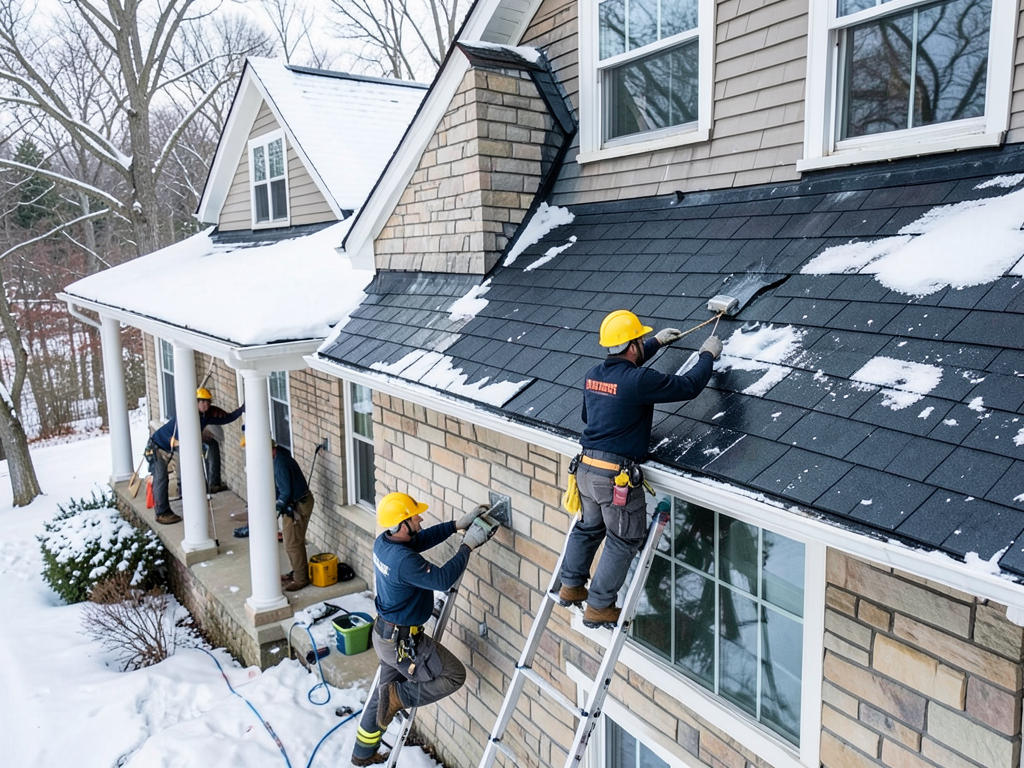
How to survive the chaos and noise of a roof replacement while working from home
Roof replacement noise can reach 100+ decibels—similar to a rock concert or jackhammer. For Boston remote workers, this means dealing with constant hammering, nail guns, and crew movement throughout the workday. The good news is you can minimize disruption with the right preparation and strategies. EPA indoor air quality guidelines.
Understanding what to expect during your roof replacement
Most roof replacements in Boston take 1-3 days depending on roof size and weather. Crews typically start at 7:30 AM and work until 5:30 PM. The loudest work happens during tear-off and installation when old shingles are removed and new materials are nailed down.
The noise pattern follows a predictable cycle. Morning hours involve tear-off with heavy debris removal. Midday brings the loudest hammering as crews install new shingles. Afternoon focuses on cleanup and final touches. Understanding this rhythm helps you plan your most critical work around the quieter periods.
Creating your noise survival strategy
Start by identifying your most important work hours. If you have client calls or deadlines, schedule them during the afternoon when crews are wrapping up and noise decreases. Use the morning hours for tasks that don’t require deep concentration.
Sound travels differently through various home structures. Single-story homes experience more direct noise impact than multi-story buildings. Homes with attic insulation absorb more sound than those with exposed roof decks. Test your space by having someone make noise outside while you work inside to identify the worst-affected areas.
Soundproofing techniques that actually work
Heavy curtains over windows facing the roof can reduce noise by 3-5 decibels. Weatherstripping doors and windows creates an additional sound barrier. Bookshelves filled with books against exterior walls help absorb sound waves.
For temporary solutions, moving to interior rooms away from exterior walls significantly reduces noise levels. Basements often provide the quietest workspace since sound has more barriers to penetrate. If you have a finished basement, this becomes your best option during roof work.
Essential equipment for noise management
Noise-canceling headphones are your first line of defense. Models with active noise cancellation can reduce construction noise by 20-30 decibels. Over-ear designs work better than earbuds for continuous noise exposure. Battery life matters—choose models with at least 20-hour capacity for full workday coverage.
White noise machines or apps can mask construction sounds. Rainfall, ocean waves, or brown noise work better than music for concentration. Position the machine between you and the noise source for maximum effectiveness.
Consider a backup internet connection. Construction can damage exterior cables or cause temporary service interruptions. A mobile hotspot ensures you stay connected during critical meetings or deadlines.
Communication strategies with your roofing crew
Establish clear communication channels before work begins. Exchange cell phone numbers with the crew foreman. This allows you to alert them about important calls or meetings without disrupting their workflow.
Most professional roofing crews understand the challenges of working near occupied homes. They can often adjust their loudest work to certain times of day if given advance notice about your schedule. Be specific about your needs rather than making general requests. Why Metal Roofing is Becoming a Top Choice for Coastal East Boston Homes.
Ask about the crew’s break schedule. Most teams take a lunch break around noon and shorter breaks mid-morning and mid-afternoon. These quieter periods become your best opportunities for focused work or important calls.
Alternative workspace options
Plan backup locations before your roof replacement begins. Local libraries offer quiet spaces with free Wi-Fi. Coffee shops provide ambient noise that masks construction sounds. Some Boston coworking spaces offer day passes for temporary workspace needs.
Consider timing your most critical work around the crew’s schedule. If you know they’ll be working on the back of your house in the morning, plan to use rooms on the opposite side or move to an alternative location during those hours.
For longer projects, some remote workers arrange temporary office space with colleagues or rent a small office for the duration of major construction work.
Protecting your home and belongings
Construction creates vibrations that travel through walls and floors. Secure wall hangings, especially in rooms directly under the roof. Remove fragile items from shelves in upper-level rooms. Close windows to prevent dust and debris from entering your home.
Cover electronics and important documents with sheets or plastic covers. Construction dust can settle on keyboards, monitors, and paperwork. Consider moving valuable items to interior rooms away from exterior walls.
Establish a pet safety plan. Construction noise can stress animals. Create a quiet space in an interior room with familiar items. Consider pet daycare options for the noisiest days if your pet is particularly sensitive to sound.
Managing stress and maintaining productivity
Construction noise triggers stress responses in many people. Practice stress management techniques like deep breathing or short meditation breaks. Take regular breaks away from your workspace to reset your focus.
Break your workday into smaller chunks rather than marathon sessions. This helps maintain productivity despite interruptions. Use noise as a cue to take short breaks—stand up, stretch, or grab water when hammering intensifies.
Communicate with your employer or clients about temporary work conditions. Most understand construction-related disruptions and appreciate proactive communication about potential availability changes.
When to consider temporary relocation
For extensive roof replacements or if you have critical deadlines, temporary relocation might be worth considering. Stay with family or friends for a few days. Book a short-term rental in a quieter area. Some hotels offer extended stay rates that make this option more affordable.
Consider the cost-benefit analysis. If a $500 hotel stay preserves a $5,000 client project or prevents missed deadlines, it’s a worthwhile investment. Factor in your productivity loss during noisy work—if you’re accomplishing only half your normal output, temporary relocation might actually save money.
Post-replacement recovery
Once your new roof is installed, give yourself time to readjust to normal noise levels. Construction sounds can make you hyper-aware of normal household noises for several days after completion.
Take time to appreciate your new roof’s benefits: improved energy efficiency, better protection from Boston’s harsh weather, and increased home value. The temporary disruption leads to long-term peace of mind knowing your home is properly protected.
Consider scheduling a follow-up inspection after the first major storm to ensure everything is functioning correctly. This gives you confidence in your investment and identifies any minor adjustments needed.
Making the best of a challenging situation
Roof replacement while working from home is challenging but manageable with proper preparation. Focus on what you can control: your workspace setup, communication with the crew, and your response to the noise.
Remember that this is temporary. Most roof replacements in Boston are completed within 3-5 days. The short-term inconvenience leads to years of improved home protection and energy efficiency.
Consider using this time to tackle tasks that don’t require deep concentration. Catch up on administrative work, organize digital files, or handle routine communications during the noisiest hours. Save your most demanding cognitive work for quieter periods.
Call (857) 387-1711 today to schedule your inspection and get specific timeline information for your project. Our team understands the challenges of working from home during construction and can help you plan for minimal disruption.
Frequently Asked Questions
How long does roof replacement noise typically last each day?
Roof replacement crews typically work from 7:30 AM to 5:30 PM, with the loudest noise occurring between 9 AM and 3 PM during active installation. Morning hours involve tear-off and debris removal, while afternoon focuses on cleanup and finishing work.
Can I work effectively with roof replacement happening nearby?
Yes, with proper preparation. Use noise-canceling headphones, create a quiet workspace in interior rooms, and communicate your schedule needs to the roofing crew. Many remote workers successfully manage construction noise by adjusting their work patterns and using soundproofing techniques. The Best Roofing Strategies for Multi-Family Property Owners in Savin Hill.
What’s the best way to communicate with roofing crews about my work schedule?
Exchange cell phone numbers with the crew foreman before work begins. Be specific about important calls or meetings rather than making general requests. Most professional crews can adjust their loudest work around your critical needs if given advance notice.
Should I consider temporary relocation during roof replacement?
Consider temporary relocation if you have critical deadlines, work in a field requiring absolute quiet, or have extreme noise sensitivity. For most people, proper preparation and noise management techniques make staying home feasible. The decision depends on your specific work requirements and noise tolerance.
How can I protect my electronics and documents during roof replacement?
Cover electronics with sheets or plastic covers to protect from construction dust. Move valuable documents to interior rooms away from exterior walls. Secure wall hangings and remove fragile items from shelves in upper-level rooms where vibrations are strongest. For more information, visit CDC noise exposure information.
{
“@context”: “https://schema.org”,
“@type”: “BlogPosting”,
“headline”: “How to survive the chaos and noise of a roof replacement while working from home”,
“description”: “Practical strategies for remote workers in Boston to handle roof replacement noise, protect productivity, and maintain sanity during construction.”,
“wordCount”: 1477,
“datePublished”: “2026-05-23T13:56:00.000Z”,
“dateModified”: “2026-05-23T13:56:00.000Z”,
“inLanguage”: “en-US”,
“mainEntityOfPage”: {
“@type”: “WebPage”,
“@id”: “https://silverlineroofingboston.com”
},
“publisher”: {
“@type”: “LocalBusiness”,
“name”: “Silverline Roofing Boston”,
“url”: “https://silverlineroofingboston.com”
},
“author”: {
“@type”: “Organization”,
“name”: “Silverline Roofing Boston”,
“url”: “https://silverlineroofingboston.com”
},
“image”: {
“@type”: “ImageObject”,
“url”: “https://silverlineroofingboston.com/wp-content/uploads/2026/03/how-to-survive-the-chaos-and-noise-of-a-roof-repla-1.png”
}
}
{
“@context”: “https://schema.org”,
“@type”: “RoofingContractor”,
“name”: “Silverline Roofing Boston”,
“url”: “https://silverlineroofingboston.com”,
“address”: {
“@type”: “PostalAddress”,
“addressLocality”: “Boston”
},
“areaServed”: {
“@type”: “City”,
“name”: “Boston”
}
}
{
“@context”: “https://schema.org”,
“@type”: “FAQPage”,
“mainEntity”: [
{
“@type”: “Question”,
“name”: “How long does roof replacement noise typically last each day?”,
“acceptedAnswer”: {
“@type”: “Answer”,
“text”: “Roof replacement crews typically work from 7:30 AM to 5:30 PM, with the loudest noise occurring between 9 AM and 3 PM during active installation. Morning hours involve tear-off and debris removal, while afternoon focuses on cleanup and finishing work.”
}
},
{
“@type”: “Question”,
“name”: “Can I work effectively with roof replacement happening nearby?”,
“acceptedAnswer”: {
“@type”: “Answer”,
“text”: “Yes, with proper preparation. Use noise-canceling headphones, create a quiet workspace in interior rooms, and communicate your schedule needs to the roofing crew. Many remote workers successfully manage construction noise by adjusting their work patterns and using soundproofing techniques. The Best Roofing Strategies for Multi-Family Property Owners in Savin Hill.”
}
},
{
“@type”: “Question”,
“name”: “What’s the best way to communicate with roofing crews about my work schedule?”,
“acceptedAnswer”: {
“@type”: “Answer”,
“text”: “Exchange cell phone numbers with the crew foreman before work begins. Be specific about important calls or meetings rather than making general requests. Most professional crews can adjust their loudest work around your critical needs if given advance notice.”
}
},
{
“@type”: “Question”,
“name”: “Should I consider temporary relocation during roof replacement?”,
“acceptedAnswer”: {
“@type”: “Answer”,
“text”: “Consider temporary relocation if you have critical deadlines, work in a field requiring absolute quiet, or have extreme noise sensitivity. For most people, proper preparation and noise management techniques make staying home feasible. The decision depends on your specific work requirements and noise tolerance.”
}
},
{
“@type”: “Question”,
“name”: “How can I protect my electronics and documents during roof replacement?”,
“acceptedAnswer”: {
“@type”: “Answer”,
“text”: “Cover electronics with sheets or plastic covers to protect from construction dust. Move valuable documents to interior rooms away from exterior walls. Secure wall hangings and remove fragile items from shelves in upper-level rooms where vibrations are strongest. For more information, visit CDC noise exposure information.”
}
}
]
}
{
“@context”: “https://schema.org”,
“@type”: “BreadcrumbList”,
“itemListElement”: [
{
“@type”: “ListItem”,
“position”: 1,
“name”: “Home”,
“item”: “https://silverlineroofingboston.com”
},
{
“@type”: “ListItem”,
“position”: 2,
“name”: “Blog”,
“item”: “https://silverlineroofingboston.com/blog”
},
{
“@type”: “ListItem”,
“position”: 3,
“name”: “How to survive the chaos and noise of a roof replacement while working from home”
}
]
}
{
“@context”: “https://schema.org”,
“@type”: “Service”,
“serviceType”: “Roofing”,
“provider”: {
“@type”: “LocalBusiness”,
“name”: “Silverline Roofing Boston”,
“url”: “https://silverlineroofingboston.com”
},
“areaServed”: {
“@type”: “City”,
“name”: “Boston”
},
“description”: “Practical strategies for remote workers in Boston to handle roof replacement noise, protect productivity, and maintain sanity during construction.”
}