Navigating the complexities of shared roof repairs for semi-detached homes in the South End
Shared roof repairs in South End brownstones present unique challenges that require specialized knowledge of historic preservation, local building codes, and Victorian-era construction techniques. The South End’s distinctive row house architecture means your roof doesn’t just protect your home—it’s often connected to your neighbor’s structure through shared party walls and common drainage systems. South End Landmark District Commission.
Before any repair work begins, understanding the specific requirements of the South End Landmark District Commission (SELDC) and Boston’s building permit process is essential. These regulations exist to preserve the architectural integrity of our neighborhood’s 19th-century brick facades and intricate rooflines that have defined the South End since its development in the 1850s.
Understanding South End brownstone roof architecture
South End brownstones feature several architectural elements that complicate roof repairs. The shared party wall construction means water infiltration in one unit can affect multiple properties. Historic slate and copper roofing materials require specialized installation techniques that differ significantly from modern asphalt shingles. Why Metal Roofing is Becoming a Top Choice for Coastal East Boston Homes.
The flat roof sections common in South End row houses create drainage challenges unique to urban settings. Without proper slope and flashing, water pools against parapet walls, leading to leaks that can damage interior plasterwork and historic woodwork. The freeze-thaw cycles characteristic of Boston winters exacerbate these issues, causing ice dams that push water under roofing materials. The Best Roofing Strategies for Multi-Family Property Owners in Savin Hill.
Historic cornice work and decorative brackets require careful removal and replacement during repairs. Many South End homes feature original copper gutters and downspouts that need specialized soldering techniques for repairs. The tight urban lots typical of the South End also limit equipment access, requiring manual material transport through narrow alleyways and interior staircases. The Best Way to Keep Gutters Clog-Free in Wooded West Roxbury Neighborhoods.
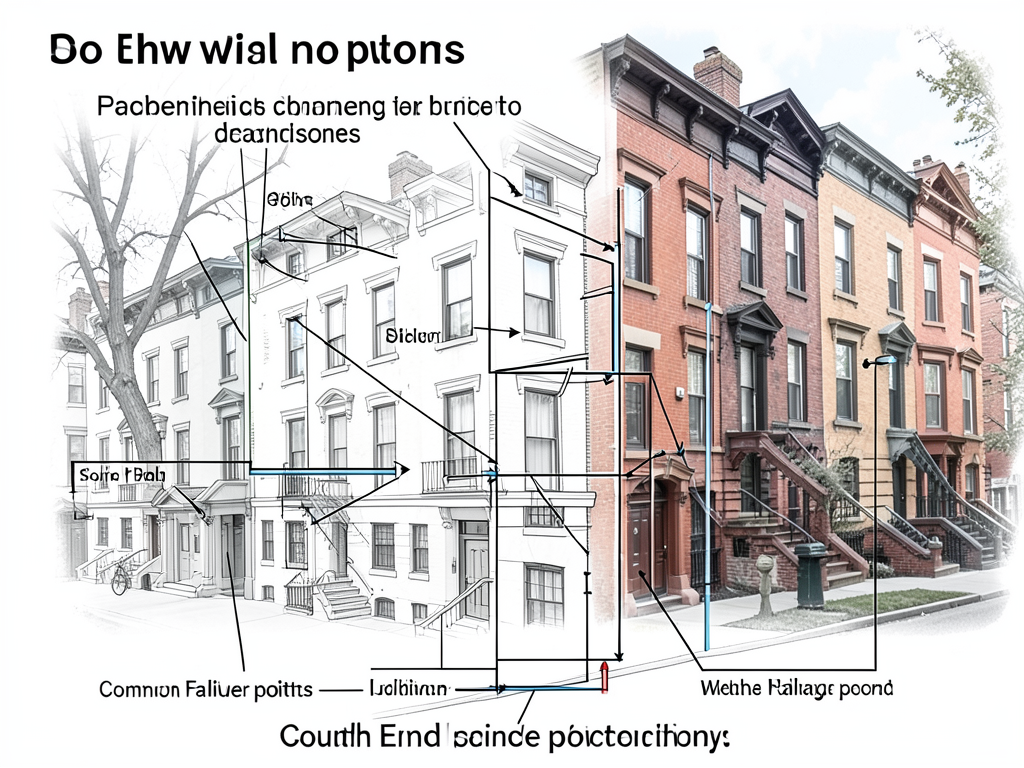
Image description: Technical diagram showing party wall connections and shared drainage systems in South End brownstone row houses, highlighting common failure points.
South End Landmark District Commission requirements
Any roof repair in the South End Landmark District requires approval from the SELDC before work begins. The commission reviews proposals to ensure repairs maintain the historic character of the neighborhood. This includes requirements for material matching, color consistency, and preservation of original architectural details.
The SELDC application process typically takes 30-45 days for standard repairs. Emergency repairs may qualify for expedited review, but documentation of the emergency situation is required. Working without proper permits can result in fines and mandatory removal of completed work.
Material specifications must match existing roofing as closely as possible. For slate roofs, this means using Vermont or Pennsylvania slate of similar thickness and color variation. Copper work must match the existing patina, and any new flashing should be installed to blend with original craftsmanship. Roofing Quincy.
The commission also reviews proposals for visible rooftop equipment like HVAC units or solar panels. These installations must be positioned to minimize visual impact from public ways. In some cases, equipment may need to be installed on rear-facing roof slopes or within existing parapet walls.
Common roofing materials in South End brownstones
Historic slate remains the most common roofing material in the South End, particularly on Victorian-era homes built between 1860 and 1900. Natural slate offers exceptional durability but requires specialized installation techniques. Each slate tile must be hand-nailed with copper or stainless steel fasteners to prevent rust staining. Bringing Natural Light into Your South End Attic with Custom Skylights.
Copper flashing and gutters represent another hallmark of South End roofing. The natural patina that develops on copper creates the distinctive green-gray appearance seen on many historic buildings. Repairs to copper systems require soldering skills that differ from modern roofing techniques.
Flat roof sections typically feature built-up roofing (BUR) or modified bitumen systems. These materials handle the weight of snow loads common in Boston winters while providing waterproofing for the complex roof geometries found in row houses. EPDM rubber roofing has become popular for modern flat roof installations due to its durability and ease of repair.
Clay tile roofing appears on some Mediterranean-style homes in the South End. These heavy materials require structural assessment before installation and specialized underlayment systems to prevent moisture intrusion. The curved profile of clay tiles creates unique drainage patterns that must be accounted for during repairs.. Read more about Managing the unique drainage challenges of narrow East Boston alleyways and rooflines.
Shared roof repair challenges and solutions
Shared party walls create the most complex repair scenarios in South End brownstones. Water infiltration through one roof section can travel along the shared wall, causing damage in multiple units. This requires coordinated repair efforts between neighbors and careful documentation of damage extent.
Flashing details at party wall intersections represent critical repair points. These areas experience the most movement between connected structures and require flexible materials that accommodate seasonal expansion and contraction. Improper flashing installation often leads to recurring leaks that affect multiple properties.
Drainage system coordination presents another challenge. Shared gutter systems require agreement between neighbors on maintenance schedules and repair responsibilities. When one unit replaces gutters, the new system must integrate with existing downspouts and drainage patterns serving adjacent properties.
Access limitations in urban settings require creative solutions. Materials often must be transported through interior spaces, and staging areas may be limited to small backyards or alley spaces. This increases labor costs but is necessary to complete repairs without street permits or sidewalk closures.
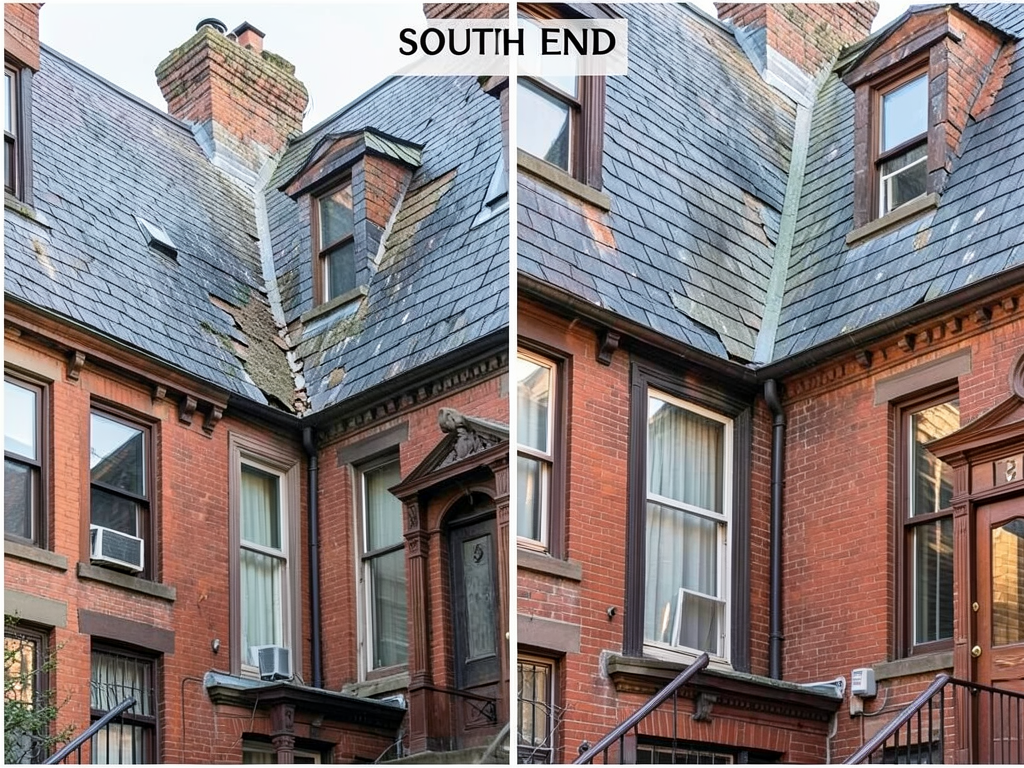
Image description: Before and after comparison showing historic slate roof repair on a South End brownstone, demonstrating material matching and preservation of architectural details.
Emergency leak detection and temporary repairs
Emergency leak detection in South End brownstones requires systematic investigation of multiple potential entry points. Water often travels along structural members before appearing as visible damage, making the source difficult to identify. Thermal imaging cameras help locate moisture within wall cavities and under roofing materials.
Temporary emergency repairs typically involve installing waterproof tarps or applying emergency sealants to active leak areas. These measures prevent further interior damage while permanent repairs are planned and permitted. Emergency repairs must still comply with SELDC requirements for historic districts.
Common emergency scenarios include ice dam formation, wind damage to flashing, and tree limb impacts. Each requires different temporary stabilization techniques. Ice dams may require steam removal and heat cable installation, while wind damage often needs immediate tarping to prevent water infiltration during storms.
The diagnostic process includes moisture meter testing at multiple depths to determine water migration patterns. This helps identify whether leaks are active or historical, and whether they’re affecting structural components. Understanding the full extent of damage is crucial for insurance claims and repair planning.
Permit requirements and the application process
Roof repairs in the South End require building permits from the City of Boston Inspectional Services Department. The permit application must include detailed drawings showing existing conditions, proposed repairs, and material specifications. SELDC approval is typically required before building permits can be issued.
The permit review process examines structural adequacy, fire safety, and compliance with the Massachusetts State Building Code. For historic buildings, additional review ensures repairs don’t compromise architectural integrity. The process typically takes 2-4 weeks for standard repairs, longer for complex historic preservation projects. Massachusetts State Building Code.
Permit fees vary based on project scope and valuation. Simple repair permits may cost a few hundred dollars, while comprehensive restoration projects can require permits costing several thousand dollars. These fees support the administrative review process and ensure qualified professionals evaluate proposals.
Working without permits can result in stop-work orders, fines, and mandatory removal of completed work. Insurance companies may also deny claims for unpermitted work. The permit process, while sometimes lengthy, protects property owners by ensuring work meets safety standards and building code requirements.
Cost factors for shared roof repairs
Several factors influence the cost of shared roof repairs in South End brownstones. Historic material requirements often increase material costs by 30-50% compared to standard roofing products. The specialized labor required for slate and copper work also commands premium rates due to the skill level involved.
Access limitations in urban settings can increase labor costs by 20-30%. Manual material transport, limited staging areas, and the need for specialized equipment to navigate tight spaces all contribute to higher installation costs. These factors must be considered when budgeting for repairs.
Coordination between multiple property owners can affect project timelines and costs. Scheduling conflicts, material selection disagreements, and varying repair priorities can extend project duration. Clear communication and written agreements between neighbors help prevent delays and cost overruns.
Emergency repairs typically cost 40-60% more than scheduled work due to after-hours labor rates and expedited material procurement. However, addressing leaks promptly prevents more extensive damage that would result in even higher repair costs. The cost-benefit analysis strongly favors immediate attention to active leaks.
Preventive maintenance for South End roofs
Regular maintenance extends the life of South End brownstone roofs and prevents costly emergency repairs. Annual inspections should examine flashing details, gutter systems, and roof surface conditions. Early detection of minor issues prevents them from developing into major problems requiring extensive repairs.
Gutter cleaning and inspection should occur at least twice annually, typically in spring and fall. South End trees drop leaves and debris that can clog historic gutter systems, causing water backup and damage to fascia boards and soffits. Proper drainage prevents ice dam formation and extends roof system life.
Flashing inspection focuses on areas around chimneys, skylights, and roof penetrations. These vulnerable points experience the most movement and weathering. Loose or deteriorated flashing allows water infiltration that can damage interior finishes and structural components.
Slate roof maintenance includes replacing broken or missing tiles, securing loose fasteners, and inspecting for signs of delamination. Individual tile replacement prevents water infiltration while preserving the overall roof system. This targeted approach is more cost-effective than complete roof replacement for minor damage.
Choosing the right roofing contractor
Selecting a contractor experienced with South End brownstone repairs requires verifying specific qualifications. Look for contractors with demonstrated experience in historic preservation, knowledge of SELDC requirements, and proper licensing for work in Boston’s historic districts. References from similar projects provide valuable insight into contractor capabilities.
Insurance coverage is critical for work in historic districts. Contractors should carry general liability insurance, workers’ compensation, and specific coverage for historic property work. This protects both the property owner and the contractor in case of accidents or damage during repairs.
Material sourcing capabilities matter for historic repairs. Contractors should have relationships with suppliers of authentic slate, copper, and other historic materials. The ability to match existing materials ensures repairs blend seamlessly with original construction.
Communication skills and project management experience are essential for shared roof repairs involving multiple property owners. Contractors should provide clear timelines, regular progress updates, and documentation of work completed. This transparency helps maintain good relationships between neighbors during the repair process.
Insurance considerations for shared roof repairs
Insurance coverage for shared roof repairs depends on the cause of damage and the specific policy terms. Most homeowner’s policies cover sudden, accidental damage from events like storms or fallen trees. However, damage from lack of maintenance or wear and tear is typically not covered.
When multiple properties are affected, insurance coordination becomes complex. Each property owner’s policy may cover only their portion of the damage, requiring coordination between insurance companies for shared repair costs. Some policies include provisions for shared damage scenarios, but these vary significantly between carriers.
Documentation is crucial for insurance claims involving historic properties. Detailed photos, professional assessments, and material specifications help justify repair costs and demonstrate the need for historic-appropriate materials. This documentation is particularly important when SELDC approval is required for repairs.
Claims involving multiple property owners may benefit from a single point of contact to coordinate between insurance companies, contractors, and property owners. This centralized approach streamlines communication and helps ensure all parties receive appropriate coverage for their share of the damage.
Future trends in South End roof repairs
Energy efficiency improvements are becoming increasingly important in South End roof repairs. While maintaining historic appearance, modern underlayment systems and insulation can significantly improve building performance. These upgrades must be carefully designed to avoid altering visible roof characteristics.
Sustainable roofing materials are gaining popularity for South End applications. Recycled slate alternatives, cool roof coatings, and solar integration designed to preserve historic character represent emerging trends. These technologies must be evaluated for compatibility with SELDC requirements and historic preservation goals.
Advanced diagnostic tools are improving repair accuracy and efficiency. Drone inspections, thermal imaging, and moisture mapping help identify problem areas before they cause visible damage. These technologies reduce the need for invasive investigation methods that could damage historic materials.
Climate change considerations are influencing repair strategies. Increased storm frequency and intensity require more robust flashing details and drainage systems. Freeze-thaw cycles are becoming more extreme, necessitating enhanced ice dam prevention measures and improved roof ventilation systems.
Image description: Close-up detail showing copper flashing repair on a South End brownstone, demonstrating traditional soldering techniques and material matching for historic preservation.
Frequently Asked Questions
How long does the SELDC approval process take for roof repairs?
The South End Landmark District Commission typically requires 30-45 days for standard roof repair approvals. Emergency repairs may qualify for expedited review with proper documentation of the urgent situation.
Can I use modern materials for my South End roof repair?
Modern materials must closely match existing historic materials in appearance and performance. The SELDC requires material samples and specifications that demonstrate compatibility with the building’s historic character.
Who is responsible for repairs when multiple units share a roof?
Responsibility depends on the specific property configuration and any existing agreements between neighbors. Typically, shared roof areas require coordination and cost-sharing among all affected property owners.
What permits are required for roof repairs in the South End?
Roof repairs require both SELDC approval and building permits from the City of Boston Inspectional Services Department. The process includes detailed drawings, material specifications, and compliance with historic preservation requirements.
How can I prevent ice dams on my South End brownstone?
Ice dam prevention requires proper roof ventilation, adequate insulation, and appropriate underlayment systems. Heat cables may be necessary in problem areas, but must be installed to minimize visual impact on historic architecture.
- Assess the damage
Document all visible damage with photos and notes. Determine if the issue affects multiple properties or is isolated to your unit.
- Coordinate with neighbors
Communicate with adjacent property owners about the damage. Determine if repairs will affect shared roof areas or drainage systems.
- Research SELDC requirements
Review South End Landmark District Commission guidelines for your specific property type. Understand material and design requirements before proceeding.
- Obtain necessary permits
Submit applications to both SELDC and the City of Boston Inspectional Services Department. Include detailed drawings and material specifications.
- Select qualified contractor
Choose a roofing contractor with experience in historic preservation and South End brownstone repairs. Verify licensing and insurance coverage.
- Schedule repairs
Coordinate repair timing with neighbors and contractors. Consider weather conditions and material availability when planning the work schedule.
Call (857) 387-1711 today to schedule your inspection. Our team specializes in South End brownstone roof repairs and understands the unique challenges of working in Boston’s historic districts. Don’t wait until small leaks become major structural problems.
Pick up the phone and call (857) 387-1711 before the next storm hits. We provide 24/7 emergency service for South End residents and can quickly assess damage to prevent further water infiltration into your historic home.
{
“@context”: “https://schema.org”,
“@type”: “BlogPosting”,
“headline”: “Navigating the complexities of shared roof repairs for semi-detached homes in the South End”,
“description”: “Expert guide to shared roof repairs in South End brownstones. Learn about SELDC compliance, historic materials, and emergency solutions for Boston’s Victorian row houses.”,
“wordCount”: 2577,
“datePublished”: “2026-06-05T06:08:00.000Z”,
“dateModified”: “2026-06-05T06:08:00.000Z”,
“inLanguage”: “en-US”,
“mainEntityOfPage”: {
“@type”: “WebPage”,
“@id”: “https://silverlineroofingboston.com”
},
“publisher”: {
“@type”: “LocalBusiness”,
“name”: “Silverline Roofing Boston”,
“url”: “https://silverlineroofingboston.com”
},
“author”: {
“@type”: “Organization”,
“name”: “Silverline Roofing Boston”,
“url”: “https://silverlineroofingboston.com”
},
“image”: {
“@type”: “ImageObject”,
“url”: “https://silverlineroofingboston.com/wp-content/uploads/2026/03/navigating-the-complexities-of-shared-roof-repairs-1.png”
}
}
{
“@context”: “https://schema.org”,
“@type”: “RoofingContractor”,
“name”: “Silverline Roofing Boston”,
“url”: “https://silverlineroofingboston.com”,
“address”: {
“@type”: “PostalAddress”,
“addressLocality”: “Boston”
},
“areaServed”: {
“@type”: “City”,
“name”: “Boston”
}
}
{
“@context”: “https://schema.org”,
“@type”: “FAQPage”,
“mainEntity”: [
{
“@type”: “Question”,
“name”: “How long does the SELDC approval process take for roof repairs?”,
“acceptedAnswer”: {
“@type”: “Answer”,
“text”: “The South End Landmark District Commission typically requires 30-45 days for standard roof repair approvals. Emergency repairs may qualify for expedited review with proper documentation of the urgent situation.”
}
},
{
“@type”: “Question”,
“name”: “Can I use modern materials for my South End roof repair?”,
“acceptedAnswer”: {
“@type”: “Answer”,
“text”: “Modern materials must closely match existing historic materials in appearance and performance. The SELDC requires material samples and specifications that demonstrate compatibility with the building’s historic character.”
}
},
{
“@type”: “Question”,
“name”: “Who is responsible for repairs when multiple units share a roof?”,
“acceptedAnswer”: {
“@type”: “Answer”,
“text”: “Responsibility depends on the specific property configuration and any existing agreements between neighbors. Typically, shared roof areas require coordination and cost-sharing among all affected property owners.”
}
},
{
“@type”: “Question”,
“name”: “What permits are required for roof repairs in the South End?”,
“acceptedAnswer”: {
“@type”: “Answer”,
“text”: “Roof repairs require both SELDC approval and building permits from the City of Boston Inspectional Services Department. The process includes detailed drawings, material specifications, and compliance with historic preservation requirements.”
}
},
{
“@type”: “Question”,
“name”: “How can I prevent ice dams on my South End brownstone?”,
“acceptedAnswer”: {
“@type”: “Answer”,
“text”: “Ice dam prevention requires proper roof ventilation, adequate insulation, and appropriate underlayment systems. Heat cables may be necessary in problem areas, but must be installed to minimize visual impact on historic architecture.”
}
}
]
}
{
“@context”: “https://schema.org”,
“@type”: “HowTo”,
“name”: “How to navigate shared roof repairs”,
“step”: [
{
“@type”: “HowToStep”,
“position”: 1,
“name”: “Assess the damage”,
“text”: “Document all visible damage with photos and notes. Determine if the issue affects multiple properties or is isolated to your unit.”
},
{
“@type”: “HowToStep”,
“position”: 2,
“name”: “Coordinate with neighbors”,
“text”: “Communicate with adjacent property owners about the damage. Determine if repairs will affect shared roof areas or drainage systems.”
},
{
“@type”: “HowToStep”,
“position”: 3,
“name”: “Research SELDC requirements”,
“text”: “Review South End Landmark District Commission guidelines for your specific property type. Understand material and design requirements before proceeding.”
},
{
“@type”: “HowToStep”,
“position”: 4,
“name”: “Obtain necessary permits”,
“text”: “Submit applications to both SELDC and the City of Boston Inspectional Services Department. Include detailed drawings and material specifications.”
},
{
“@type”: “HowToStep”,
“position”: 5,
“name”: “Select qualified contractor”,
“text”: “Choose a roofing contractor with experience in historic preservation and South End brownstone repairs. Verify licensing and insurance coverage.”
},
{
“@type”: “HowToStep”,
“position”: 6,
“name”: “Schedule repairs”,
“text”: “Coordinate repair timing with neighbors and contractors. Consider weather conditions and material availability when planning the work schedule.”
}
],
“image”: “https://silverlineroofingboston.com/wp-content/uploads/2026/03/navigating-the-complexities-of-shared-roof-repairs-1.png”
}
{
“@context”: “https://schema.org”,
“@type”: “BreadcrumbList”,
“itemListElement”: [
{
“@type”: “ListItem”,
“position”: 1,
“name”: “Home”,
“item”: “https://silverlineroofingboston.com”
},
{
“@type”: “ListItem”,
“position”: 2,
“name”: “Blog”,
“item”: “https://silverlineroofingboston.com/blog”
},
{
“@type”: “ListItem”,
“position”: 3,
“name”: “Navigating the complexities of shared roof repairs for semi-detached homes in the South End”
}
]
}
{
“@context”: “https://schema.org”,
“@type”: “Service”,
“serviceType”: “Roofing”,
“provider”: {
“@type”: “LocalBusiness”,
“name”: “Silverline Roofing Boston”,
“url”: “https://silverlineroofingboston.com”
},
“areaServed”: {
“@type”: “City”,
“name”: “Boston”
},
“description”: “Expert guide to shared roof repairs in South End brownstones. Learn about SELDC compliance, historic materials, and emergency solutions for Boston’s Victorian row houses.”
}