Older Winchester homes often have beautiful timber-framed roofs built decades before solar panels existed. These historic structures weren’t designed to handle the added weight of modern photovoltaic systems. Before installing solar panels on your Winchester home, understanding the hidden structural reinforcements required by Massachusetts building codes is critical for safety and long-term performance. Massachusetts State Building Code 780 CMR.
The average solar PV array adds 2-4 pounds per square foot of dead load to your roof structure. While this might seem minimal, Massachusetts snow loads in Winchester can reach 30-40 pounds per square foot during winter storms. Combined with the age of many Winchester homes built before 1980, this creates a structural challenge that requires professional assessment. Structural requirements for solar installations.
Massachusetts State Building Code 780 CMR Section 16.55 specifically addresses roof snow loads and structural adequacy for solar installations. Winchester’s older homes often feature balloon framing or post-and-beam construction that may not meet current load-bearing requirements without reinforcement. A structural engineer’s evaluation is typically required before any solar installation on homes over 30 years old in Winchester.. Read more about Comparing solar shingles and traditional panels for historic Cambridge rooftops.
Understanding the structural challenges of Winchester’s historic homes
Winchester’s architectural heritage includes many Victorian and Colonial homes built between 1850 and 1950. These structures were designed for different loads than modern solar systems require. The timber used in these older homes often has different strength characteristics than contemporary lumber, and many have experienced decades of moisture cycling and minor settling.
Common structural issues in Winchester’s older homes include:
- Rotted or weakened rafters from decades of moisture exposure
- Sagging roof lines from inadequate original design
- Undersized collar ties or missing structural connections
- Deteriorated sheathing that can’t support modern mounting hardware
Winchester’s climate adds another layer of complexity. The town experiences heavy snowfall from nor’easters, with some storms dropping over two feet of snow in a single event. This creates significant live loads that, when combined with solar panel weight, can exceed the original design capacity of older roof structures.
Call (857) 387-1711 today to schedule your structural assessment before your solar installation.
Common reinforcement methods for solar-ready roofs
Professional roofers use several proven methods to strengthen older Winchester roofs for solar installations. The specific approach depends on your home’s construction type, age, and current condition.
Rafter sistering is one of the most common reinforcement techniques. This involves attaching new lumber alongside existing rafters to increase their load-bearing capacity. The process typically uses construction adhesive and structural screws to create a unified beam system that can handle increased loads.
Collar ties and purlins provide horizontal support that prevents roof spread under heavy loads. In Winchester’s older homes, these components are often undersized or missing entirely. Upgrading to properly sized dimensional lumber ensures the roof structure can handle both snow loads and solar panel weight without deformation.
Gusset plates and structural hardware upgrades connect different roof components more securely. Modern hurricane ties, rafter connectors, and engineered hardware create stronger load paths than the original construction methods used in Winchester’s historic homes.
Sheathing replacement may be necessary if the existing roof deck is deteriorated. Modern 5/8-inch plywood or OSB provides better fastener holding power for solar mounting systems than the original 1/2-inch boards found in many Winchester homes.
Learn more about comprehensive roof inspections before solar installation.
Navigating Boston building codes and permit requirements
Massachusetts requires specific structural evaluations for solar installations on older homes. The Boston Inspectional Services Department (ISD) and Winchester Building Department both require permits and engineering documentation for structural modifications. Tile Roofing Services.
A Massachusetts Licensed Structural Engineer (PE) must evaluate your roof structure and provide calculations showing it can handle the combined loads. This evaluation includes:
- Load calculations for dead loads, live loads, and wind uplift
- Material strength analysis of existing structural components
- Recommendations for specific reinforcement methods
- Certification that the modified structure meets code requirements
The Boston ISD requires structural drawings stamped by a PE before issuing permits for solar installations on homes built before 1980. Winchester’s building department follows similar requirements, though they may have additional historic district considerations if your home is in a designated area.
Historic District Commission considerations apply to many Winchester neighborhoods. Homes in areas like the Winchester Center Historic District may require additional approvals for visible structural modifications. The commission evaluates whether proposed reinforcements maintain the historic character of the building.
Discover how different roofing materials affect solar installation.
The cost of solar roof reinforcement vs. long-term risk
Structural reinforcement costs vary significantly based on your home’s specific needs. In the Winchester area, homeowners typically invest between $3,000 and $8,000 for solar-ready roof strengthening, though complex projects can exceed $12,000.
Cost factors include:
- Extent of existing structural deterioration
- Roof accessibility and working height
- Complexity of the reinforcement design
- Need for temporary weather protection during work
While these costs add to your solar installation budget, they prevent far more expensive problems. A roof collapse during a heavy snow year could cost $30,000-$50,000 in structural repairs, not including the solar system damage and potential injury liability. 24/7 Emergency Roof Repair.
The ROI of proper reinforcement extends beyond preventing catastrophic failure. A structurally sound roof with solar panels maintains its value better, passes home inspections more easily, and provides peace of mind during severe weather events common to Winchester.
Insurance companies increasingly require structural certification for solar installations on older homes. Without proper reinforcement documentation, you may face coverage limitations or higher premiums. Some insurers won’t cover homes with solar installations unless structural upgrades are completed.
Diagnostic testing for solar readiness
Professional roofers use specific diagnostic tests to evaluate whether your Winchester home needs structural reinforcement. These tests go beyond visual inspection to assess actual structural capacity.
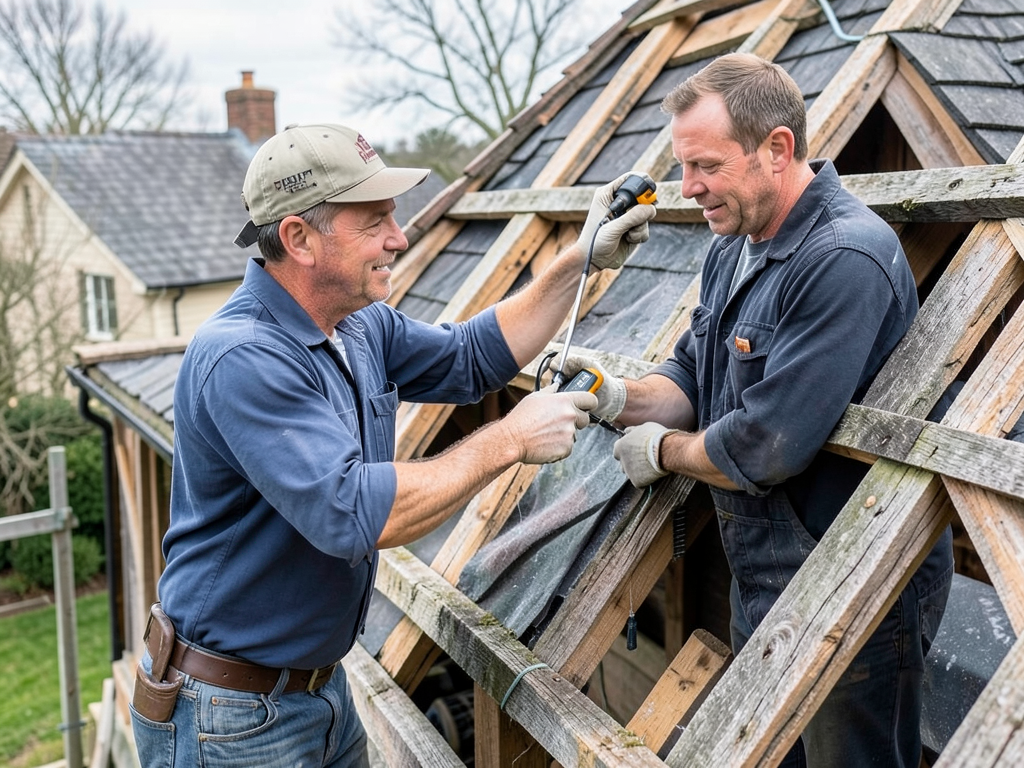
The moisture meter test identifies areas where water damage has weakened structural components. By testing multiple depths in rafters and sheathing, technicians can map deterioration patterns that aren’t visible from the surface.
The deflection test measures how much existing roof components bend under load. Using laser levels and precise measurements, technicians can determine if rafters are approaching their elastic limit even before solar installation.
Core sampling reveals the actual condition of structural members. Small holes drilled in inconspicuous locations allow inspection of the interior wood condition, revealing rot, insect damage, or structural degradation that surface inspection misses.
Load path analysis traces how forces travel through your roof structure. This engineering assessment identifies weak points where loads concentrate and determines whether the existing structure can safely transfer solar and snow loads to the foundation.
Learn about preventing water damage that weakens roof structures.
Working with solar installers and structural engineers
Successful solar installations on older Winchester homes require coordination between multiple professionals. The roofer, structural engineer, and solar installer must work together to ensure all components integrate properly.
The structural engineer typically provides calculations and drawings that the roofer uses for reinforcement work. These documents specify lumber sizes, hardware types, and connection methods that meet code requirements while accommodating the solar mounting system.
Solar installers need to understand the reinforcement work to properly mount their equipment. Some mounting systems require specific backing or blocking that should be installed during the reinforcement phase, not after roofing work is complete. Roofing Quincy.
Communication between all parties prevents costly mistakes. For example, if the structural engineer specifies a particular rafter sistering pattern, the solar installer needs to know this to avoid mounting hardware conflicts.
Timeline coordination matters significantly. Structural reinforcement must be inspected and approved before solar installation begins. This sequencing adds time to your project but ensures all work meets code requirements.
Discover how attic modifications affect roof structure.
Preventing common solar reinforcement mistakes
Several common mistakes can compromise your solar reinforcement project. Understanding these pitfalls helps you avoid costly errors and ensures your roof remains structurally sound.
Insufficient load calculations are perhaps the most serious error. Some contractors estimate reinforcement needs based on visual inspection alone, without proper engineering analysis. This can result in under-reinforced structures that fail under heavy snow loads.
Improper material selection creates long-term problems. Using standard lumber where engineered products are required, or choosing hardware that doesn’t meet code specifications, can lead to premature failure or inspection failures.
Ignoring existing damage compounds structural problems. If your roof has existing water damage, rot, or insect infestation, simply adding reinforcement over these issues doesn’t solve the underlying problem. Proper remediation must precede reinforcement work.
DIY reinforcement attempts often fail code inspection. While saving money is tempting, structural work requires professional expertise to ensure safety and code compliance. Failed inspections result in costly rework and project delays.
Cutting corners on hardware specifications can be dangerous. Using smaller fasteners, fewer connectors, or lower-grade materials than specified in engineering drawings compromises the entire reinforcement system.
Don’t risk your home’s safety. Call (857) 387-1711 for a professional structural assessment before going solar.
Winchester-specific considerations for older homes
Winchester’s housing stock presents unique challenges for solar reinforcement. The town features many homes built between 1890 and 1940, a period when construction methods differed significantly from modern practices.
Many Winchester homes feature balloon framing, where wall studs extend continuously from foundation to roof. This construction method can complicate reinforcement work, as removing or modifying structural elements requires careful consideration of the entire building’s stability.
The town’s historic districts, including areas near the Winchester Center and along the Aberjona River, have additional requirements. Any visible structural modifications may require approval from the Historic District Commission, potentially limiting reinforcement options.
Winchester’s soil conditions affect roof structure performance. The town’s mix of clay and glacial till soils can cause minor foundation movement over time, which transfers to roof structures. Reinforcement designs must account for these potential movements.
Local weather patterns in Winchester create specific loading scenarios. The town’s position in the Mystic River valley can create wind tunnel effects during storms, requiring additional consideration for uplift resistance in reinforcement designs.
Winchester’s proximity to Boston means it experiences similar snow load patterns but with some local variations. The town’s slightly higher elevation compared to downtown Boston can result in greater snow accumulation, affecting structural design requirements.
Learn about multi-family solar considerations in Massachusetts.
Future-proofing your reinforced roof
Proper solar reinforcement should consider not just current needs but also future modifications. A well-designed reinforcement system provides flexibility for potential changes while maintaining structural integrity.
Load capacity margins are essential for future-proofing. Designing reinforcement to handle 20-30% more load than currently required allows for future solar array expansions or additional equipment without major structural modifications.
Access considerations matter for maintenance. Reinforcement designs should accommodate future roof access for solar panel cleaning, snow removal, or equipment servicing without compromising structural integrity.
Documentation of all reinforcement work provides valuable information for future property owners. Detailed records of structural modifications, engineering calculations, and inspection approvals help maintain property value and facilitate future renovations.
Integration with existing building systems prevents conflicts. Reinforcement designs should consider HVAC equipment, plumbing vents, and electrical systems to avoid creating new problems while solving structural issues.
Environmental considerations include proper ventilation and moisture management. Reinforcement work provides an opportunity to improve roof ventilation, potentially reducing ice dam formation and extending the life of both the roof and solar equipment.
Ready to make your Winchester home solar-ready? Call (857) 387-1711 for expert structural assessment and reinforcement.
Frequently Asked Questions
How do I know if my Winchester home needs structural reinforcement for solar?
Homes built before 1980, those with visible roof sagging, or properties in areas with heavy snowfall likely need structural assessment. A professional evaluation using moisture meters, deflection testing, and load calculations determines specific requirements.
Can I install solar panels without structural reinforcement?
Only if a licensed structural engineer certifies your existing roof structure can handle the additional loads. Most homes over 30 years old in Winchester require some level of reinforcement to meet Massachusetts building codes.
How long does solar structural reinforcement take?
Most reinforcement projects take 2-5 days, depending on complexity. This includes removal of existing roofing materials if needed, installation of reinforcements, and replacement of roofing components. Weather conditions can affect timelines.
Will structural reinforcement damage my historic home?
Professional reinforcement work preserves your home’s historic character while ensuring safety. Work in historic districts requires additional approvals, and experienced contractors use methods that minimize visible impact on original materials.
What happens if I skip structural reinforcement?
Skipping required reinforcement risks roof collapse under heavy snow loads, invalidates solar warranties, creates insurance problems, and can lead to costly emergency repairs. It also may result in failed inspections and legal liability.
{
“@context”: “https://schema.org”,
“@type”: “BlogPosting”,
“headline”: “The hidden structural reinforcements your older Winchester roof needs before going solar”,
“description”: “Older Winchester homes need hidden structural reinforcements before solar installation. Learn about Massachusetts snow loads, timber frame integrity, and solar-ready roof strengthening.”,
“wordCount”: 2081,
“datePublished”: “2026-05-31T10:25:00.000Z”,
“dateModified”: “2026-05-31T10:25:00.000Z”,
“inLanguage”: “en-US”,
“mainEntityOfPage”: {
“@type”: “WebPage”,
“@id”: “https://silverlineroofingboston.com”
},
“publisher”: {
“@type”: “LocalBusiness”,
“name”: “Silverline Roofing Boston”,
“url”: “https://silverlineroofingboston.com”
},
“author”: {
“@type”: “Organization”,
“name”: “Silverline Roofing Boston”,
“url”: “https://silverlineroofingboston.com”
},
“image”: {
“@type”: “ImageObject”,
“url”: “https://silverlineroofingboston.com/wp-content/uploads/2026/03/the-hidden-structural-reinforcements-your-older-wi-1.png”
}
}
{
“@context”: “https://schema.org”,
“@type”: “RoofingContractor”,
“name”: “Silverline Roofing Boston”,
“url”: “https://silverlineroofingboston.com”,
“address”: {
“@type”: “PostalAddress”,
“addressLocality”: “Boston”
},
“areaServed”: {
“@type”: “City”,
“name”: “Boston”
}
}
{
“@context”: “https://schema.org”,
“@type”: “FAQPage”,
“mainEntity”: [
{
“@type”: “Question”,
“name”: “How do I know if my Winchester home needs structural reinforcement for solar?”,
“acceptedAnswer”: {
“@type”: “Answer”,
“text”: “Homes built before 1980, those with visible roof sagging, or properties in areas with heavy snowfall likely need structural assessment. A professional evaluation using moisture meters, deflection testing, and load calculations determines specific requirements.”
}
},
{
“@type”: “Question”,
“name”: “Can I install solar panels without structural reinforcement?”,
“acceptedAnswer”: {
“@type”: “Answer”,
“text”: “Only if a licensed structural engineer certifies your existing roof structure can handle the additional loads. Most homes over 30 years old in Winchester require some level of reinforcement to meet Massachusetts building codes.”
}
},
{
“@type”: “Question”,
“name”: “How long does solar structural reinforcement take?”,
“acceptedAnswer”: {
“@type”: “Answer”,
“text”: “Most reinforcement projects take 2-5 days, depending on complexity. This includes removal of existing roofing materials if needed, installation of reinforcements, and replacement of roofing components. Weather conditions can affect timelines.”
}
},
{
“@type”: “Question”,
“name”: “Will structural reinforcement damage my historic home?”,
“acceptedAnswer”: {
“@type”: “Answer”,
“text”: “Professional reinforcement work preserves your home’s historic character while ensuring safety. Work in historic districts requires additional approvals, and experienced contractors use methods that minimize visible impact on original materials.”
}
}
]
}
{
“@context”: “https://schema.org”,
“@type”: “BreadcrumbList”,
“itemListElement”: [
{
“@type”: “ListItem”,
“position”: 1,
“name”: “Home”,
“item”: “https://silverlineroofingboston.com”
},
{
“@type”: “ListItem”,
“position”: 2,
“name”: “Blog”,
“item”: “https://silverlineroofingboston.com/blog”
},
{
“@type”: “ListItem”,
“position”: 3,
“name”: “The hidden structural reinforcements your older Winchester roof needs before going solar”
}
]
}
{
“@context”: “https://schema.org”,
“@type”: “Service”,
“serviceType”: “Roofing”,
“provider”: {
“@type”: “LocalBusiness”,
“name”: “Silverline Roofing Boston”,
“url”: “https://silverlineroofingboston.com”
},
“areaServed”: {
“@type”: “City”,
“name”: “Boston”
},
“description”: “Older Winchester homes need hidden structural reinforcements before solar installation. Learn about Massachusetts snow loads, timber frame integrity, and solar-ready roof strengthening.”
}