
What Homeowners in Lexington Should Know About Choosing a Historically Accurate Roof for a Colonial Style House
Choosing the right roof for your Colonial-style home in Lexington requires understanding both historical accuracy and modern performance standards. Lexington’s rich architectural heritage means your roofing decision impacts not just your home’s protection but also its place in the community’s historic fabric. This guide walks you through the essential considerations for selecting materials that honor your home’s Colonial roots while meeting today’s building requirements. Lexington Historical Commission.
Colonial homes in Lexington typically feature symmetrical facades, central chimneys, and distinct roof pitches that range from 6:12 to 12:12. The most common subtypes include Garrison Colonials with their second-floor overhangs, Saltbox designs with their distinctive long rear slopes, and Georgian Colonials with their formal proportions. Each style demands specific roofing approaches to maintain architectural integrity. Why Metal Roofing is Becoming a Top Choice for Coastal East Boston Homes.
Massachusetts building codes require Class A fire-rated materials for residential roofing, with ice and water shield extending at least 24 inches inside the exterior wall line. For homes in Lexington’s historic districts, the Lexington Historical Commission adds another layer of review. Their guidelines prioritize materials that match original construction methods while allowing modern equivalents that achieve the same visual effect. Massachusetts State Building Code.

Traditional Roofing Materials That Define Colonial Architecture
Colonial-era roofing relied on locally available materials. In New England, that meant wood shakes, slate, and later, clay tiles. Understanding these materials helps you choose modern equivalents that capture the same aesthetic. The Best Roofing Strategies for Multi-Family Property Owners in Savin Hill.
Natural cedar shakes were the original roofing material for many Lexington Colonials. These hand-split wooden shingles weather to a soft gray and develop character over decades. Modern cedar shakes require treatment for fire resistance and typically need replacement every 20-30 years in Massachusetts’ climate. The natural variation in width and thickness creates the authentic Colonial texture that machine-cut products cannot replicate. Bringing Natural Light into Your South End Attic with Custom Skylights.
Slate roofing dominated New England’s affluent neighborhoods by the mid-1800s. The metamorphic rock comes in various colors from gray to purple to green. A properly installed slate roof can last 75-100 years. The key diagnostic feature is the sound: when tapped with a tool, quality slate produces a clear, ringing tone while delaminating pieces sound dull. Modern synthetic slate offers the same appearance with easier installation and lower weight, making it suitable for homes that cannot support the 800-1,500 pounds per square that natural slate requires. Roofing Quincy.
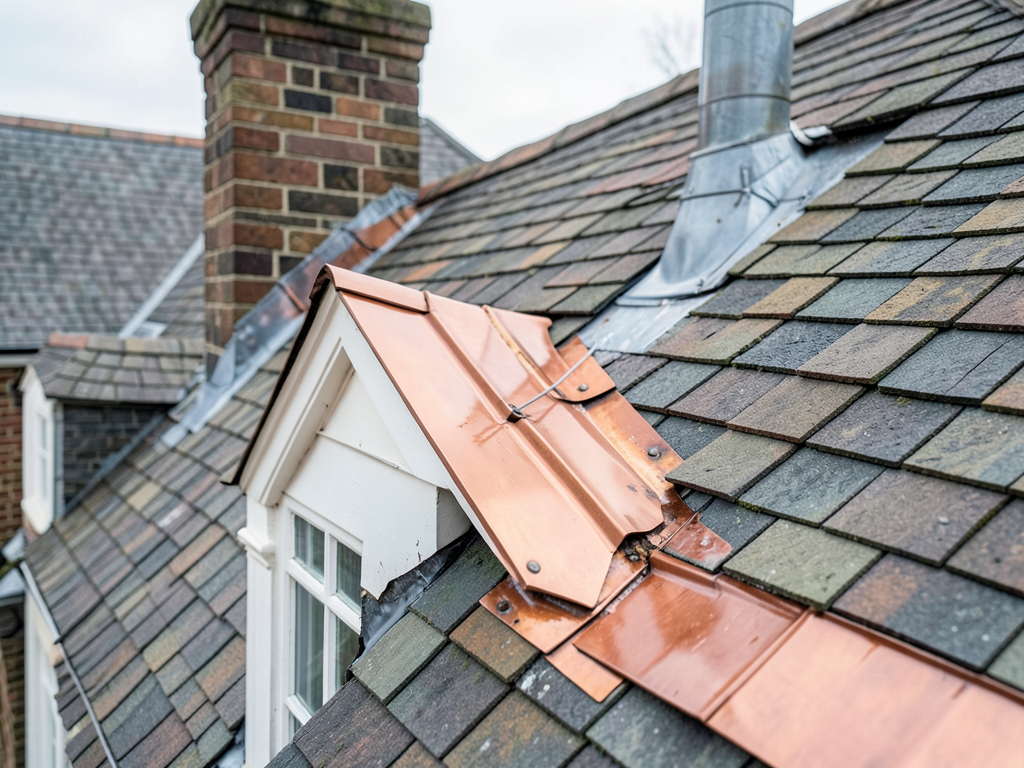
Copper flashing and gutters were standard on high-end Colonial homes. The metal develops a distinctive green patina over 20-30 years. Today’s architectural asphalt shingles can mimic this look with specialized granule coatings that replicate weathered copper’s color variations. These premium shingles typically carry 30-50 year warranties and perform well in New England’s freeze-thaw cycles. The Best Way to Keep Gutters Clog-Free in Wooded West Roxbury Neighborhoods.
Modern Materials That Honor Colonial Aesthetics
Today’s roofing manufacturers produce materials specifically designed to look historic while meeting modern performance standards. These products balance authenticity with practical concerns like weight, cost, and installation complexity.
Architectural asphalt shingles represent the most popular compromise for Colonial homes. Premium lines like CertainTeed Landmark and GAF Grand Sequoia offer dimensional profiles that cast shadows similar to wood shakes. The key is selecting colors that match Colonial palettes: charcoal, weathered wood, slate gray, and colonial red. These shingles install quickly, cost significantly less than natural materials, and carry warranties of 30-50 years.
Synthetic slate and shake products use recycled rubber and plastic to create lightweight alternatives. These materials weigh 25-40% of natural slate and install with standard tools. The manufacturing process creates consistent thickness and eliminates the breakage common with natural slate. Most synthetic products carry 50-year warranties and resist the freeze-thaw damage that destroys natural materials in Massachusetts winters.
Metal roofing has gained acceptance for Colonial homes, particularly in standing seam profiles painted to resemble traditional materials. The panels install quickly and reflect heat in summer while shedding snow efficiently in winter. Modern coatings prevent the rust that plagued early metal roofs. The clean lines work particularly well on Garrison Colonials and Georgian styles.
Navigating Lexington’s Historic District Requirements
The Lexington Historical Commission reviews all exterior changes in designated historic districts. Their process ensures new work respects the town’s architectural heritage while allowing necessary updates for modern living.
Before starting any roofing project in a historic district, you must submit a Certificate of Appropriateness application. The commission evaluates materials, colors, and installation methods against guidelines that prioritize visual compatibility with surrounding properties. They typically approve materials that match the original in appearance, even if the composition differs. For example, they might approve architectural asphalt that looks like slate but reject bright colors or modern profiles that clash with Colonial aesthetics.
The commission’s review process takes 30-45 days. They consider factors like roof pitch, dormer placement, and chimney integration. Homes on the Battle Green or near historic sites face stricter scrutiny. The key to approval is demonstrating that your chosen materials will maintain or enhance the property’s historic character.
Working with contractors familiar with Lexington’s historic requirements prevents costly delays. These professionals understand which materials the commission consistently approves and can prepare applications that address potential concerns before the review meeting. They also know local suppliers who stock historically appropriate materials in the exact dimensions and colors that satisfy commission standards.
Weather Considerations for Lexington Colonial Roofs
Lexington’s climate creates specific challenges for Colonial-style roofs. The town experiences 40-50 inches of snow annually, with occasional accumulations exceeding two feet. These loads stress roof structures and create ice dam conditions that damage historic materials.
Ice dams form when heat escaping from the home melts snow on the roof surface. The water flows to the colder eaves and refreezes, creating a barrier that forces water under shingles. Colonial homes with their complex roof lines and multiple valleys are particularly vulnerable. The Massachusetts building code requires ice and water shield in these areas, but historic homes often need additional protection.
Ventilation plays a crucial role in preventing ice dams. Colonial homes typically lack the continuous soffit and ridge vents standard in modern construction. Adding these features without visible disruption requires careful planning. Contractors often install vents in the rear roof slope or integrate them into existing features like cupolas or dormers.
Wind resistance becomes critical during nor’easters that sweep through Middlesex County. Colonial roof pitches between 8:12 and 12:12 perform well in high winds, but the numerous intersections create potential failure points. Modern underlayment systems use self-adhering membranes that seal around nails, preventing the uplift that damages traditional felt paper.
Color Selection for Colonial Authenticity
Colonial color palettes draw from natural pigments available in the 18th and early 19th centuries. These colors complement the traditional siding materials like wood clapboard painted in white, soft yellow, or gray. Your roof color should harmonize with both the siding and the surrounding neighborhood.
Charcoal and slate gray remain the most popular choices for Colonial roofs. These colors suggest the weathered appearance of natural slate without the cost. They also hide minor staining from tree debris and complement white or light-colored siding. The slight variations in premium shingles create depth that flat colors cannot achieve.
Weathered wood tones work well on Saltbox and Garrison Colonials. These multi-color blends include browns, grays, and muted reds that suggest aged cedar shakes. The variation helps camouflage repairs and creates visual interest on large roof areas. However, these colors show algae growth more readily in shaded areas.
Colonial red, a deep burgundy color, appears on some historic homes and works well on Georgian Colonials with formal proportions. This color requires careful coordination with siding and trim. It shows fading more than neutral colors and may not suit all neighborhoods. The commission typically approves it only when it matches existing historic examples.
Cost Factors and Investment Considerations
Roofing costs for Colonial homes vary significantly based on material selection, roof complexity, and historic requirements. Understanding these factors helps you budget appropriately and avoid surprises during the project.
Architectural asphalt shingles cost $350-500 per square installed for Colonial homes. This includes removal of existing roofing, new underlayment, and basic flashing. Premium architectural lines with enhanced warranties cost $450-650 per square. These prices assume straightforward roof designs without extensive repairs to underlying structures.
Synthetic slate and shake products cost $600-900 per square installed. The higher price reflects both material costs and the specialized installation techniques required. These products often qualify for insurance discounts due to their impact resistance and Class A fire ratings.
Natural slate costs $1,200-2,000 per square installed. The wide range reflects variations in slate quality, source location, and installation complexity. Homes requiring structural reinforcement to support the weight add $1,000-3,000 to the project cost. The total investment often exceeds $30,000 for an average Colonial home.
Copper roofing and flashing represent the premium option at $1,500-2,500 per square for the roof alone. Copper gutters add $15-25 per linear foot. While the initial cost exceeds other materials, copper’s 75-100 year lifespan and minimal maintenance requirements provide long-term value for historic properties.
Finding the Right Contractor for Your Colonial Roof
Colonial roofing requires specialized knowledge that goes beyond standard installation techniques. The roofer must understand historic materials, local building codes, and the aesthetic requirements that preserve your home’s architectural integrity.
Experience with historic homes matters more than years in business. Ask potential contractors about specific Colonial projects they’ve completed in Lexington or nearby towns. Request references from homeowners with similar homes and follow up to verify their satisfaction with both the process and the finished roof.
Insurance and licensing requirements in Massachusetts include a Construction Supervisor License and proper liability coverage. However, for historic homes, you also need contractors who understand the Lexington Historical Commission’s requirements and can navigate the approval process. They should provide sample applications and explain how they’ll address potential concerns.
Warranty coverage varies significantly between contractors and material manufacturers. Premium shingles typically carry 30-50 year warranties, but these often exclude labor costs. Clarify what’s covered, who handles warranty claims, and whether the contractor will remain available for service calls years after installation.
Communication throughout the project prevents misunderstandings. Your contractor should explain the installation schedule, material delivery timing, and how they’ll protect your landscaping and historic features. They should also discuss cleanup procedures and debris removal, particularly important for homes near Lexington’s historic sites where construction debris could impact the area’s appearance.
Maintenance Requirements for Colonial Roofs
Different roofing materials require varying levels of maintenance to achieve their expected lifespans. Understanding these requirements helps you protect your investment and maintain your home’s historic appearance.
Cedar shake roofs need the most frequent attention. Annual inspections should check for moss growth, damaged shakes, and proper flashing around chimneys and dormers. The shakes require cleaning every 3-5 years to remove debris that traps moisture. In Massachusetts’ humid climate, untreated cedar develops mold and algae that accelerate deterioration. Treatment with wood preservatives extends the lifespan but requires reapplication every 3-5 years.
Asphalt shingles need minimal maintenance beyond keeping gutters clean and removing debris from valleys. However, the south-facing slopes on Colonial homes often show premature aging from UV exposure. Annual inspections should check for missing granules, cracked shingles, and damaged flashing. Most manufacturers recommend professional inspections every 2-3 years to maintain warranty coverage.
Slate and synthetic slate roofs need professional inspections every 5 years. The key diagnostic test involves gently tapping each slate with a tool to check for delamination. A dull sound indicates the slate is deteriorating and needs replacement. The copper flashing around chimneys and dormers requires inspection for corrosion, particularly at joints where dissimilar metals create galvanic reactions.
Metal roofs need the least maintenance of any Colonial-appropriate material. The smooth surfaces shed debris and resist moss growth. Annual inspections should check for loose fasteners, damaged sealants, and corrosion at cut edges. The factory finishes typically carry 30-50 year warranties and resist fading better than traditional materials.
Energy Efficiency and Colonial Roofs
Colonial homes often struggle with energy efficiency due to their age and construction methods. The roof plays a crucial role in managing heat transfer and can significantly impact your utility costs.
Modern underlayment systems include reflective barriers that reduce heat gain in summer. These materials install beneath the visible roofing and can lower attic temperatures by 20-30 degrees. For Lexington’s climate, this means reduced air conditioning costs in summer and less snow melt that contributes to ice dams in winter.
Ventilation improvements often accompany roof replacement. Adding ridge vents and improving soffit ventilation creates continuous airflow that carries away excess heat and moisture. This prevents the condensation that rots roof decks and degrades insulation. The Massachusetts building code requires minimum ventilation ratios, but historic homes often need additional ventilation to meet modern efficiency standards.
Cool roof technologies use specially formulated granules that reflect infrared radiation. These shingles appear in traditional colors but reduce heat absorption by 20-30%. While the energy savings may seem modest, they compound over the roof’s lifespan and improve comfort in second-floor bedrooms common in Colonial homes.
Solar integration presents challenges for historic homes but offers significant benefits. Low-profile solar shingles can replace traditional roofing in less visible areas while maintaining the home’s historic appearance from the street. These systems cost 20-30% more than standard solar panels but preserve architectural integrity while generating electricity.
Common Problems and Solutions for Colonial Roofs
Colonial roofs face specific failure patterns due to their age, design, and the New England climate. Understanding these problems helps you identify issues early and choose appropriate solutions.
Water infiltration often occurs at roof intersections where dormers meet the main roof. These areas create valleys that channel water and debris. The original flashing materials, often lead or copper, deteriorate over decades. Modern solutions use rubberized asphalt membranes that seal around fasteners and flex with temperature changes without cracking.
Structural sagging develops when roof decks cannot support accumulated snow loads. Colonial homes built before modern engineering standards often have 1×6 or 1×8 boards as decking rather than the plywood used today. These boards cup and split over time, creating uneven surfaces that accelerate shingle wear. Reinforcement requires removing the roofing to access the deck, making it an ideal time to address the issue during replacement.
Chimney deterioration affects many Colonial homes. The original mortar joints erode from freeze-thaw cycles, allowing water infiltration that damages both the chimney and surrounding roofing. Modern chimney rebuilding uses Type N mortar that matches historic appearance while providing superior durability. Stainless steel liners improve fireplace efficiency and prevent the condensation that accelerates mortar deterioration.
Ice dam formation remains the most destructive problem for Lexington Colonial roofs. While prevention through ventilation and insulation helps, severe winters overwhelm these measures. Heat cables installed in roof valleys and along eaves provide active protection by creating drainage paths for melting snow. These systems cost $500-1,000 to install and use minimal electricity while preventing the thousands in damage that ice dams cause.
Timeline and Planning for Your Roof Replacement
Roof replacement for a Colonial home requires careful planning that accounts for material lead times, historic approvals, and weather considerations. Starting the process early prevents rushed decisions and ensures you get the best materials and contractors.
Material selection should begin 3-4 months before your desired installation date. Premium roofing materials often require 6-8 week lead times, particularly specialty colors or architectural profiles. Historic approvals add another 1-2 months to the timeline. Starting early also allows you to get multiple quotes and compare not just prices but contractor experience with Colonial homes.
Weather considerations affect scheduling in Massachusetts. Roofing season typically runs from April through November, with peak demand in May and June. Contractors often book 2-3 months ahead during these months. Winter installations are possible but increase costs due to cold-weather installation requirements and the risk of weather delays.
Historic district reviews require submitting detailed plans that include material samples, color chips, and installation methods. The Lexington Historical Commission meets monthly, and incomplete applications get postponed to the next meeting. Working with a contractor who has successfully navigated this process prevents the delays that occur when applicants misunderstand the requirements.
Preparation for installation includes protecting landscaping, moving outdoor furniture, and discussing noise concerns with neighbors. Colonial homes often have mature trees and gardens that require careful protection during material delivery and installation. Your contractor should explain their protection methods and provide a clear timeline for when different phases of the project will occur.
Frequently Asked Questions
What is the most historically accurate roofing material for a Colonial home?
Natural cedar shakes represent the most historically accurate material for Colonial homes in Lexington. These hand-split wooden shingles were the standard roofing material in 18th century New England. However, modern alternatives like architectural asphalt shingles designed to mimic cedar shakes offer better fire resistance and longer lifespans while maintaining the Colonial aesthetic.
How long does a roof replacement take for a Colonial-style house?
Most Colonial home roof replacements take 3-5 days for asphalt shingles and 5-7 days for premium materials like synthetic slate. Complex roof designs with multiple dormers or historic features may extend the timeline to 7-10 days. Weather delays can add additional time, particularly during Massachusetts’ volatile spring and fall seasons.
Do I need special permits to replace my roof in Lexington?
Yes, you need a building permit from the Town of Lexington for any roof replacement. If your home is in a historic district, you also need approval from the Lexington Historical Commission before obtaining your building permit. The commission reviews materials, colors, and installation methods to ensure they maintain the property’s historic character.
How can I tell if my Colonial roof needs replacement?
Signs that your Colonial roof needs replacement include missing or curling shingles, water stains on ceilings, granules in gutters, and daylight visible through roof boards in the attic. For homes over 20 years old, professional inspection can identify issues before they cause interior damage. The presence of multiple layers of roofing often indicates it’s time for complete replacement.
What colors work best for Colonial-style roofing?
Colonial-appropriate colors include charcoal gray, weathered wood, slate gray, and deep burgundy. These colors reflect the natural pigments available during the Colonial period and complement traditional siding colors like white, soft yellow, and gray. The Lexington Historical Commission typically approves these classic colors while discouraging bright or modern hues.
Making Your Decision
Selecting the right roof for your Colonial home in Lexington requires balancing historical accuracy, modern performance, and practical considerations like budget and maintenance. The best choice depends on your home’s specific architectural style, its location within historic districts, and your long-term plans for the property.
Consider starting with a professional inspection to assess your current roof’s condition and identify any structural issues that need addressing. This inspection should include checking the roof deck, flashing, and ventilation system. Understanding these conditions helps you budget appropriately and prevents surprises during the replacement process.
Visit neighborhoods with similar Colonial homes to see how different materials and colors look in your area’s natural light. Many manufacturers offer visualization tools, but seeing actual installations provides better guidance for your decision. Talk with neighbors who have recently replaced their roofs about their experiences with different contractors and materials.
Remember that your roof represents a significant investment in your home’s protection and appearance. Quality materials and proper installation typically cost more upfront but provide better long-term value through longer lifespans, fewer repairs, and maintained home value. The right roof should serve your home for 20-50 years while honoring Lexington’s rich architectural heritage.
Ready to explore your Colonial roofing options? Call (857) 387-1711 today to schedule your free Lexington roof inspection and estimate. Our team understands the unique requirements of historic homes and can guide you through material selection, historic approvals, and installation planning.
Don’t wait until minor issues become major problems. Contact us now to protect your Colonial home with a roof that combines historical authenticity with modern performance. We serve all of Lexington and the surrounding Middlesex County area with the expertise your historic home deserves.
{
“@context”: “https://schema.org”,
“@type”: “BlogPosting”,
“headline”: “What Homeowners in Lexington Should Know About Choosing a Historically Accurate Roof for a Colonial Style House”,
“description”: “Expert guide for Lexington homeowners on selecting historically accurate roofing materials for Colonial homes. Learn about local codes, materials, and preservation requirements.”,
“wordCount”: 3358,
“datePublished”: “2026-03-31T06:59:00.000Z”,
“dateModified”: “2026-03-31T06:59:00.000Z”,
“inLanguage”: “en-US”,
“mainEntityOfPage”: {
“@type”: “WebPage”,
“@id”: “https://silverlineroofingboston.com”
},
“publisher”: {
“@type”: “LocalBusiness”,
“name”: “Silverline Roofing Boston”,
“url”: “https://silverlineroofingboston.com”
},
“author”: {
“@type”: “Organization”,
“name”: “Silverline Roofing Boston”,
“url”: “https://silverlineroofingboston.com”
},
“image”: {
“@type”: “ImageObject”,
“url”: “https://silverlineroofingboston.com/wp-content/uploads/2026/03/what-homeowners-in-lexington-should-know-about-cho-1.png”
}
}
{
“@context”: “https://schema.org”,
“@type”: “RoofingContractor”,
“name”: “Silverline Roofing Boston”,
“url”: “https://silverlineroofingboston.com”,
“address”: {
“@type”: “PostalAddress”,
“addressLocality”: “Boston”
},
“areaServed”: {
“@type”: “City”,
“name”: “Boston”
}
}
{
“@context”: “https://schema.org”,
“@type”: “FAQPage”,
“mainEntity”: [
{
“@type”: “Question”,
“name”: “What is the most historically accurate roofing material for a Colonial home?”,
“acceptedAnswer”: {
“@type”: “Answer”,
“text”: “Natural cedar shakes represent the most historically accurate material for Colonial homes in Lexington. These hand-split wooden shingles were the standard roofing material in 18th century New England. However, modern alternatives like architectural asphalt shingles designed to mimic cedar shakes offer better fire resistance and longer lifespans while maintaining the Colonial aesthetic.”
}
},
{
“@type”: “Question”,
“name”: “How long does a roof replacement take for a Colonial-style house?”,
“acceptedAnswer”: {
“@type”: “Answer”,
“text”: “Most Colonial home roof replacements take 3-5 days for asphalt shingles and 5-7 days for premium materials like synthetic slate. Complex roof designs with multiple dormers or historic features may extend the timeline to 7-10 days. Weather delays can add additional time, particularly during Massachusetts’ volatile spring and fall seasons.”
}
},
{
“@type”: “Question”,
“name”: “How can I tell if my Colonial roof needs replacement?”,
“acceptedAnswer”: {
“@type”: “Answer”,
“text”: “Signs that your Colonial roof needs replacement include missing or curling shingles, water stains on ceilings, granules in gutters, and daylight visible through roof boards in the attic. For homes over 20 years old, professional inspection can identify issues before they cause interior damage. The presence of multiple layers of roofing often indicates it’s time for complete replacement.”
}
},
{
“@type”: “Question”,
“name”: “What colors work best for Colonial-style roofing?”,
“acceptedAnswer”: {
“@type”: “Answer”,
“text”: “Colonial-appropriate colors include charcoal gray, weathered wood, slate gray, and deep burgundy. These colors reflect the natural pigments available during the Colonial period and complement traditional siding colors like white, soft yellow, and gray. The Lexington Historical Commission typically approves these classic colors while discouraging bright or modern hues.”
}
}
]
}
{
“@context”: “https://schema.org”,
“@type”: “BreadcrumbList”,
“itemListElement”: [
{
“@type”: “ListItem”,
“position”: 1,
“name”: “Home”,
“item”: “https://silverlineroofingboston.com”
},
{
“@type”: “ListItem”,
“position”: 2,
“name”: “Blog”,
“item”: “https://silverlineroofingboston.com/blog”
},
{
“@type”: “ListItem”,
“position”: 3,
“name”: “What Homeowners in Lexington Should Know About Choosing a Historically Accurate Roof for a Colonial Style House”
}
]
}
{
“@context”: “https://schema.org”,
“@type”: “Service”,
“serviceType”: “Roofing”,
“provider”: {
“@type”: “LocalBusiness”,
“name”: “Silverline Roofing Boston”,
“url”: “https://silverlineroofingboston.com”
},
“areaServed”: {
“@type”: “City”,
“name”: “Boston”
},
“description”: “Expert guide for Lexington homeowners on selecting historically accurate roofing materials for Colonial homes. Learn about local codes, materials, and preservation requirements.”
}