What to Do When Your Roof Starts Leaking During a Boston Nor’easter
When storm winds howl and rain pounds your roof in Boston’s historic neighborhoods, every minute counts. Water damage spreads fast through your ceilings, walls, and insulation. You need to act immediately but stay safe.
First move to protect your belongings. Grab buckets, towels, and plastic sheeting. Place containers under active leaks. Move electronics and valuables away from affected areas. If water pools near ceiling fixtures, stay clear of that room entirely.
Now document everything. Take photos and videos of the damage before doing anything else. This documentation helps with insurance claims later. Note the time you discovered the leak and what weather conditions existed.
Never climb onto a wet roof during a storm. High winds make surfaces slippery and dangerous. Wait for the weather to clear before attempting any inspection. Your safety matters more than stopping a drip.
Call (857) 387-1711 immediately for 24/7 emergency roof repair in Boston. Our crews work through Nor’easters to stop leaks before they destroy your home’s structure. We arrive within two hours of your call, even during the worst storms. EPA Mold Guidelines.
Meanwhile, minimize interior damage. Poke small holes in sagging ceiling areas to release trapped water. This prevents ceiling collapse. Use fans to circulate air if power stays on. Remove wet items from floors to prevent mold growth.
Water finds the path of least resistance through your roof. Common entry points include damaged flashing around chimneys, missing shingles from high winds, or ice dam backups along eaves. During a Nor’easter, wind-driven rain can penetrate even small vulnerabilities.
Historic Boston homes face unique challenges. Many South End brownstones and Back Bay row houses have aging slate or clay tile roofs. These materials last decades but develop hairline cracks that let water seep through during heavy storms.
Modern construction in areas like Dorchester and Jamaica Plain uses asphalt shingles designed for New England weather. But even these systems fail when wind speeds exceed 60 mph, common during severe Nor’easters.
Coastal properties in East Boston and Charlestown deal with salt air corrosion that weakens metal components faster than inland homes. The combination of moisture and salt creates perfect conditions for flashing failure. Why Metal Roofing is Becoming a Top Choice for Coastal East Boston Homes.
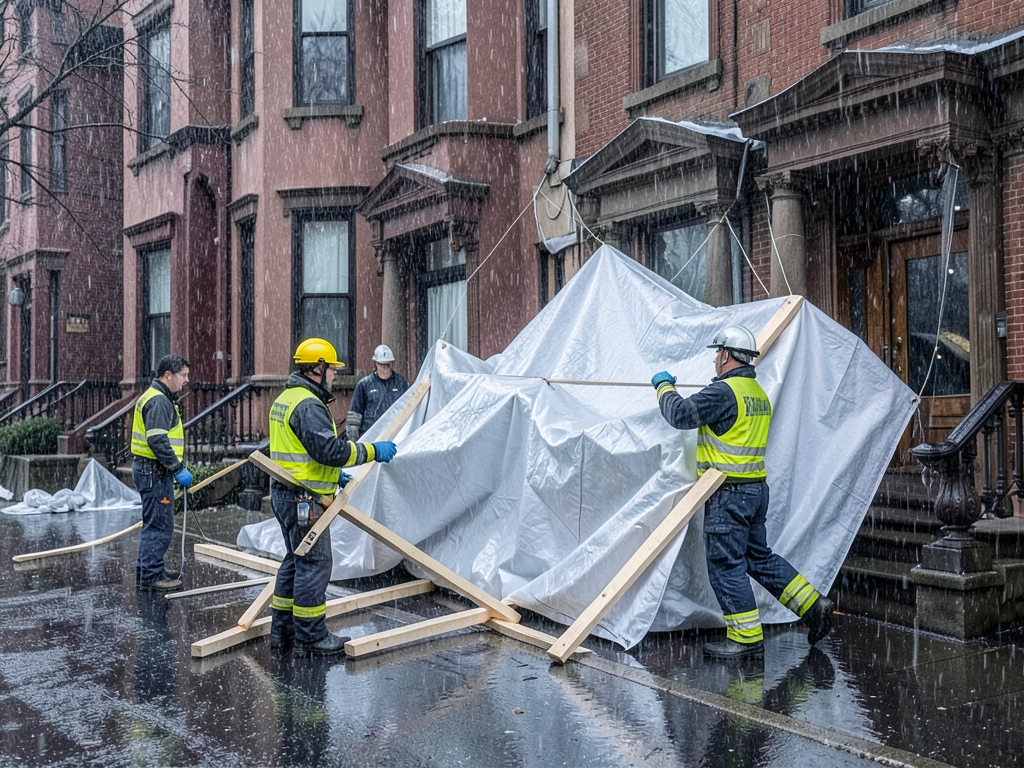
Once the storm passes, temporary fixes can prevent further damage. Use heavy-duty tarps secured with 2×4 boards to cover damaged areas. Never use nails that penetrate the tarp into your roof deck. This creates new leak points.
Ice dams form when heat escapes through your attic, melting snow on the roof. Water runs down and refreezes at the colder eaves. This creates a dam that backs up under shingles. During a Nor’easter, this process accelerates dramatically.
According to Massachusetts building code 780 CMR 36.00, ice barrier protection must extend from the roof edge up the roof slope a minimum of 24 inches inside the exterior wall line. Many older Boston homes don’t meet this standard. Massachusetts State Building Code 780 CMR.
Common Nor’easter damage patterns include wind-lifted shingles, especially along roof edges and ridges. Flying debris from nearby trees creates punctures. Heavy snow loads combined with rain add weight that stresses roof structures.
Emergency tarping requires specific techniques. Use at least 6-mil polyethylene sheeting. Extend the tarp four feet beyond all damaged areas. Secure with 2×4 boards screwed together in a grid pattern. This prevents wind from getting underneath. 24/7 Emergency Roof Repair.
Water damage severity depends on how long leaks persist. Within 24-48 hours, mold begins growing in wet materials. After 72 hours, structural wood components start weakening. Quick response prevents thousands in repair costs.
Insurance claims for storm damage require specific documentation. Take date-stamped photos of the leak source, interior damage, and any temporary repairs you make. Keep receipts for emergency services and materials. Tile Roofing Services.
Most homeowner policies cover sudden storm damage but exclude neglect-related issues. Regular roof maintenance proves you’ve cared for your property properly when filing claims.
Professional assessment determines whether you need repairs or replacement. Missing shingles or small punctures often repair easily. Widespread damage or structural issues may require full replacement.
Emergency repair costs vary by damage extent and roof type. Slate repairs cost more per square foot than asphalt. Complex roof designs with multiple valleys and dormers take longer to fix.
Prevention works better than emergency response. Schedule annual inspections before storm season. Clean gutters prevent ice dam formation. Check attic ventilation to reduce heat buildup that melts snow unevenly. The Best Way to Keep Gutters Clog-Free in Wooded West Roxbury Neighborhoods.
Tree maintenance prevents many roof emergencies. Trim branches that hang over your roof. Remove dead trees near your home. During Nor’easters, falling limbs cause significant damage.
Commercial properties face additional risks. Shopping centers and office buildings in areas like Kendall Square or the Seaport District have flat roofs that pond water during heavy rain. This increases leak potential dramatically.
Emergency response for commercial clients focuses on business continuity. We work after hours when possible. Temporary repairs keep operations running while permanent fixes happen later.
Historic preservation districts like Beacon Hill have specific requirements. Repairs must match original materials and techniques. We maintain relationships with suppliers of period-appropriate roofing materials. The Best Roofing Strategies for Multi-Family Property Owners in Savin Hill.
Modern materials offer better storm resistance. Impact-resistant shingles withstand hail and debris. Synthetic underlayment provides better protection than traditional felt paper. Metal flashing lasts longer than aluminum in coastal areas.
Ice and water shield installation prevents many common leak types. This rubberized membrane self-seals around nails. It’s required in valleys, around chimneys, and along eaves in Massachusetts.
Ventilation systems affect roof performance during storms. Proper airflow prevents ice dams. It also reduces moisture buildup that weakens roof structures over time.
Emergency repair timing affects outcomes. Quick tarping within hours of damage discovery prevents interior water spread. Waiting days allows water to travel through walls and floors.
Common leak locations include chimney flashing, vent pipe boots, and valley areas where roof sections meet. These joints expand and contract with temperature changes, eventually failing.
Water testing helps locate hard-to-find leaks. We use electric field vector mapping to trace water paths through roof assemblies. This non-invasive technique pinpoints exact leak sources.
Structural assessment determines if your roof can support snow loads common during Boston winters. Most residential roofs handle 20-30 pounds per square foot. Heavy wet snow can exceed these limits.
Emergency stabilization may involve temporary shoring for damaged rafters or trusses. This prevents further structural movement while permanent repairs proceed.
Insurance adjusters look for specific damage indicators. Circular impact marks suggest hail damage. Lifted shingles indicate wind damage. Multiple leak locations often point to ice dam problems.
Documentation quality affects claim approval. Detailed photos, professional assessments, and itemized repair estimates strengthen your position with insurance companies.
Emergency response teams carry specialized equipment. Infrared cameras detect moisture behind walls. Moisture meters measure water content in materials. These tools guide repair decisions.
Safety protocols protect both workers and your property. We use fall protection equipment on all roof work. Interior protection prevents damage during emergency repairs.
Communication matters during emergencies. We provide regular updates on repair progress. Clear explanations help you understand what’s happening and what to expect.
Preventive measures reduce future emergencies. Install snow guards on steep roofs. Upgrade to impact-resistant materials in high-risk areas. Improve attic insulation to prevent ice dams.
Emergency repair success depends on preparation. Our trucks carry tarps, fasteners, and basic repair materials. This allows immediate response without supply delays.
Weather monitoring helps predict emergency calls. We track storm systems approaching Boston. Additional crews position near high-risk areas before severe weather hits.
Customer education prevents panic during emergencies. Understanding what’s happening helps you make better decisions about temporary measures and when to call for help.
Emergency repairs often reveal hidden problems. Water damage may have been occurring slowly for months. Full assessment determines if broader repairs make sense.
Quality emergency work prevents callbacks. We use manufacturer-approved materials and techniques. Proper installation ensures repairs last until permanent solutions install.
Emergency response timing affects costs. After-hours calls incur premium rates. Weekend work may cost more than weekday repairs. We provide clear pricing before starting work.
Local building officials may need to inspect repairs in some cases. We handle permit requirements and inspections as needed for your project.
Emergency repairs don’t always solve underlying problems. Sometimes replacement makes more sense than repeated emergency fixes. We provide honest assessments of your options.
Community resources help during widespread emergencies. We coordinate with other contractors when multiple homes need help after major storms.
Emergency preparedness includes having our number saved. (857) 387-1711 connects you to 24/7 roof repair service throughout Boston and surrounding communities.
Don’t wait until water drips through your ceiling. Call (857) 387-1711 today for roof inspection and maintenance. Preventing emergencies costs less than fixing them.
When storms threaten Boston, we stand ready to protect your home. Our experience with local weather patterns and building types ensures effective emergency response.
Trust matters during stressful situations. We arrive on time, work professionally, and stand behind our emergency repairs with warranties.
Your home deserves protection from Boston’s harsh weather. Whether you need emergency help now or want to prevent future problems, we’re here to serve.
Call (857) 387-1711 now if you’re dealing with an active leak. Don’t let water damage destroy your home’s structure and your peace of mind.
Frequently Asked Questions
How long can I wait before calling for emergency roof repair?
Call immediately when you discover a leak. Water damage spreads quickly through your home’s structure. Within 24-48 hours, mold begins growing in wet materials. Quick response prevents thousands in repair costs.
Is it safe to inspect my roof during a Nor’easter?
No. Never climb onto a wet roof during a storm. High winds make surfaces extremely slippery and dangerous. Wait for weather to clear before attempting any inspection. Your safety matters more than stopping a drip.
What should I do while waiting for the emergency repair team?
Move valuables away from affected areas. Place buckets under active leaks. Document damage with photos and videos. If water pools near ceiling fixtures, stay clear of that room. Minimize walking on wet floors to prevent slip hazards.
Will my insurance cover emergency roof repairs?
Most homeowner policies cover sudden storm damage but exclude neglect-related issues. Document everything with photos and videos. Keep receipts for emergency services. We can help with insurance documentation to support your claim.
{
“@context”: “https://schema.org”,
“@type”: “BlogPosting”,
“headline”: “What to Do When Your Roof Starts Leaking During a Boston Nor’easter”,
“description”: “Learn the exact steps to take when your roof leaks during a Boston Nor’easter. 24/7 emergency repair service available. Call (857) 387-1711 now.”,
“wordCount”: 1751,
“datePublished”: “2026-02-17T08:25:00.000Z”,
“dateModified”: “2026-02-17T08:25:00.000Z”,
“inLanguage”: “en-US”,
“mainEntityOfPage”: {
“@type”: “WebPage”,
“@id”: “https://silverlineroofingboston.com”
},
“publisher”: {
“@type”: “LocalBusiness”,
“name”: “Silverline Roofing Boston”,
“url”: “https://silverlineroofingboston.com”
},
“author”: {
“@type”: “Organization”,
“name”: “Silverline Roofing Boston”,
“url”: “https://silverlineroofingboston.com”
},
“image”: {
“@type”: “ImageObject”,
“url”: “https://silverlineroofingboston.com/wp-content/uploads/2026/03/what-to-do-when-your-roof-starts-leaking-during-a-1.png”
}
}
{
“@context”: “https://schema.org”,
“@type”: “RoofingContractor”,
“name”: “Silverline Roofing Boston”,
“url”: “https://silverlineroofingboston.com”,
“address”: {
“@type”: “PostalAddress”,
“addressLocality”: “Boston”
},
“areaServed”: {
“@type”: “City”,
“name”: “Boston”
}
}
{
“@context”: “https://schema.org”,
“@type”: “FAQPage”,
“mainEntity”: [
{
“@type”: “Question”,
“name”: “How long can I wait before calling for emergency roof repair?”,
“acceptedAnswer”: {
“@type”: “Answer”,
“text”: “Call immediately when you discover a leak. Water damage spreads quickly through your home’s structure. Within 24-48 hours, mold begins growing in wet materials. Quick response prevents thousands in repair costs.”
}
},
{
“@type”: “Question”,
“name”: “Is it safe to inspect my roof during a Nor’easter?”,
“acceptedAnswer”: {
“@type”: “Answer”,
“text”: “No. Never climb onto a wet roof during a storm. High winds make surfaces extremely slippery and dangerous. Wait for weather to clear before attempting any inspection. Your safety matters more than stopping a drip.”
}
},
{
“@type”: “Question”,
“name”: “What should I do while waiting for the emergency repair team?”,
“acceptedAnswer”: {
“@type”: “Answer”,
“text”: “Move valuables away from affected areas. Place buckets under active leaks. Document damage with photos and videos. If water pools near ceiling fixtures, stay clear of that room. Minimize walking on wet floors to prevent slip hazards.”
}
},
{
“@type”: “Question”,
“name”: “Will my insurance cover emergency roof repairs?”,
“acceptedAnswer”: {
“@type”: “Answer”,
“text”: “Most homeowner policies cover sudden storm damage but exclude neglect-related issues. Document everything with photos and videos. Keep receipts for emergency services. We can help with insurance documentation to support your claim.”
}
}
]
}
{
“@context”: “https://schema.org”,
“@type”: “BreadcrumbList”,
“itemListElement”: [
{
“@type”: “ListItem”,
“position”: 1,
“name”: “Home”,
“item”: “https://silverlineroofingboston.com”
},
{
“@type”: “ListItem”,
“position”: 2,
“name”: “Blog”,
“item”: “https://silverlineroofingboston.com/blog”
},
{
“@type”: “ListItem”,
“position”: 3,
“name”: “What to Do When Your Roof Starts Leaking During a Boston Nor’easter”
}
]
}
{
“@context”: “https://schema.org”,
“@type”: “Service”,
“serviceType”: “Roofing”,
“provider”: {
“@type”: “LocalBusiness”,
“name”: “Silverline Roofing Boston”,
“url”: “https://silverlineroofingboston.com”
},
“areaServed”: {
“@type”: “City”,
“name”: “Boston”
},
“description”: “Learn the exact steps to take when your roof leaks during a Boston Nor’easter. 24/7 emergency repair service available. Call (857) 387-1711 now.”
}