Why Rubber Roofing is the Best Solution for Those Low Slope Porch Additions in Belmont
When Belmont homeowners add a porch or rear extension to their historic Colonial or Cape Cod, they often face a unique roofing challenge. The low slope of these additions creates perfect conditions for ice dams, ponding water, and premature wear from New England’s harsh winters. That’s where rubber roofing—specifically EPDM membranes—becomes the smartest choice for long-term protection. Why Metal Roofing is Becoming a Top Choice for Coastal East Boston Homes.
EPDM (ethylene propylene diene monomer) offers a seamless, waterproof barrier that flexes with temperature changes and resists UV damage. Unlike traditional shingles that can crack and lift on shallow pitches, rubber roofing creates a continuous surface that sheds water efficiently even on slopes as low as 1/4 inch per foot. For Belmont’s historic homes with their characteristic rear additions, this means decades of reliable protection without the maintenance headaches of other materials. The Best Roofing Strategies for Multi-Family Property Owners in Savin Hill.
The real advantage shows up during our notorious Massachusetts winters. When snow melts on a warm roof deck and refreezes at the colder eaves, ice dams form. On a rubber membrane, that water simply slides off instead of backing up under shingles. The material’s black surface also absorbs solar heat, helping melt snow accumulation naturally. For homes near Belmont’s historic district where architectural preservation matters, rubber roofing provides modern protection without altering the home’s classic appearance from the street. Bringing Natural Light into Your South End Attic with Custom Skylights.
Understanding EPDM vs. TPO for Your Belmont Home
Most homeowners don’t realize there are actually three main types of rubber roofing membranes. EPDM has been the gold standard for residential applications since the 1980s, while TPO (thermoplastic polyolefin) and PVC (polyvinyl chloride) have gained popularity more recently. Each has distinct advantages for Belmont’s specific climate conditions. Roofing Quincy.
EPDM offers superior flexibility in cold weather, making it ideal for Massachusetts’ freeze-thaw cycles. The material remains pliable at temperatures well below zero, preventing the cracking that can occur with stiffer membranes. Its black surface absorbs heat efficiently, which helps with snow melt but may increase cooling costs in summer. For porch additions that face south or west, this heat absorption can actually reduce ice dam formation.
TPO provides better energy efficiency with its reflective white surface, potentially lowering summer cooling costs by 10-15%. However, it becomes more brittle in extreme cold and may not flex as well during rapid temperature swings. For north-facing additions or homes in Belmont Center where summer heat is a concern, TPO might be worth considering despite the higher initial cost.
PVC offers excellent chemical resistance and durability but comes at a premium price point. For most residential porch additions in Belmont, the cost-benefit ratio doesn’t justify choosing PVC over EPDM unless there are specific chemical exposure concerns.
| Material | Temperature Range | Energy Efficiency | Best For |
|---|---|---|---|
| EPDM | -40°F to 180°F | Low (black absorbs heat) | Historic homes, cold climates |
| TPO | -20°F to 160°F | High (reflective white) | Energy efficiency, summer cooling |
| PVC | -20°F to 160°F | High (reflective) | Chemical exposure, premium durability |
The Installation Process: What to Expect for Your Belmont Porch
Professional rubber roofing installation follows a precise sequence that ensures maximum durability and leak prevention. The process begins with a thorough deck inspection, where we check for any signs of rot, sagging, or previous water damage. This diagnostic step is critical because even the best membrane won’t perform well over a compromised substrate.
Next comes the installation of a high-quality underlayment system. For Massachusetts homes, we use a minimum 1/2-inch CDX plywood deck, followed by a self-adhering ice and water shield that extends 24 inches beyond the exterior wall line. This exceeds the Massachusetts State Building Code 780 CMR requirements and provides crucial protection against ice dam infiltration.
The rubber membrane itself arrives in large rolls, typically 10 feet wide. For porch additions, we often can install a single sheet that covers the entire area without seams. When seams are necessary, we use a heat-welding process that creates a bond stronger than the original material. This seamless construction is one of rubber roofing’s biggest advantages over traditional materials.
Flashing installation around chimneys, walls, and roof penetrations requires special attention. We use custom-fabricated metal flashings that integrate with the rubber membrane, creating a watertight transition. The final step involves installing termination bars and edge metal to secure the membrane and provide a clean finished appearance.
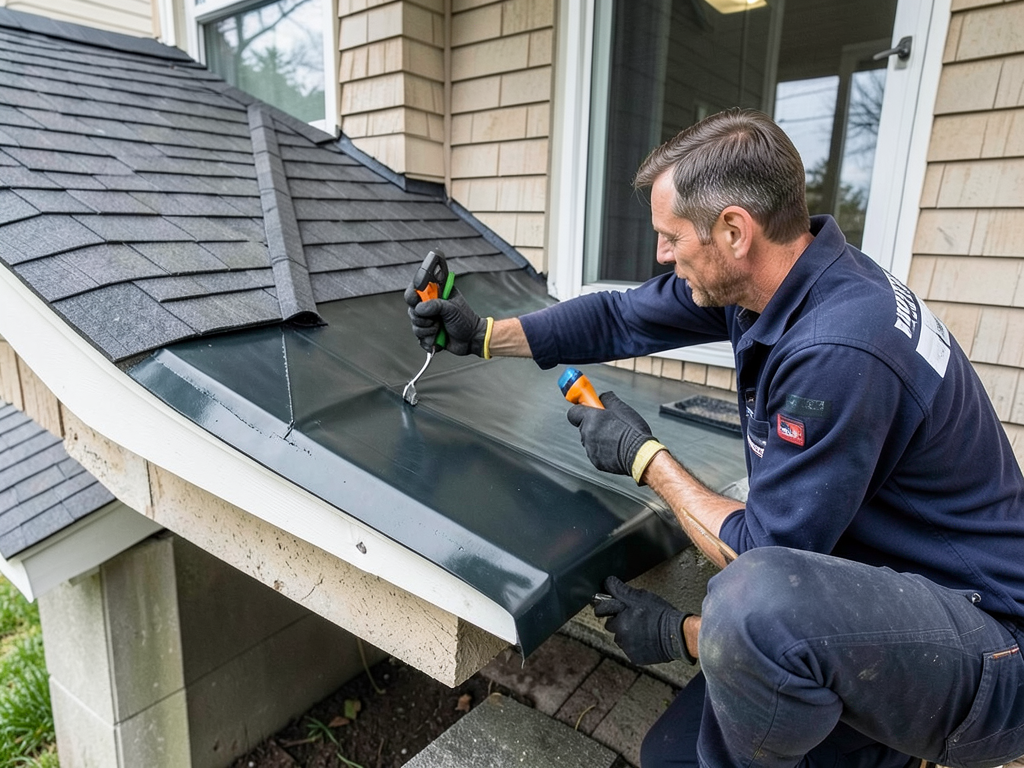
Diagram showing EPDM membrane installation on a low-slope porch addition with proper flashing details and ice barrier placement.
Belmont’s Building Codes and Permit Requirements
Before starting any roofing project in Belmont, homeowners must navigate the local permit process through the Belmont Building Department. The town follows the Massachusetts State Building Code 780 CMR, which includes specific requirements for low-slope roofing applications. Understanding these regulations upfront can save significant time and prevent costly rework. EPA on EPDM roofing environmental benefits.
For rubber roofing on porch additions, the key code sections include 780 CMR 1510.2.1 for roof coverings and 1510.2.3 for ice barrier requirements. The ice barrier must extend from the eave edge up the roof slope a minimum of 24 inches inside the exterior wall line. In Belmont’s climate zone, this often means installing a full ice and water shield across the entire porch roof deck.
Permit applications require detailed roof plans showing the existing structure, proposed modifications, and material specifications. The Belmont Building Department particularly scrutinizes projects in the historic district, where any visible changes must maintain the home’s architectural character. Rubber roofing’s low profile and ability to match existing colors makes it an approved choice for many historic properties.
Inspections occur at multiple stages: after deck preparation, after ice barrier installation, and upon project completion. The final inspection ensures proper flashing integration and membrane termination. Working with a contractor familiar with Belmont’s specific requirements streamlines this process significantly.
Weather Resistance: Why Rubber Outperforms in New England
Massachusetts weather presents unique challenges that make rubber roofing particularly valuable. Our region experiences an average of 44 inches of annual rainfall, 48 inches of snowfall, and temperature swings from -10°F to 95°F. These extremes test roofing materials in ways that milder climates never do.
Ice dam formation represents the biggest threat to low-slope roofs in Belmont. When warm air from your home melts snow on the roof surface, the water runs down to the colder eaves where it refreezes. This cycle creates a dam that forces water back up under traditional roofing materials. Rubber membranes prevent this by providing a continuous waterproof barrier with no seams for water to penetrate.
Freeze-thaw cycles cause expansion and contraction that can crack rigid materials. EPDM’s elasticity allows it to expand up to 300% of its original size without damage. This flexibility means the membrane moves with your home’s structure rather than against it, preventing the stress cracks that plague less flexible materials.
UV radiation degrades many roofing materials over time, causing brittleness and color fading. Modern EPDM formulations include carbon black and other stabilizers that protect against UV damage for 25-30 years. The material’s dark color also helps melt snow accumulation, reducing winter maintenance needs.
Wind uplift poses another concern for low-slope roofs. The smooth surface of rubber roofing creates less wind resistance than textured materials, and proper edge termination prevents the lifting that can occur during nor’easters. For Belmont homes near the coast or on exposed lots, this wind resistance provides crucial protection.
Maintenance and Longevity: Protecting Your Investment
One of rubber roofing’s biggest advantages is its minimal maintenance requirements. Unlike traditional shingles that need periodic replacement or repair, a properly installed EPDM roof can last 30-50 years with basic care. This longevity makes it an excellent investment for Belmont homeowners planning to stay in their homes long-term.
Annual inspections should focus on checking membrane integrity, cleaning debris from drainage areas, and inspecting flashings for signs of separation. Small issues caught early prevent major problems later. We recommend scheduling these inspections in late fall before winter weather arrives.
Drainage remains critical for low-slope roofs. Even with rubber’s superior waterproofing, standing water can eventually cause issues if allowed to pond for extended periods. Ensuring gutters and downspouts are clear and properly sized prevents this problem. For porch additions, extending downspouts away from the foundation protects both your roof and your home’s structure. The Best Way to Keep Gutters Clog-Free in Wooded West Roxbury Neighborhoods.
Minor repairs might be needed if the membrane gets punctured by falling branches or during maintenance activities. These repairs involve cleaning the damaged area, applying primer, and installing a patch with compatible adhesive. Most homeowners can handle small repairs, though professional service ensures proper technique and material compatibility.
Recoating isn’t typically necessary for EPDM, though some homeowners choose to apply reflective coatings every 10-15 years to improve energy efficiency. This optional step can reduce cooling costs and extend the membrane’s already impressive lifespan.
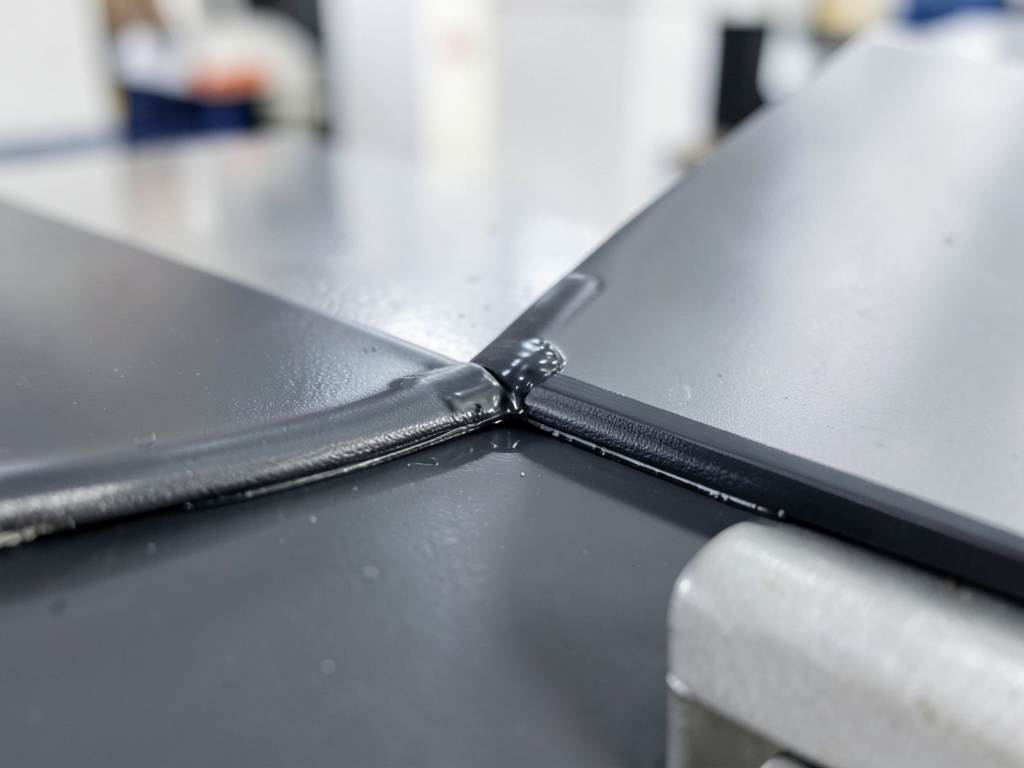
Close-up of EPDM membrane seam welding showing the heat-bonded connection that creates a watertight seal stronger than the original material.
Cost Considerations for Belmont Homeowners
Rubber roofing installation costs vary based on several factors specific to Belmont homes. The average price range for a typical porch addition runs from $8 to $14 per square foot, including materials and labor. While this initial investment exceeds some alternatives, the long-term value proposition makes rubber roofing cost-effective over time.
Material costs represent the largest variable. Standard EPDM in black runs $0.80 to $1.20 per square foot, while premium formulations with enhanced UV resistance or custom colors cost more. TPO typically runs $1.50 to $2.50 per square foot, and PVC can exceed $3.00 per square foot for residential applications.
Labor costs in Belmont reflect the area’s higher cost of living and the specialized skills required for proper rubber roofing installation. Experienced contractors charge $3 to $5 per square foot for installation, with additional fees for complex flashing details or multiple roof penetrations. The expertise required justifies these rates, as improper installation can void warranties and lead to premature failure.
Permit fees through the Belmont Building Department typically range from $100 to $300 depending on project scope. Historic district properties may require additional review fees. These costs should be factored into your project budget from the start.
Long-term savings offset the higher initial cost. Rubber roofing’s 30-50 year lifespan means you’ll likely replace traditional materials two or three times during the same period. Energy savings from improved insulation and reduced ice dam damage add to the financial benefits. Many homeowners find the total cost of ownership significantly lower than alternative options.
Energy Efficiency and Environmental Benefits
Beyond weather protection, rubber roofing offers substantial energy efficiency benefits that appeal to environmentally conscious Belmont homeowners. The material’s insulation properties help maintain consistent indoor temperatures, reducing heating and cooling costs year-round.
During winter, rubber roofing’s dark surface absorbs solar radiation, creating a warming effect that can reduce heating costs by 5-10%. This passive solar gain is particularly valuable for porch additions that receive direct sunlight. The material’s insulation value also prevents heat loss through the roof, a common issue with traditional materials on low-slope applications.
Summer performance varies by material choice. Standard black EPDM absorbs heat, which can increase cooling costs in unshaded areas. However, this same property helps melt snow in winter. For maximum summer efficiency, some homeowners opt for white EPDM or apply reflective coatings that can reduce cooling costs by 15-20% while still providing excellent winter performance.
The environmental impact of rubber roofing extends beyond energy savings. Most EPDM membranes contain recycled content, and the material itself is fully recyclable at the end of its service life. Manufacturing processes have also become more environmentally friendly, with many producers using water-based adhesives and low-VOC materials.
Reduced ice dam formation means less salt and chemical de-icers entering the local watershed. For Belmont residents concerned about environmental preservation, this benefit aligns with the town’s sustainability goals. The material’s long lifespan also means less frequent replacement, reducing construction waste over time.
Common Problems and How to Avoid Them
Even with rubber roofing’s excellent performance record, certain issues can arise if installation or maintenance falls short. Understanding these potential problems helps homeowners make informed decisions and protect their investment.
Ponding water represents the most common issue on low-slope roofs. While rubber roofing handles occasional ponding better than other materials, chronic standing water can eventually cause problems. Proper roof slope during installation (minimum 1/4 inch per foot) and adequate drainage prevent this issue. For porch additions, ensuring the roof ties into existing drainage patterns is crucial.
Membrane shrinkage can occur over time, particularly with EPDM exposed to extreme temperature cycles. Quality installation includes allowing for thermal movement and using proper adhesives that maintain flexibility. Most modern EPDM formulations include additives that minimize shrinkage to less than 3% over 20 years.
UV degradation affects all roofing materials, though rubber roofing handles it better than most. While the carbon black in EPDM provides excellent protection, areas with prolonged sun exposure may show some surface checking over decades. This cosmetic issue rarely affects performance but can be addressed with protective coatings if desired.
Penetrations for vents, skylights, or other roof features require careful detailing. Improper flashing integration represents a leading cause of leaks in rubber roofing systems. Professional installers use custom-fabricated flashings and proven sealing techniques to prevent these failures.
Foot traffic damage can occur if maintenance personnel aren’t familiar with rubber roofing’s characteristics. The material withstands normal foot traffic but can be cut by sharp objects or damaged by petroleum-based products. Establishing guidelines for roof access helps prevent accidental damage.
Photo of properly installed rubber roofing on a Belmont porch addition showing clean edge termination and integrated flashing around the wall connection.
Why Choose Local Expertise for Your Belmont Project
Rubber roofing installation requires specific skills and experience that go beyond general roofing knowledge. Belmont’s unique housing stock, from historic Colonials to mid-century ranches, presents installation challenges that demand local expertise and understanding of regional weather patterns.
Local contractors understand Belmont’s specific building codes, permit requirements, and historic district regulations. They know which products perform best in our climate and have relationships with local suppliers for timely material delivery. This local knowledge translates to smoother projects and better long-term results.
Experience with Belmont’s specific housing styles means your contractor understands the nuances of working with older homes. They know how to integrate new roofing with existing materials, maintain architectural integrity, and address the unique challenges of historic properties. This expertise prevents the costly mistakes that can occur when working with unfamiliar housing types.
Local contractors also provide better warranty service and ongoing support. If issues arise, they can respond quickly and have established relationships with material manufacturers for warranty claims. This local accountability provides peace of mind that out-of-area contractors cannot match.
Community reputation matters in Belmont. Local contractors depend on word-of-mouth referrals and repeat business, so they’re motivated to deliver exceptional quality and customer service. This community connection ensures your project receives the attention and care it deserves.
Making the Right Choice for Your Home
Choosing rubber roofing for your Belmont porch addition represents a significant decision that affects your home’s protection, energy efficiency, and long-term maintenance needs. The material’s proven performance in New England’s challenging climate, combined with its architectural versatility, makes it an excellent choice for most residential applications.
Consider your specific needs when making this decision. If you prioritize minimal maintenance and maximum durability, EPDM offers the best combination of features. If energy efficiency is your primary concern, TPO might be worth the additional investment. For most Belmont homeowners, standard EPDM provides the optimal balance of performance, cost, and longevity.
The key to success lies in choosing the right contractor. Look for experience with rubber roofing installation, familiarity with Belmont’s building requirements, and a track record of quality work in the area. Ask about specific experience with porch additions and low-slope applications similar to your project.
Don’t hesitate to ask questions about material choices, installation methods, and warranty coverage. A reputable contractor will explain their recommendations clearly and help you understand the long-term implications of your choices. This education process is part of what you’re paying for and helps ensure you’re making the best decision for your home.
Ready to protect your Belmont home with a rubber roofing system built for New England weather? Call (857) 387-1711 today to schedule your free consultation and learn how we can help you choose the perfect solution for your porch addition or low-slope roofing needs.
Frequently Asked Questions
How long does rubber roofing last on a porch addition in Belmont?
A properly installed EPDM rubber roof typically lasts 30-50 years in Belmont’s climate. The material’s durability, UV resistance, and flexibility in cold weather contribute to this impressive lifespan. Regular maintenance and prompt repairs of any damage can help ensure you achieve the full expected service life.
Is rubber roofing more expensive than traditional shingles for low-slope applications?
Rubber roofing typically costs more upfront than traditional shingles, ranging from $8-14 per square foot installed versus $5-8 for shingles. However, rubber’s longer lifespan (30-50 years vs. 15-20 for shingles) and lower maintenance requirements often make it more cost-effective over the long term.
Can rubber roofing be installed over my existing porch roof?
In many cases, yes. Rubber roofing can often be installed over existing single-layer roofing materials if the deck is in good condition. However, multiple layers or damaged decking typically requires removal first. A professional inspection will determine the best approach for your specific situation.
Does rubber roofing come in colors other than black?
Yes, rubber roofing is available in white, gray, and other colors, though black remains the most popular choice for its superior heat absorption and lower cost. White rubber roofing or reflective coatings can be applied for improved energy efficiency if desired, particularly for south-facing additions.
How does rubber roofing handle ice dams compared to traditional materials?
Rubber roofing excels at preventing ice dam damage because it provides a continuous waterproof barrier with no seams for water to penetrate. The material’s flexibility also allows it to withstand the freeze-thaw cycles that cause ice dams to form. Many homeowners find rubber roofing eliminates ice dam problems entirely.
What maintenance does rubber roofing require?
Rubber roofing requires minimal maintenance. Annual inspections to check for damage, cleaning debris from drainage areas, and ensuring flashings remain sealed are typically sufficient. Unlike traditional shingles, rubber roofing doesn’t require periodic replacement of individual pieces or extensive repairs for weather damage.
Is rubber roofing environmentally friendly?
Yes, rubber roofing offers several environmental benefits. Most EPDM membranes contain recycled content, the material is fully recyclable at end-of-life, and its long lifespan reduces construction waste. Energy efficiency improvements can also reduce your home’s carbon footprint, particularly when combined with reflective coatings in warm climates. For more information, visit ASHRAE standards for roofing systems.
{
“@context”: “https://schema.org”,
“@type”: “BlogPosting”,
“headline”: “Why Rubber Roofing is the Best Solution for Those Low Slope Porch Additions in Belmont”,
“description”: “Discover why EPDM rubber roofing excels for Belmont porch additions. Learn about durability, ice dam resistance, and expert installation for Massachusetts weather.”,
“wordCount”: 3146,
“datePublished”: “2026-04-13T15:13:00.000Z”,
“dateModified”: “2026-04-13T15:13:00.000Z”,
“inLanguage”: “en-US”,
“mainEntityOfPage”: {
“@type”: “WebPage”,
“@id”: “https://silverlineroofingboston.com”
},
“publisher”: {
“@type”: “LocalBusiness”,
“name”: “Silverline Roofing Boston”,
“url”: “https://silverlineroofingboston.com”
},
“author”: {
“@type”: “Organization”,
“name”: “Silverline Roofing Boston”,
“url”: “https://silverlineroofingboston.com”
},
“image”: {
“@type”: “ImageObject”,
“url”: “https://silverlineroofingboston.com/wp-content/uploads/2026/03/why-rubber-roofing-is-the-best-solution-for-those-1.png”
}
}
{
“@context”: “https://schema.org”,
“@type”: “RoofingContractor”,
“name”: “Silverline Roofing Boston”,
“url”: “https://silverlineroofingboston.com”,
“address”: {
“@type”: “PostalAddress”,
“addressLocality”: “Boston”
},
“areaServed”: {
“@type”: “City”,
“name”: “Boston”
}
}
{
“@context”: “https://schema.org”,
“@type”: “FAQPage”,
“mainEntity”: [
{
“@type”: “Question”,
“name”: “How long does rubber roofing last on a porch addition in Belmont?”,
“acceptedAnswer”: {
“@type”: “Answer”,
“text”: “A properly installed EPDM rubber roof typically lasts 30-50 years in Belmont’s climate. The material’s durability, UV resistance, and flexibility in cold weather contribute to this impressive lifespan. Regular maintenance and prompt repairs of any damage can help ensure you achieve the full expected service life.”
}
},
{
“@type”: “Question”,
“name”: “Is rubber roofing more expensive than traditional shingles for low-slope applications?”,
“acceptedAnswer”: {
“@type”: “Answer”,
“text”: “Rubber roofing typically costs more upfront than traditional shingles, ranging from $8-14 per square foot installed versus $5-8 for shingles. However, rubber’s longer lifespan (30-50 years vs. 15-20 for shingles) and lower maintenance requirements often make it more cost-effective over the long term.”
}
},
{
“@type”: “Question”,
“name”: “Can rubber roofing be installed over my existing porch roof?”,
“acceptedAnswer”: {
“@type”: “Answer”,
“text”: “In many cases, yes. Rubber roofing can often be installed over existing single-layer roofing materials if the deck is in good condition. However, multiple layers or damaged decking typically requires removal first. A professional inspection will determine the best approach for your specific situation.”
}
},
{
“@type”: “Question”,
“name”: “Does rubber roofing come in colors other than black?”,
“acceptedAnswer”: {
“@type”: “Answer”,
“text”: “Yes, rubber roofing is available in white, gray, and other colors, though black remains the most popular choice for its superior heat absorption and lower cost. White rubber roofing or reflective coatings can be applied for improved energy efficiency if desired, particularly for south-facing additions.”
}
},
{
“@type”: “Question”,
“name”: “How does rubber roofing handle ice dams compared to traditional materials?”,
“acceptedAnswer”: {
“@type”: “Answer”,
“text”: “Rubber roofing excels at preventing ice dam damage because it provides a continuous waterproof barrier with no seams for water to penetrate. The material’s flexibility also allows it to withstand the freeze-thaw cycles that cause ice dams to form. Many homeowners find rubber roofing eliminates ice dam problems entirely.”
}
},
{
“@type”: “Question”,
“name”: “What maintenance does rubber roofing require?”,
“acceptedAnswer”: {
“@type”: “Answer”,
“text”: “Rubber roofing requires minimal maintenance. Annual inspections to check for damage, cleaning debris from drainage areas, and ensuring flashings remain sealed are typically sufficient. Unlike traditional shingles, rubber roofing doesn’t require periodic replacement of individual pieces or extensive repairs for weather damage.”
}
},
{
“@type”: “Question”,
“name”: “Is rubber roofing environmentally friendly?”,
“acceptedAnswer”: {
“@type”: “Answer”,
“text”: “Yes, rubber roofing offers several environmental benefits. Most EPDM membranes contain recycled content, the material is fully recyclable at end-of-life, and its long lifespan reduces construction waste. Energy efficiency improvements can also reduce your home’s carbon footprint, particularly when combined with reflective coatings in warm climates. For more information, visit ASHRAE standards for roofing systems.”
}
}
]
}
{
“@context”: “https://schema.org”,
“@type”: “BreadcrumbList”,
“itemListElement”: [
{
“@type”: “ListItem”,
“position”: 1,
“name”: “Home”,
“item”: “https://silverlineroofingboston.com”
},
{
“@type”: “ListItem”,
“position”: 2,
“name”: “Blog”,
“item”: “https://silverlineroofingboston.com/blog”
},
{
“@type”: “ListItem”,
“position”: 3,
“name”: “Why Rubber Roofing is the Best Solution for Those Low Slope Porch Additions in Belmont”
}
]
}
{
“@context”: “https://schema.org”,
“@type”: “Service”,
“serviceType”: “Roofing”,
“provider”: {
“@type”: “LocalBusiness”,
“name”: “Silverline Roofing Boston”,
“url”: “https://silverlineroofingboston.com”
},
“areaServed”: {
“@type”: “City”,
“name”: “Boston”
},
“description”: “Discover why EPDM rubber roofing excels for Belmont porch additions. Learn about durability, ice dam resistance, and expert installation for Massachusetts weather.”
}