
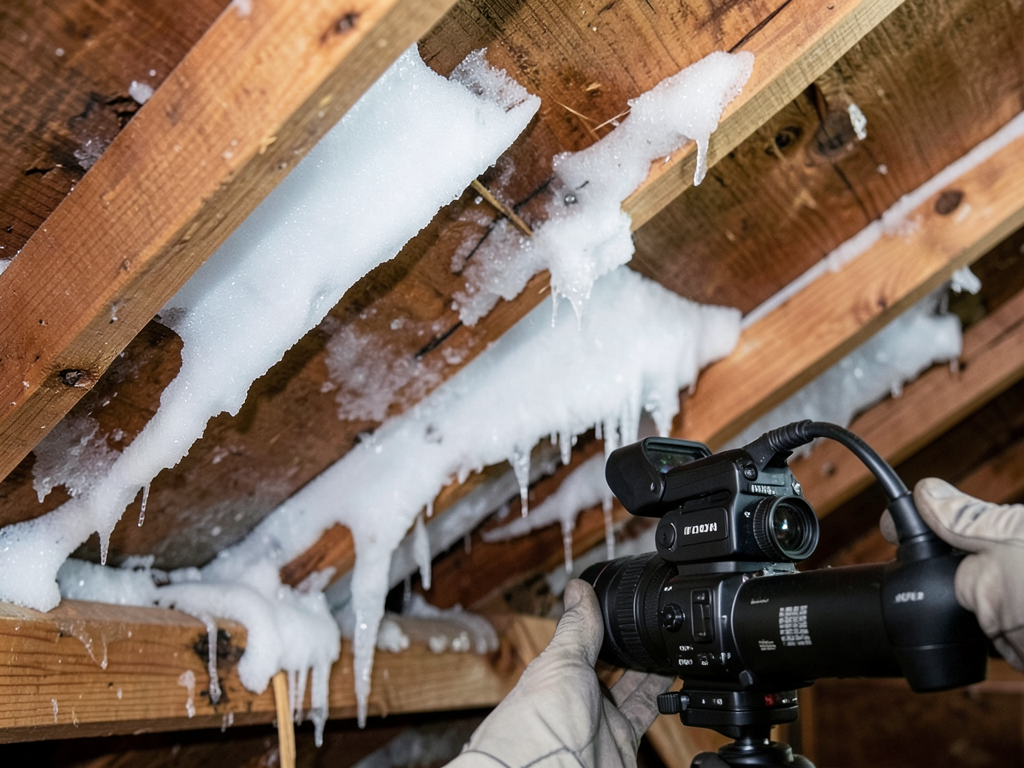
Why Arlington Homes Face Hidden Ice Dam Damage
Ice dams form when heat escapes through your roof, melting snow that refreezes at the eaves. In Arlington’s historic homes, this freeze-thaw cycle repeats for months, creating thick ice barriers that trap water. That trapped water seeps under shingles, flows into walls, and slowly destroys structural components. The damage isn’t cosmetic—it’s structural. Rotted rafters, compressed insulation, and foundation moisture are common outcomes in Arlington’s older housing stock. If your home has recurring ice dams, you’re already paying for repairs you haven’t seen yet. EPA ventilation guidelines.
How Ice Dams Compromise Your Home’s Structure
Ice dams attack your home through multiple pathways. Water backs up under shingles and flows into the attic, saturating insulation and creating perfect conditions for mold growth. The constant moisture weakens roof decking, causing it to sag and lose structural integrity. In Arlington’s older homes with balloon framing, water travels down wall cavities, soaking studs and creating hidden rot. The freeze-thaw cycle also forces ice into tiny gaps around flashing and vents, expanding them until they fail completely. What starts as a winter nuisance becomes a year-round structural threat.. Read more about Ways Modern Roof Insulation Can Lower Your Monthly Cooling Bills in the Densely Packed North End.
Warning Signs Boston Homeowners Should Look For
Arlington homeowners need to recognize the early warning signs before catastrophic failure occurs. Large icicles hanging from gutters indicate ice dam formation, but the real damage happens behind walls. Look for water stains on interior ceilings near exterior walls, especially in second-floor bedrooms. Peeling paint or bubbling wallpaper in upper-level rooms suggests moisture intrusion. Attic inspections reveal sagging roof decking, dark spots on rafters, or compressed insulation that no longer springs back when touched. If you notice these signs, your home’s structure is already compromised. The Best Way to Keep Gutters Clog-Free in Wooded West Roxbury Neighborhoods.
Technical Root Causes: Insulation vs. Ventilation
Massachusetts building code requires R-60 insulation in attics, but many Arlington homes fall far short of this standard. Heat escapes through inadequate insulation, warming the roof deck and creating the perfect ice dam conditions. Poor ventilation compounds the problem. Without proper soffit-to-ridge airflow, warm air becomes trapped in the attic, creating temperature differentials that drive ice dam formation. The code also mandates ice and water shield extending six feet from the eaves, but many pre-2000 homes lack this critical protection. These technical failures create the perfect storm for structural damage. Massachusetts State Building Code 780 CMR.
Professional Assessment and Remediation
Professional assessment starts with thermal imaging to locate moisture pockets hidden in walls and ceilings. This technology reveals exactly where structural damage has occurred without destructive testing. Steam removal is the only safe method for eliminating existing ice dams—chiseling or chemical melting damages shingles and creates new vulnerabilities. After removal, damaged areas require structural drying using commercial-grade equipment that removes moisture from wood framing and prevents mold colonization. The assessment also identifies ventilation deficiencies and insulation gaps that must be corrected to prevent recurrence.
Long-Term Prevention for New England Homes
Prevention requires addressing the three root causes: heat loss, poor ventilation, and inadequate ice protection. Blown-in cellulose insulation creates a continuous thermal barrier without gaps that allow heat escape. Ridge and soffit vents must be properly sized and installed to create continuous airflow across the entire attic space. Ice and water shield installation should extend from the eaves up the roof slope at least six feet, with additional protection in valleys and around penetrations. Heat cables along the eaves provide backup protection during extreme weather events. These measures work together to eliminate the conditions that create ice dams.
Cost-Benefit Analysis: Prevention vs. Repair
Arlington homeowners often hesitate at prevention costs, but the math is clear. Professional ice dam removal averages $1,200-$2,500 per incident. Structural repairs from water damage typically range from $5,000-$15,000, with extensive rot repairs exceeding $25,000. Prevention costs $3,000-$8,000 upfront but eliminates all future removal and damage costs. Over a ten-year period, prevention saves $15,000-$30,000 compared to repeated damage cycles. Insurance rarely covers ice dam damage, considering it a maintenance issue. The financial argument for prevention is compelling, but the structural argument is even stronger. 24/7 Emergency Roof Repair.
Insurance Claim Guidance for New England Policies
Massachusetts insurance policies typically exclude ice dam damage as a preventable maintenance issue. However, if ice dams cause sudden, catastrophic damage like a roof collapse, coverage may apply. Document everything: take photos of ice formation, keep receipts for professional removal, and maintain records of prevention measures. Some policies offer specific ice dam endorsements for an additional premium. When filing claims, emphasize sudden damage rather than gradual deterioration. Work with contractors who provide detailed damage assessments and can testify to the structural nature of the damage. Understanding your policy’s limitations helps you make informed decisions about prevention investments.. Read more about Understanding the weight limits for snow and people on your older Cambridge flat roof.
Arlington’s Unique Vulnerability Factors
Arlington’s older housing stock creates specific vulnerabilities. Many homes built before 1950 lack proper attic insulation and have balloon framing that allows water to travel freely through wall cavities. The town’s mix of architectural styles—from Victorian to Cape Cod—means no single prevention strategy works for all homes. Arlington’s location in the Boston metro area subjects it to the same severe winter weather patterns that create ideal ice dam conditions. The freeze-thaw cycles common to this region repeatedly stress roofing materials, accelerating deterioration. These local factors make Arlington homes particularly susceptible to ice dam structural damage. Why Metal Roofing is Becoming a Top Choice for Coastal East Boston Homes.
Professional Steam Removal vs. Manual Hacking
Steam removal uses 300-degree water vapor to melt ice without damaging roofing materials. The process takes longer but preserves the integrity of shingles, flashing, and underlayment. Manual hacking with tools like hatchets or ice picks creates immediate damage—cracked shingles, bent flashing, and punctured underlayment. These injuries become new entry points for water in subsequent storms. Steam removal also allows technicians to assess the extent of existing damage while working. The additional cost of professional steam removal is minimal compared to the structural repairs required after manual hacking damages your roof. The Best Roofing Strategies for Multi-Family Property Owners in Savin Hill.
Secondary Structural Damage: Gutter Collapse and Fascia Rot
Ice dams don’t just damage roofs—they destroy the entire roofing system. The weight of ice and snow in gutters often exceeds their design capacity, causing them to pull away from the fascia or collapse completely. Water trapped behind ice flows into the fascia board, causing rot that spreads to rafters and soffits. In Arlington’s older homes, original wood gutters and fascia are particularly vulnerable to this type of damage. Once fascia boards rot, they can no longer support gutters or provide a proper transition between roofing and siding. This secondary damage often exceeds the cost of primary roof repairs. Roofing Quincy.
Ice Shield Membrane Requirements Under Massachusetts Code
Massachusetts State Building Code 780 CMR 36.00 mandates ice barrier underlayment extending at least 24 inches inside the exterior wall line. For low-slope roofs, this requirement increases to two layers of underlayment cemented together or a self-adhering polymer-modified bitumen sheet. Many Arlington homes built before these codes were adopted lack adequate protection. The code also requires proper drip edge installation and specific fastening patterns for ice barrier materials. These requirements exist because ice dam damage is so prevalent in New England that the state mandates specific protections rather than leaving it to individual choice.
Attic Bypasses: The Hidden Heat Loss Pathways
Attic bypasses are gaps around penetrations where conditioned air escapes into the attic. Common bypasses in Arlington homes include recessed light fixtures, plumbing vents, chimney chases, and attic access hatches. Each bypass acts like a chimney, drawing warm air upward and heating the roof deck. A typical older home has 20-30 square feet of bypass area, equivalent to leaving a window open all winter. Professional energy audits use blower door tests and infrared cameras to locate these bypasses. Sealing them with spray foam or rigid insulation blocks heat loss at the source, addressing ice dam formation at its root cause.. Read more about The Safest Way to Inspect Your Roof for Post Winter Damage Before the Spring Rains Hit Framingham.
Professional Assessment Process
Professional assessment begins with a comprehensive attic inspection using moisture meters and thermal imaging cameras. Technicians check roof decking for rot using a screwdriver test—probing suspect areas to assess structural integrity. They measure insulation depth and identify ventilation deficiencies. The assessment includes examining exterior conditions like gutter attachment, fascia condition, and ice formation patterns. This diagnostic process typically takes 2-3 hours and produces a detailed report with remediation recommendations prioritized by urgency and cost. The assessment fee is often credited toward any recommended work, making it a low-risk investment for concerned homeowners.. Read more about The only gutter guards that actually handle the pine needles in wooded Walpole neighborhoods.
Call (857) 387-1711 for Expert Ice Dam Assessment
Don’t wait for ice dams to destroy your Arlington home’s structure. Our team provides comprehensive ice dam assessments using thermal imaging and moisture detection technology. We identify structural damage before it becomes catastrophic and recommend prevention strategies tailored to your home’s specific construction. Call (857) 387-1711 today to schedule your assessment before the next storm hits. Early intervention saves thousands in structural repairs and protects your home’s long-term value. Our Boston-area experts understand the unique challenges Arlington homes face and provide solutions that work in New England’s harsh climate.. Read more about The Engineering Challenges of Replacing a Slate Mansard Roof on a Multi Family Building in Malden.
Frequently Asked Questions
How much does ice dam removal cost in Arlington?
Professional steam removal in Arlington typically costs $1,200-$2,500 depending on roof size and ice thickness. This investment prevents the $5,000-$25,000 structural repairs that result from DIY removal or delayed intervention.
Can ice dams cause foundation problems?
Yes. Water from ice dams can saturate soil around foundation walls, creating hydrostatic pressure that causes cracks and basement leaks. In Arlington’s older homes, this moisture also contributes to basement mold growth and structural settling.. Read more about Why you might have roof leaks on sunny winter days in your Stoneham attic.
How long does ice dam damage take to become visible?
Ice dam damage often takes 3-5 years to become visible as structural problems. By the time you see water stains on ceilings, the underlying damage to rafters, insulation, and wall cavities is already extensive and costly to repair.
You may also find this helpful. Why your manufacturer warranty won’t cover storm damage in Stoughton.
{
“@context”: “https://schema.org”,
“@type”: “BlogPosting”,
“headline”: “The Long Term Structural Damage Caused by Recurring Ice Dams in Older Arlington Houses”,
“description”: “Discover how ice dams silently destroy Arlington homes. Learn warning signs, structural risks, and prevention methods from Boston roofing experts. Call (857) 387-1711.”,
“wordCount”: 1651,
“datePublished”: “2026-05-07T13:46:00.000Z”,
“dateModified”: “2026-05-07T13:46:00.000Z”,
“inLanguage”: “en-US”,
“mainEntityOfPage”: {
“@type”: “WebPage”,
“@id”: “https://silverlineroofingboston.com”
},
“publisher”: {
“@type”: “LocalBusiness”,
“name”: “Silverline Roofing Boston”,
“url”: “https://silverlineroofingboston.com”
},
“author”: {
“@type”: “Organization”,
“name”: “Silverline Roofing Boston”,
“url”: “https://silverlineroofingboston.com”
},
“image”: {
“@type”: “ImageObject”,
“url”: “https://silverlineroofingboston.com/wp-content/uploads/2026/03/the-long-term-structural-damage-caused-by-recurrin-1.png”
}
}
{
“@context”: “https://schema.org”,
“@type”: “RoofingContractor”,
“name”: “Silverline Roofing Boston”,
“url”: “https://silverlineroofingboston.com”,
“address”: {
“@type”: “PostalAddress”,
“addressLocality”: “Boston”
},
“areaServed”: {
“@type”: “City”,
“name”: “Boston”
}
}
{
“@context”: “https://schema.org”,
“@type”: “FAQPage”,
“mainEntity”: [
{
“@type”: “Question”,
“name”: “How much does ice dam removal cost in Arlington?”,
“acceptedAnswer”: {
“@type”: “Answer”,
“text”: “Professional steam removal in Arlington typically costs $1,200-$2,500 depending on roof size and ice thickness. This investment prevents the $5,000-$25,000 structural repairs that result from DIY removal or delayed intervention.”
}
},
{
“@type”: “Question”,
“name”: “Can ice dams cause foundation problems?”,
“acceptedAnswer”: {
“@type”: “Answer”,
“text”: “Yes. Water from ice dams can saturate soil around foundation walls, creating hydrostatic pressure that causes cracks and basement leaks. In Arlington’s older homes, this moisture also contributes to basement mold growth and structural settling.”
}
},
{
“@type”: “Question”,
“name”: “How long does ice dam damage take to become visible?”,
“acceptedAnswer”: {
“@type”: “Answer”,
“text”: “Ice dam damage often takes 3-5 years to become visible as structural problems. By the time you see water stains on ceilings, the underlying damage to rafters, insulation, and wall cavities is already extensive and costly to repair.”
}
}
]
}
{
“@context”: “https://schema.org”,
“@type”: “BreadcrumbList”,
“itemListElement”: [
{
“@type”: “ListItem”,
“position”: 1,
“name”: “Home”,
“item”: “https://silverlineroofingboston.com”
},
{
“@type”: “ListItem”,
“position”: 2,
“name”: “Blog”,
“item”: “https://silverlineroofingboston.com/blog”
},
{
“@type”: “ListItem”,
“position”: 3,
“name”: “The Long Term Structural Damage Caused by Recurring Ice Dams in Older Arlington Houses”
}
]
}
{
“@context”: “https://schema.org”,
“@type”: “Service”,
“serviceType”: “Roofing”,
“provider”: {
“@type”: “LocalBusiness”,
“name”: “Silverline Roofing Boston”,
“url”: “https://silverlineroofingboston.com”
},
“areaServed”: {
“@type”: “City”,
“name”: “Boston”
},
“description”: “Discover how ice dams silently destroy Arlington homes. Learn warning signs, structural risks, and prevention methods from Boston roofing experts. Call (857) 387-1711.”
}